 By admin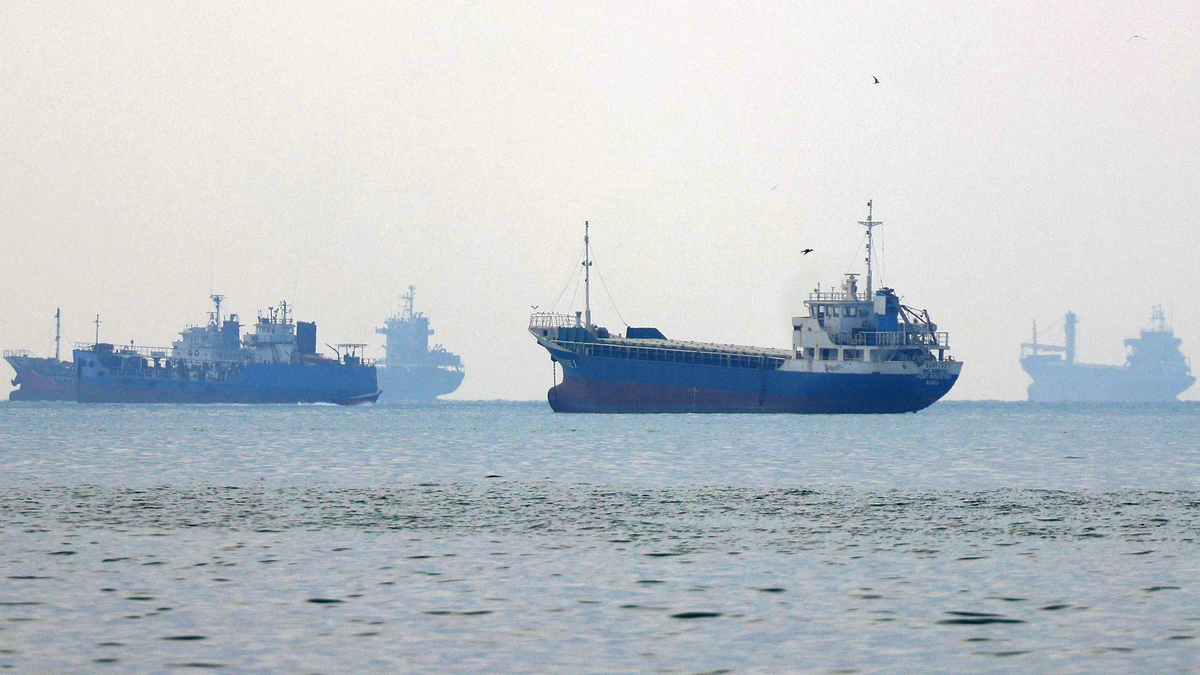
Iran plans to formally unveil an agreement on a temporary shipping lane through the Strait of Hormuz on Monday, after a flurry of diplomatic activity including a rare meeting between senior officials from Tehran and Abu Dhabi.
Read more Veteran fund manager’s Fed interest rate hike prediction will frustrate consumers
The Islamic Republic is set to reveal to Gulf nations its agreement with Oman on a temporary new shipping lane, according to a person familiar with the matter.
Negotiations on details such as the fees ships may be charged will continue between the two countries later, they said, asking not to be identified discussing private deliberations.
Talks between Tehran and Muscat over the waterway, a global chokepoint for energy exports, have progressed in recent weeks and the latter had been aiming to bring together foreign ministers from the Gulf Cooperation Council on Monday in Salala, a southern Omani city.
Abu Dhabi Crown Prince Sheikh Khaled bin Mohamed Al Nahyan met Iranian President Masoud Pezeshkian for rare public discussions between the two powers on the sidelines of the BRICS summit in India.
Tehran has indicated any deal won’t amount to a full reopening and it’ll still decide on which ships can cross the strait. Iranian Foreign Minister Abbas Araghchi described the proposed meeting as an “important event” and a step toward building trust, in an interview with Al Araby Al Jadid.
It’s not clear which nations would attend the purported gathering. Bahrain has ruled out participating, citing recent Iranian-backed attacks on Gulf sites, while escalating fighting between Saudi Arabia-backed forces and the Houthis, a group based in neighboring Yemen and supported by Iran, may also complicate the plans.
Sheikh Khaled and Pezeshkian stressed the need to ease tensions, promote deescalation and strengthen regional stability, according to the United Arab Emirates’ state-run WAM news agency.
Pezeshkian has expressed “balanced and rational” stances throughout the protracted crisis, Anwar Gargash, an adviser to the UAE president, said on X.
The conflict that began late February with U.S. and Israeli strikes on the Islamic Republic has upended regional economies, with Tehran moving to shutter the Strait of Hormuz.
“I don’t care. That’s up to them. That’s fine,” U.S. President Donald Trump told reporters in Ireland on Sunday when asked about a possible meeting of Gulf nations with Iran.
Read more Trump downplays AI concerns as CEOs call for slowing pace
“As long as Israel, along with the nations that we’re talking about, are they happy? That’s fine,” he said on the sidelines of the Amgen Irish Open at his golf course in Doonbeg.
Brent crude oil prices have topped $105 a barrel in recent days as renewed Middle Eastern tensions heightened concerns about global supplies. Soaring prices at the pumps pose a problem for Trump’s Republican Party with just over 50 days to go before midterm elections.
Trump on Sunday sought to allay concerns over rising costs, predicting the conflict would end “right after” or “maybe before” the vote.
Whenever it does, he said, “gasoline’s going to drop like a rock.”
The U.S. and Iran exchanged strikes on oil tankers in the Persian Gulf earlier this month. Tensions flared again in the strait over the weekend, with U.K. Maritime Trade Operations saying Sunday a fire broke out on a ship hit by a projectile the day before.
Iran’s state-run IRIB reported an “enemy strike” on a commercial vessel off Iran’s Qeshm and Hengam islands that killed one person.
Saudi Aramco shares fell nearly 1.1% on Sunday to their lowest level since March, after the kingdom closed its East-West pipeline, a key alternative to the Strait of Hormuz for its oil exports, due to drone attacks by Iraq-based militants.
The UAE has been a prominent target during the conflict, and successfully fended off thousands of projectiles fired by Iran.
The Gulf state has taken a hard line toward Tehran during the war, with Abu Dhabi formally severing economic ties in August. At the same time, the UAE has called for a political solution.
Gargash last month said the “state of neither war nor peace” was unsustainable, and urged a solution that restored normal navigation through the strait.
The meeting in India reflects the UAE’s approach of combining deterrence with diplomacy, Gargash said on X. “Deterrence strengthens the credibility of diplomacy, while diplomacy succeeds.”
Read more Simi man sentenced to over 39 years to life for killing father
_____
(With assistance from Jennifer A. Dlouhy.)
_____
Copyright 2026 Tribune Content Agency. All Rights Reserved.
This story was originally published September 13, 2026 at 9:31 AM.