 By admin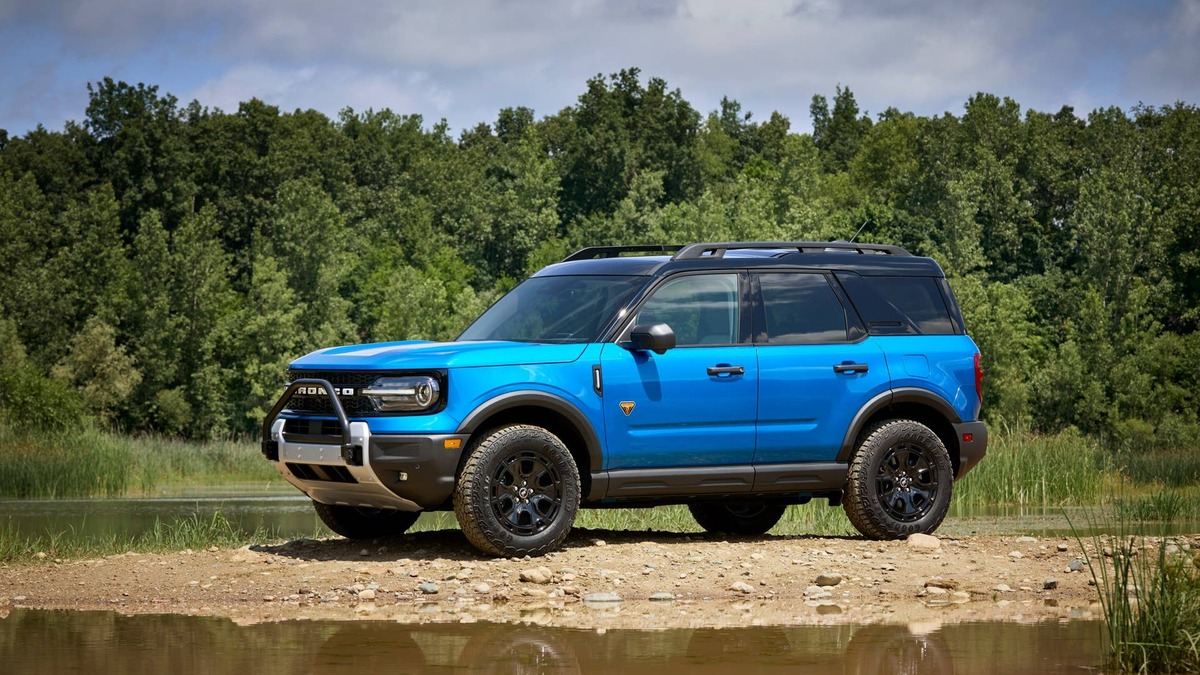
Both of these sell on the promise that a compact crossover can handle a trailhead, and both deliver on it in ways most rivals do not. The Compass has a Trailhawk with genuine off-road hardware; the Bronco Sport has a Badlands with more of it. What separates them is $4,485 at the entry point, one engine against two, and a cargo area that differs by more than the exterior dimensions suggest. The surprise is the fifth difference, which turns out not to be a difference at all: both return close to 27 mpg combined despite one carrying four-wheel drive as standard and the other not.
Read more Ukraine’s Zelenskiy imposes sanctions on former press secretary
What’s New for 2026
Ford’s compact adds a Bronze Package with bronze wheels, badging and interior trim accents, available on the base Big Bend and expected on the Badlands later in the year. Twelve package options are offered across the lineup alongside new colors. The four trims hold at Big Bend, Heritage, Outer Banks and Badlands, and every one carries four-wheel drive and an eight-speed automatic as standard. Pricing opens at $31,845 before a $1,995 destination charge.
Jeep’s compact carries over with the turbocharged 2.0-liter making 200 hp and 221 lb-ft through an eight-speed automatic. Three trims are offered, Latitude, Trailhawk and Limited, starting at $29,355. The Trailhawk remains the off-road version with 8.6 inches of ground clearance against 8.1 for the rest of the range, and there is no second engine anywhere in the lineup.
The Basics
2026 Ford Bronco Sport Big Bend
- Price with destination: $33,840
- Standard engine: 1.5-liter EcoBoost three-cylinder, 180 hp and 200 lb-ft
- Optional engine: 2.0-liter EcoBoost four, 250 hp and 280 lb-ft, standard on the Badlands
- Transmission: 8-speed automatic
- Drivetrain: four-wheel drive, standard on every trim
- EPA city/highway/combined: 25/30/27 mpg with the 1.5-liter, 21/27/23 with the 2.0-liter
- Towing: 2,200 lbs, or 2,700 lbs on the Badlands with the Class II Trailer Tow Package
- Cargo behind rear seats: 29.4 cu ft on the Badlands
- Maximum cargo: 65.2 cu ft with the 1.5-liter, 60.6 with the 2.0-liter
- Dimensions: 173.1 in long, 82.2 wide, 70.4 tall
- Touchscreen: 13.2 in with an 8-inch cluster
- NHTSA overall: 5 stars
- Terrain modes: five, with Mud/Ruts and Rock Crawl added on the Badlands
2026 Jeep Compass Latitude
- Starting price: $29,355
- Engine: 2.0-liter turbocharged four, 200 hp and 221 lb-ft
- Transmission: 8-speed automatic
- EPA city/highway: 23/31 mpg, close to 27 combined
- Fuel tank: 13.5 gallons
- Ground clearance: 8.1 in, or 8.6 in on the Trailhawk
- Towing: 2,000 lbs properly equipped
- Cargo behind rear seats: 27.2 cu ft
- Trims: Latitude, Trailhawk, Limited
Ford’s four trims run from the $31,845 Big Bend through the $33,395 Heritage and $35,145 Outer Banks to the Badlands, all before destination. Jeep’s three span the Latitude, Trailhawk and Limited from $29,355.
Warranty terms are three years or 36,000 miles basic and five years or 60,000 on the powertrain at both companies, which is standard for the class and half what Korean rivals offer on the powertrain at similar money.
1. Ford sells two engines and Jeep sells one
The Compass has a single powertrain across all three trims: a turbocharged 2.0-liter making 200 hp and 221 lb-ft. Whatever you spend, that is what you get, which removes a decision and also removes a choice.
Ford splits the range. Big Bend, Heritage and Outer Banks use a turbocharged 1.5-liter three-cylinder producing 180 hp and 200 lb-ft, and the Badlands gets a turbocharged 2.0-liter four at 250 hp and 280 lb-ft. So at the bottom of each lineup the Compass makes 20 more horsepower and 21 more lb-ft than the Bronco Sport, and at the top the Bronco Sport makes 50 more horsepower and 59 more lb-ft than any Compass.
The three-cylinder is the engine to understand before ordering. It is down on output against everything the Compass offers and it produces low-speed vibrations that reviewers have noted consistently, which is the cost of Ford’s efficiency approach. Anyone who wants the Bronco Sport to feel quick has to reach the Badlands.
2. $4,485 separates them before options
The Compass opens at $29,355 and a Bronco Sport Big Bend arrives at $33,840 with its $1,995 destination charge included, a difference of $4,485. In a segment where the entire price range spans close to $15,000, that is a substantial share of the buy-in.
Part of the gap is content rather than margin. Every Bronco Sport includes four-wheel drive, a 13.2-inch touchscreen, an 8-inch digital cluster, wireless smartphone mirroring, proximity keyless entry and push-button start on the base trim. The Compass Latitude is the more conventional entry car and does not match that list.
The gap holds as you climb. Ford’s Heritage is $33,395 and the Outer Banks $35,145 before destination, and the Badlands sits above both, so the Bronco Sport range never undercuts the Compass at any equivalent point. If the monthly payment is the deciding factor, this difference ends the comparison.
3. The Bronco Sport holds more, and the shape is why
Cargo runs Ford’s way on both measurements. The Bronco Sport holds 29.4 cubic feet behind its rear seats in Badlands form against the Compass’s 27.2, and reaches 65.2 cubic feet behind the first row with the 1.5-liter, dropping to 60.6 with the 2.0-liter or the Sasquatch Package fitted.
The reason is the roofline. At 70.4 inches tall on a 173.1-inch body, the Bronco Sport is deliberately boxy where most compact crossovers taper, and the squared-off rear glass turns into usable volume rather than styling. Ford also fits a MOLLE strap system for securing gear inside the cabin, which is a genuinely useful touch for camping or sports equipment and has no Jeep equivalent.
Both seat five and neither is spacious in the second row. If your cargo requirement is a weekly one, the Ford is the more useful shape by a margin the specification sheet understates. Larger crossovers change the equation entirely, but within this class the Bronco Sport is among the roomiest things on sale.
4. Off-road hardware runs deeper at Ford
Both companies sell a serious version and Ford’s is more serious. The Compass Trailhawk raises ground clearance to 8.6 inches from the standard 8.1 and adds the off-road hardware the badge implies, which is a real capability upgrade rather than an appearance package.
Ford’s answer is layered. Base Bronco Sports get five terrain modes covering Normal, Eco, Sport, Slippery and Sand. The Badlands adds Mud/Ruts and Rock Crawl, the 2.0-liter engine, advanced four-wheel drive and Trail Control. Above that, the Sasquatch Package costs $3,535 on the Outer Banks and $2,990 on the Badlands, bringing HOSS suspension, advanced four-wheel drive on the Outer Banks and BILSTEIN rear shocks on the Badlands, which is the most off-road-focused configuration in the lineup. A Black Diamond package adds skid plates and all-terrain tires for close to $650 on the Big Bend.
Towing follows. The Bronco Sport manages 2,200 lbs on the 1.5-liter trims and 2,700 lbs on the Badlands with the Class II Trailer Tow Package, against 2,000 lbs for a properly equipped Compass.
5. The fuel economy is a dead heat, which nobody predicts
Here is the difference that turns out not to be one. The Bronco Sport with the 1.5-liter returns 25 mpg city, 30 highway and 27 combined. The Compass returns 23 city and 31 highway for close to 27 combined. Same number, arrived at from opposite directions, with Ford ahead in town and Jeep ahead on the interstate.
What makes that notable is what the Bronco Sport is carrying to get there. Four-wheel drive is standard on every trim, and a boxy 70.4-inch-tall body is a worse aerodynamic proposition than the Compass’s more tapered shape. Ford offsets both with a smaller, three-cylinder engine, which is also why the base car feels slower.
Read more Their cat was stuck in a Sacramento tree for 21+ hours. How it was saved
Choose the Badlands and the picture changes. Its 2.0-liter drops to 21/27/23, so the most capable Bronco Sport costs 4 mpg combined against the Compass and against its own lesser trims. The most capable version and the most efficient version are different vehicles at Ford, and identical at Jeep. Insurance is the other running cost worth checking, and both sit at the affordable end.
What Five Years Actually Costs
Figures assume 12,000 miles a year over five years, 60,000 miles total, and fuel at $4.00 a gallon regardless of grade. Depreciation and repairs are excluded because no matched five-year estimate exists for both, so treat the totals as purchase price plus fuel.
2026 Jeep Compass Latitude
- Starting price: $29,355
- Fuel over 60,000 miles at 27 mpg: $8,889
- Five-year purchase and fuel: $38,244
2026 Ford Bronco Sport Big Bend
- Price with destination: $33,840
- Fuel over 60,000 miles at 27 mpg: $8,889
- Five-year purchase and fuel: $42,729
- Gap: $4,485 to Jeep
The fuel columns are identical to the dollar, so every cent of the difference is purchase price. That makes this an unusually clean comparison: the question is whether standard four-wheel drive, a 13.2-inch touchscreen, 2.2 more cubic feet behind the rear seats and a deeper off-road menu are worth $4,485, because nothing else in the ownership period will change the answer.
Which Trim to Actually Buy
Ford’s value trim is the Big Bend at $33,840, which already includes four-wheel drive, the 13.2-inch screen and the five terrain modes, and takes the Black Diamond package for close to $650 more if you actually leave pavement. The Outer Banks at $35,145 before destination adds dual-zone climate, heated front seats, a heated steering wheel and power-adjustable chairs, and is the sensible daily-driver pick. The Badlands is the one to buy only if you off-road seriously, since it costs 4 mpg.
Jeep’s answer is the Trailhawk, because it is the trim that delivers what the badge implies with 8.6 inches of clearance and the off-road hardware to use it. The Latitude at $29,355 is the price leader and the reason to consider a Compass at all, and the Limited adds equipment rather than capability.
What the Differences Add Up To
Ford takes three of the five outright. It offers two engines against one, holds more cargo on both measurements, and stacks off-road hardware three levels deep through the Badlands and the Sasquatch packages where Jeep stops at the Trailhawk. It also tows 700 lbs more at its best and includes four-wheel drive on every trim.
Jeep takes one and it is the one most buyers weigh first: $4,485 less at the entry point, and 20 more horsepower from its single engine than the Bronco Sport’s base three-cylinder produces.
The fifth is a tie. Both return close to 27 mpg combined, which means the ownership calculation reduces entirely to the sticker, and $4,485 is what the Ford’s extra content and capability cost.
So Which Should You Buy?
The Bronco Sport, if the capability is the reason you are shopping this segment rather than a compact crossover generally. Four-wheel drive comes standard on all four trims where Jeep treats the Trailhawk as its answer, the terrain menu runs to seven modes on the Badlands against five elsewhere, the Sasquatch packages add HOSS suspension and BILSTEIN shocks that Jeep does not match at any price, and it holds 65.2 cubic feet behind the first row. A 5-star NHTSA overall rating and a 13.2-inch touchscreen on the base trim round it out.
What the Compass does better is straightforward and hard to argue with. It costs $4,485 less, and since both cars burn identical fuel over 60,000 miles, that gap survives the entire ownership period undiminished. Its single 2.0-liter engine also makes 20 more horsepower and 21 more lb-ft than the three-cylinder in three of the four Bronco Sport trims, so the Jeep is the quicker car unless you buy the Badlands.
Two situations justify the Jeep. If the payment is fixed, $4,485 is close to a sixth of the purchase price in this class and no amount of terrain modes recovers it. And if you want adequate power without climbing to a top trim, the Compass delivers it as standard while Ford makes you spend to escape the three-cylinder.
Buy the Bronco Sport if you use the cargo area or the four-wheel drive, because the content justifies the premium and the fuel economy costs you nothing to have it. Buy the Compass if the price is what matters, and take the Trailhawk if you need the clearance.
Alternatives to Consider
The Subaru Crosstrek makes symmetrical all-wheel drive standard on every trim and clears 8.7 inches, undercutting the Bronco Sport on price. The Toyota Corolla Cross offers a hybrid returning close to 42 mpg combined that neither of these approaches. The Chevrolet Trailblazer costs less than both with an 11-inch touchscreen standard, if all-wheel drive is not a requirement. And the Ford Bronco is the body-on-frame answer for anyone who finds the Bronco Sport’s crossover underpinnings a compromise too far.
Frequently Asked Questions
Which is more affordable, the Bronco Sport or the Compass?
The Compass, at $29,355 against $33,840 with destination, a difference of $4,485. Both burn identical fuel, so that gap holds across five years.
Which is more fuel efficient?
Effectively a tie at close to 27 mpg combined. The Bronco Sport leads in the city at 25 against 23, and the Compass on the highway at 31 against 30.
Which one tows more?
The Bronco Sport, at 2,200 lbs on most trims and 2,700 lbs on the Badlands with the Class II Trailer Tow Package. The Compass manages 2,000 lbs.
Is four-wheel drive standard on both?
Only on the Bronco Sport, where all four trims have it. The Compass answers with the Trailhawk, which clears 8.6 inches against 8.1 for the rest of its range.
Read more Deshaun Watson, Browns Off To Disastrous Start Against Jaguars
Copyright 2026 The Arena Group, Inc. All Rights Reserved
This story was originally published September 13, 2026 at 11:30 AM.