 By admin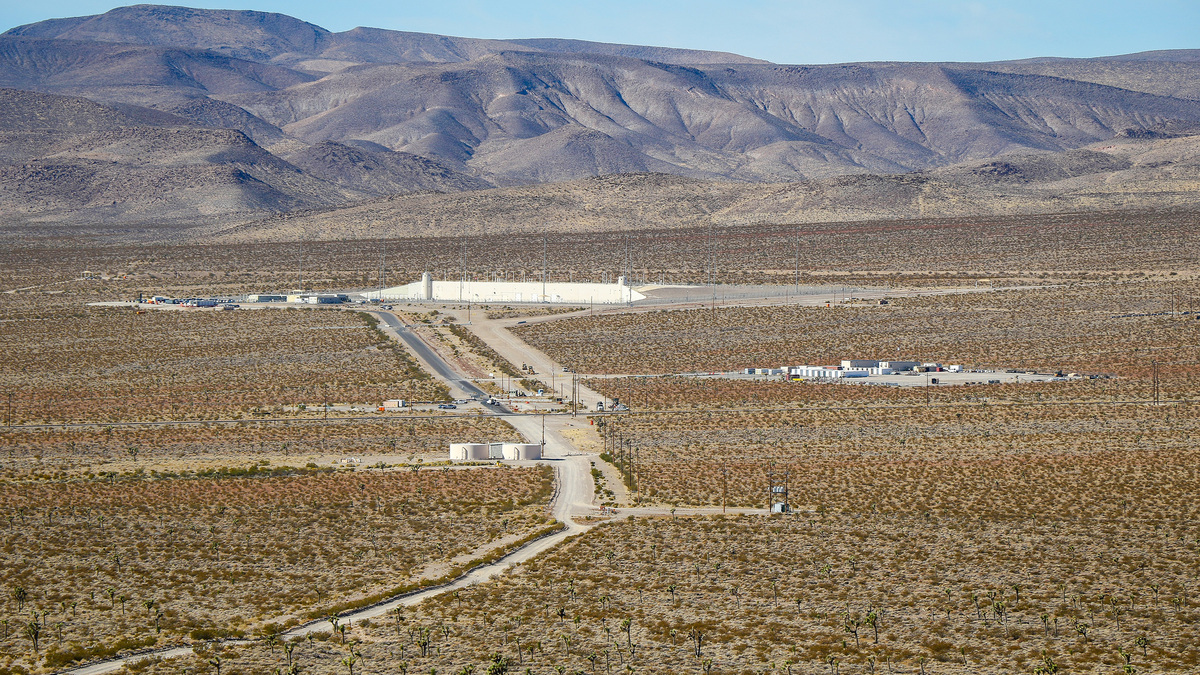
A facility at the Nevada National Security Site outside of Las Vegas has been used to perform testing on key components for very small nuclear reactors – a technology that some believe holds great promise for advancing energy production in the United States.
Read more Bullriding, roping and more. See photos as Sac-Town Rodeo returns for second year
Several companies around the world are now racing to produce what are known as microreactors. They are heat and power generators and are in the design phase in the U.S.
If they can be successfully built and operated commercially, the reactors could be produced in a factory and some would be small enough to fit on the back of an 18-wheeler, said David N. Ruzic, a professor emeritus at the University of Illinois.
They could also be deployed in rural, isolated locations or for military uses to produce heat and power, he said.
“I believe microreactors are the wave of the future,” Ruzic said. “They have several dramatic advantages over the standard nuclear power plants that are providing 20% of our country’s electricity.”
There are still a lot of questions about the reactors, however. Edwin Lyman, director of nuclear power safety at the Union of Concerned Scientists, said there is doubt about how viable microreactors will be over the long term largely due to cost concerns.
“There are no operating, power-producing microreactors,” Lyman said. “It is basically just a dream at this point.”
It now appears the Nevada National Security Site is playing an important role in testing components of microreactors.
The test site, with its long history of nuclear weapons testing, is where the federal government performed more than 900 such tests from 1951 to 1992.
Companies, often in partnership with government research labs like Los Alamos National Laboratory, have recently said they’ve been testing key components of microreactors at the National Criticality Experiments Research Center at the test site. The research center is operated by the Los Alamos lab.
The testing has involved what the companies and the Department of Energy call “zero power criticality testing” of components for the reactors. Zero power criticality testing is essentially a test to show that a reactor’s design is capable of sustaining a controlled nuclear chain reaction, which must be achieved before the reactor can generate power, according to the Department of Energy’s website.
Westinghouse Electric Co. said in a recent press release that it performed testing for a microreactor at the test site Aug. 24. The company describes the microreactor as what amounts to a small, nuclear-powered battery that could be deployed in off-grid communities, mining operations, strategic military outposts or oil and gas operations.
The product could produce power for up to eight years without interruption, the company has said on its website.
Los Alamos National Laboratory said July 30 that it completed a “high temperature, zero-power criticality demonstration” for a microreactor design at the research center at the test site from April through May.
Read more Mina Kimes Takes Issue With Aaron Rodgers’ Comment About His Wife
In November, the company Valar Atomics said it collaborated with the Los Alamos National Laboratory at the site to achieve zero-power criticality on its NOVA Core project.
Lyman said the tests at the test site are simply to prove that the core design of a microreactor is plausible.
“It means you are achieving a nuclear fission chain reaction, which means that essentially it is a self-sustaining nuclear reaction which is the basis for your power,” Lyman said. “But it would be operated at such a low level there would be essentially almost no power generated so it would not get hot.”
He said that while public relations campaigns by companies and the federal government are portraying microreactors as the next revolution in nuclear power, it remains to be seen if a viable microreactor will ever be produced because “the economics are bad.”
“The main obstacle here is cost,” Lyman said. “One of the reasons why nuclear reactors that power the grid today are as large as they are is because that reduces the cost of electricity generation because of economies of scale. The bigger the reactor the cheaper the electricity.”
He said when it comes to microreactors, “no one disputes the cost of producing electricity is going to be substantially higher than what it is for a large reactor.”
“Utilities aren’t champing at the bit to buy these things,” Lyman said. “They are trying to market them to these very niche applications where there are very few alternatives, like space flight.”
He said there is also a significant question about long-term safety.
“Because these reactors are so small and so expensive, it would make it even less economical to have the kind of safety systems large reactors have like containment structures,” Lyman said. “So these reactors, if they don’t have containment structures and if something did happen – and it is not impossible that it could – you could have a large release of radiation.”
Ruzic said the safety concerns are overstated. The reactors can be designed to shut down and cool autonomously, he said.
They could also be autonomous from the power grid and could eliminate the need to ship diesel fuel to power systems located in remote areas. He said multiple microreactors could be placed together, enhancing their production capacity.
“Many of these small modular reactors might do a couple hundred megawatts,” he said. “They are ideal to power a data center, for instance.”
He said when the large, traditional nuclear reactors are constructed, each is unique, increasing costs. With small modular reactors, manufacturers could mass-produce units in factories. He agrees the first ones to be built will be expensive, but he also believes over time the costs will go down.
“If it’s micro or small, you can build it somewhere else and bring it to the site where it is used,” Ruzic said. “That gives you better quality control and ultimately better economics because you can build a bunch of them.”
Read more How to Watch Florida State at No. 10 Alabama Football
_____
Copyright 2026 Tribune Content Agency. All Rights Reserved.
This story was originally published September 13, 2026 at 1:47 PM.