 By admin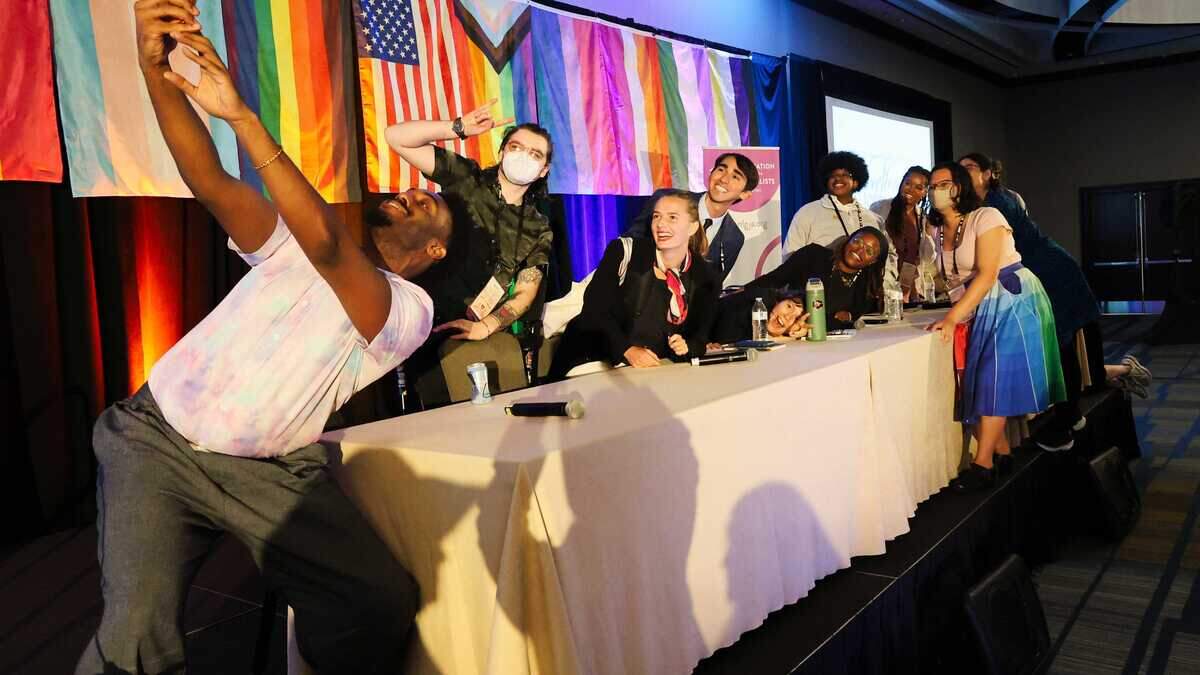
In 1992, a group of dedicated journalists gathered in San Francisco for the first National Lesbian and Gay Journalists Association convention. The event brought approximately 300 LGBTQ+ journalists from print and broadcast together in the name of civic service.
Read more Sacramento’s week-in-review: SMF parking fees, Auburn flock cameras and more
“(Gay and lesbian journalists) insist on being seen as professionals who have been in this business for years and years doing excellent jobs with high professional journalistic standards and that does not end just because you come out and be totally who you are,” said Leroy Aarons, founder of NLGJA and former editor for The Oakland Tribune, in a 1992 interview hours before that inaugural national convention.
Nearly 35 years later, the rebranded NGLJA: The Associate of LGBTQ+ Journalists returned to San Francisco Sept. 10, for its annual event. This year’s three-day convention was also an anniversary celebration of an organization that helped shape the careers and lives of past, present and future LGBTQ+ journalists from across the nation.
How journalists becoming the story changed the narrative
In the grand ballroom of the Hyatt Regency San Francisco, dozens of attendees at this year’s convention listened attentively as others recounted the history of an organization that changed the landscape of their profession.
Displayed on the ballroom’s two large screens was a new documentary featuring the voices of founders, board members, NLGJA staff and former members recounting the events that led to the organization’s birth.
Senta Scarborough, lifetime NLGJA member and board leader, directed and produced the documentary. Scarborough, who heads the journalism department at East Tennessee State University, said the documentary was a love letter to the organization and to the many LGBTQ+ journalists who have shaped history.
Scarborough said in making the project she realized that although journalists understand the power of storytelling, they struggle with telling their own stories.
“I felt like maybe this is a way that we could help humanize people in our profession, so they understand us better and can appreciate the importance of journalism,” said Scarborough. “Also appreciate the importance of diversity journalism and minority journalism, which is desperately needed in this country.”
It was the need for a change in narrative that prompted Aarons to create the NLGJA.
The era under which Aarons founded the organization was a fraught one. The HIV/AIDS epidemic was a global crisis, and systemic violence and hate crimes targeting the LGBTQ+ community persisted. Many journalists feared coming out for the sake of their careers and personal safety.
Scarborough said it was a difficult for Aarons to go against his journalistic instincts and “become the story,” but that decision led to major change.
During the first national convention, in a videotaped address to convention attendees, New York Times publisher Arthur Sulzberger, Jr., promised that the Times would offer domestic partner benefits. Less than two years later, nine other media companies followed his lead in offering health insurance and other benefits to same-sex couples. A year after the first convention, NBC agreed to a policy of nondiscrimination for LGBT employees.
Despite those changes, NLGJA published a report in 1995 revealing that most media professionals were “unimpressed with the quality and extent of [media] coverage of many gay issues.”
“The arc of the moral universe doesn’t bend towards justice unless we make it,” said Matt Rossetti, Scarborough’s co-producer and Assistant Professor of Journalism at East Tennessee State. “Unless people are fighting for what is just and right then the universe isn’t going in that direction. You need people who are constantly working behind the scenes to move that needle.”
NLGJA’s California roots
NLGJA’s rich history is rooted in California, particularly in San Francisco.
The Northern California Chapter is the organization’s oldest local chapter. Founder Aaron and a group of Bay Area reporters helped establish the Golden Gate City as the central meeting point for LGBTQ+ journalists and led advocacy efforts for journalists in more conservative newsrooms elsewhere in the country.
Read more California ‘home sales and prices rise.’ Where to find homes for as low as $270K
Elizabeth Manglesdorf, a founding member of NLGJA and founding president of the Northern California Chapter, said she was part of the small team that planned and executed the first convention.
“It was a huge event where we could be ourselves and meet people and gather and just enjoy each other. And that’s really what I remember about the first convention,” Manglesdorf said, now vice principal of Mt. Diablo High School in Concord.
Kelsi Thorud, president of the Northern California NLGJA Chapter, said the chapter was built in a city with a rich LGBTQ+ history which helped create a strong foundation for the organization.
Although there have been significant wins for LGBTQ+ equality since its inception, Thorud said the organization faces similar issues to those of 35 years ago, including a lack of representation for transgender and nonbinary journalists.
“You see maybe a lot of gay men or a lot of lesbians, but you don’t see as many trans people or bi[sexual] people,” Thorud said. “There’s a lot more room there for more inclusion, and that’s something that we’re trying to work on, especially in the NorCal chapter.”
Bethany Grace Howe, head of the Strategic and Development Committee of NLGJA, said so much time is spent pushing back on the political and cultural issues affecting LGBTQ+ communities that it is difficult for the organization to set its focus on internal growth.
“Here’s the truth: I’m a transgender woman, and I will meet people who identify as intersex or gender queer, and I screw it up because that, to me, is something I’m not familiar with,” said Howe. “I don’t understand the reality of those identities, and I want to, and I hope we get back to a time when we can focus on taking care of ourselves instead of just saving ourselves.”
Sowing seeds for the future
The organization has grown to over a thousand members and has developed a bilingual LGBTQ+ stylebook, established awards for LGBTQ+ coverage and created a rapid-response task force to address mainstream media bias or inaccurate coverage of the LGBTQ+ community.
NLGJA’s has invested in its commitment to the growth of student and early career journalists through scholarship opportunities, mentorship, virtual student conferences and through its CONNECT Program, a multimedia student journalism and leadership training project.
Eliot Faine, Peralta Community College District student and a fellow in the CONNECT Program said NLGJA has provided them a chance to be mentored by professionals in their community.
“This is something that we can see ourselves doing because we’ve seen them doing it,” said Faine. “And for as long as our paths are geared towards journalism, it’s great to see [mentors] working with us.”
Jazmin Chapman is a graduate student of the Pratt Institute in Brooklyn, New York and a participant in the CONNECT program. She hoped to use her privilege as an LGBTQ+ journalist to shine a light on underreported communities and in educating the next generation.
“There needs to be more visibility on marginalized people and intersectionality conversations or even just joy,” said Chapman. “Lifting up other journalism collaborations and really respecting and honoring all the journalists that came before us, and all they achieve, and taking the torch and moving forward with everything we know now, so we can support future young people coming into the field.”
Read more 1887 Victorian estate tied to the origins of UC Davis on the market