 By admin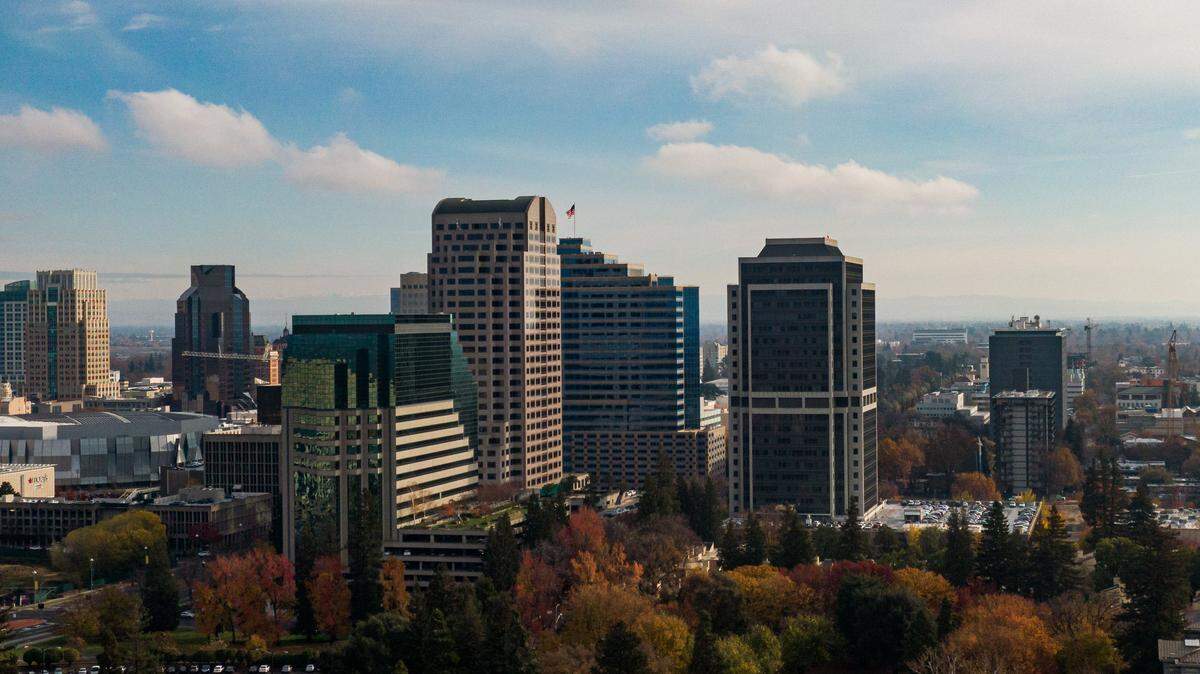
When commercial real estate broker Henry de Vere White shows properties around Sacramento, prospective tenants and buyers tend to ask the same three questions: How safe is the neighborhood? What’s the city doing to bring in business? And are workers returning to offices?
Read more Another delay for ACE rail expansion. What it means for Stanislaus, other areas
Answering that last question, he said, has been difficult of late.
You never know, he tells them. It’s being negotiated. He’s seen some office activity come back — still, it’s not near pre-pandemic levels.
State workers are the latest group scheduled to transition to greater in-person work in July. And in the six years since the pandemic forced California and other employers to embrace telework, Sacramento’s urban core, home to many of the state’s office buildings, has undergone fundamental shifts.
A handful of downtown business owners said in interviews they welcomed the expected return. It would bring new customers, energy and vibrancy to businesses and a district that has struggled since the pandemic.
Doing business downtown has come with a level of uncertainty for the past six years, as the pandemic dispelled the usual foot traffic and downtown employers and workers negotiated hybrid work. Several business owners said they were still skeptical that a return would materialize, after watching years of back-and-forth between the state and the unions that represent its employees.
“If they do come back, if they are for sure coming back — I’m not holding my breath — it will be great to see them,” said Kevin Fat, operating partner and CEO of Frank Fat’s on L Street. But, he added, “we’ve heard it before.”
The debate about the order, which is expected to affect around 95,000 California employees, has remained contentious. State workers are keenly concerned with the costs, not just financially, but also to the environment and work-life balance. The largest state workers’ union has sponsored a bill that would allow individual state agency leaders to establish their own telework policies, and a union representing state attorneys and administrative law judges have attempted to stop the process through the California Environmental Quality Act, the environmental law notorious for complicating housing development.
All the while, the dramatic shift to Sacramento’s downtown has inspired some broader reckonings, among local leaders, about how reliant the urban core had become upon office workers.
No one group should have to carry downtown on its shoulders, said Michael Ault, executive director of the Downtown Sacramento Partnership.
“The long term vision for downtown extends, for us, beyond just any one workforce,” Ault said. Still, he added, “I’m fully aware of the differing perspectives on return-to-office, but it’s a simple fact: The state workers are an important part of downtown’s identity.”
Anica Walls, president of SEIU Local 1000, the largest state worker union, said that while the group wants downtown to succeed, state workers shouldn’t be treated as a subsidy for struggling businesses.
“Decisions about telework should be based on operational need, evidence and value to taxpayers — not on whether workers can be used to increase foot traffic for nearby businesses,” Walls said in a statement.
Overreliant
Before the pandemic, there was a sense that Sacramento was on an upswing, said Fat, of the L Street restaurant. The Golden 1 Center was built, and expectations for downtown were high.
When the pandemic hit, he and other business owners launched into a world of uncertainty. He tried to reopen indoor dining, then stopped after about a month because of low foot traffic.
Over time, slowly, as people began returning to work at some of the downtown office complexes, he reopened indoor dining again with limited hours, this time vowing to remain open for good. He began gradually expanding the days and times.
Six years on, business hours are somewhat limited. The restaurant is open six days a week, instead of seven, and the late-night crowd has largely abated, he said. The estimated foot traffic in the district in April, based on cell phone data, was at 85% of the level of April 2019, per the Downtown Partnership.
Local leaders, witnessing the lasting changes to Sacramento’s urban core, have begun to reimagine the district’s future, and argue that it shouldn’t remain quite so dependent upon office space.
“It could be argued that, maybe, over the years, we were overreliant on office,” Ault said. “Office will always be the heart and soul of this district, but if we can do something to diversify — from education to hospitality to residential — and provide a mix of that, it kind of protects you from these times when the majority sector is impacted.”
Read more Folsom encampment cleanup could bring temporary traffic holds, trail closure
Councilmember Phil Pluckebaum, whose district includes downtown, said the needs of Sacramento’s urban core may look different now. It may benefit from more educational institutions — perhaps even beyond Sacramento State’s proposed downtown campus.
Pluckebaum said he endorsed Assembly Bill 1729, the bill which would allow state agency leaders to establish their own individual telework policies.
“The world changed,” Pluckebaum said. “We may not need as much the same kind of office space as we did a decade ago.”
The city doesn’t collect property tax on state-owned buildings, and that, coupled with the hit to sales tax revenues dealt by the lower foot traffic downtown, is a challenge for Sacramento, Pluckebaum said. And remaining in limbo for such a long period poses its own conundrum.
If the latest return-to-office effort doesn’t materialize, Fat, said he hopes there is a plan for the offices that go unutilized.
“Otherwise,” the restaurant owner said, “we’ll just be staying the way we are.”
A panacea for downtown?
On a recent weekday at Ernesto Delgado’s K Street restaurant, Mayahuel, most of the tables in the main dining room were empty at noon.
That wouldn’t have been the case, Delgado observed, in 2019.
When the pandemic began, the restaurant remained open, but went from 57 employees to three, including himself. Now Mayahuel has 46 employees.
Delgado feels a sense of ownership about Sacramento’s downtown. He leads a group of 20 to 30 people on weekly cleanups around his block on Thursday mornings, and the manager of a nearby hotel does the same on Tuesdays.
“We need to take ownership of issues that affect our city, our downtown, our block,” Delgado said. “We’re all here ready for them. We’re here ready to serve.”
The work of operating a business downtown has changed, some owners said. It’s required them to adapt.
The Crest Theatre on K Street now hosts a wider range of events, including podcast recordings and book signings.
Owner Robert Emerick wouldn’t have believed, in 2019, that an author could fill 900 seats, but now it happens regularly. And the theater has gained new customers and attention by offering $2 tickets on Tuesdays, which Emerick believes has appealed to inflation-weary locals. He estimated that business has returned to 75% or 80% of pre-pandemic levels.
Fat said his restaurant wasn’t making any changes in anticipation of the July 1 deadline. Emerick, the theater owner, said the latest push to bring workers back “didn’t even register” with him.
“I’d love to have them back, I really would,” Emerick said. “But you can’t plan on anything till there’s something to plan for.”
Ault, of the Downtown Partnership, said the latest return-to-office effort has sparked some “reserved optimism” among the property owners who are members of his organization.
“I think people are hopeful that: Is it a panacea that’s going to change everything? No,” Ault said. “But there’s more bodies and more energy and more people on the streets, and more eyes on businesses.”
Read more Police say Chico library shooting suspect wanted to carry out Columbine-style attack