 By admin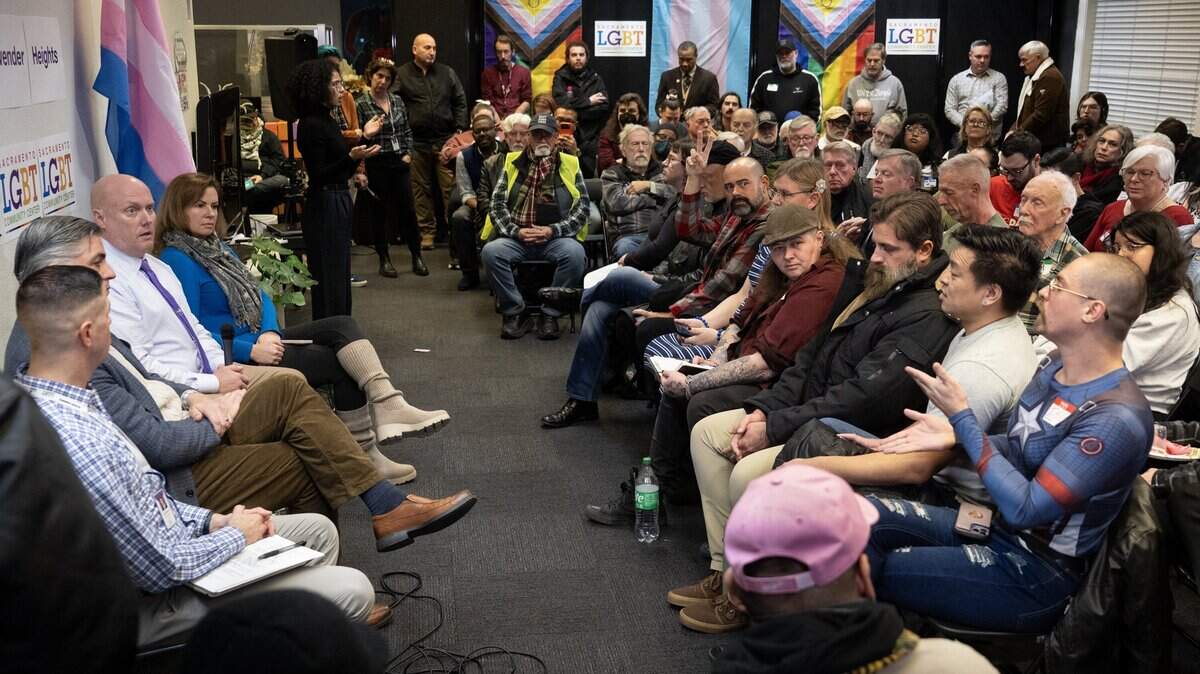
Still bruised and tender, Joseph “Joey” Sais returned to work at Sacramento City Hall two days after he said four men shouting homophobic and racist slurs attacked him outside a nightclub last weekend.
Read more Lost lumber load causes I-5 commute headache through downtown Sacramento
“My bruising is healing pretty nicely, but it’s at times hard to eat because my lip was so busted,” he said.
In the days since, the incident has sparked another round of reckoning with safety for LGBTQ people in Sacramento’s Lavender Heights neighborhood, which has seen a number of violent incidents in recent years. And it has brought new urgency to the topic, and some efforts are already in motion.
On the city’s end, officials promised improved lighting in that area and also positioned surveillance cameras at the intersection of 20th and L Streets. On Sunday, the annual Rainbow Festival returns from 11 a.m. to 10 p.m., celebrating with music, food and a theme of “Retro Rainbow.”
Sais’ connections to the community extend to his job with the city. There he is council liaison for Councilmember Eric Guerra. He also works with the Sacramento State Pride Center, advocates for the Sacramento Stonewall Democrats and has centered his education and career around advancing equity for queer people.
“I’m really proud of Joseph because when previous assaults happened in the neighborhood, he had just started in my office and he knew exactly how to respond and who to call,” Guerra said.
Sais describes what happened
Sais’ Saturday night out was initially a “great time,” he said. His friends pushed him to be bold and climb onto the platforms at Badlands nightclub typically reserved for professional go-go dancers.
“Everybody cheered me on,” he said. “It was a night I felt happy and elated and in community with everyone there.”
After another dance session at Faces across the street, Sais’ group headed south on L Street in the early hours of Sunday morning when Sais said four men started snickering at him and his pink jersey adorned with the f-slur, a word historically associated with violence toward gay men which has been ironically (and affectionately) reclaimed by those affected by it.
When the group started spitting the word back at him, he knew that he was not among peers.
Sais said he and his friends told the group to “f— off.” The situation then escalated faster than he could process.
He said the men chased him down, punched him several times and threw him on the ground as they yelled homophobic and racist slurs. He said his head hit the concrete and sometime during the scuffle, he lost his glasses. Sais later found them destroyed — he has since worn his prescription sunglasses as he waits for a new pair.
After his friend pulled off his attacker, Sais said he was chased to the Mercantile Saloon, dripping with blood. What happened next was confusing — Sais said that he thought he was being turned away when he asked security personnel for help, that they told him “they didn’t want that here.” In a later conversation with bar management, Sais said he was told it was a misunderstanding and that the security guards were directing their comments to the men going after him.
“It did not seem that way,” Sais said. “I don’t blame the Merc, but I’m a little frustrated that there was no humanity shown.”
But the men ultimately ran away and Sais said he no longer feared for his safety. He flagged down police and specifically requested a designated LGBTQ liaison officer, a program he was aware of through his work at the city.
Sacramento Police are investigating the incident as a felony assault with a possible bias motive, but no arrests have been made. Local officials said the case may be difficult to solve because of the lack of lighting and cameras in the area.
Local reaction
Sais’ attack spurred an immediate reaction among local leaders and activists.
“It is absolutely shameful that in 2026 we are still dealing with this type of harassment, targeting and prejudice and violence,” said Councilmember Phil Pluckebaum, whose district covers Lavender Heights.
Guerra said he was relieved to hear that Sais was OK but that the situation remained “very emotional.”
Read more Millions in special-ed bills put Sacramento City Unified, county office at odds
Sais’ attack, which did not result in life-threatening injuries, has for many called to mind the community’s most recent tragic loss due to violence.
Last Halloween, Alvin Prasad, 58, was left comatose after being brutally beaten outside of Badlands nightclub in an alleged homophobic attack. Prasad died from his injuries in late December, survived by two daughters and two granddaughters. He was posthumously honored as a grand marshal of the Sac Pride Parade this summer. Family members marched and accepted the recognition on Prasad’s behalf.
Sean Payton pleaded not guilty to charges of involuntary manslaughter in February and was since released. Payton, 25, awaits trial, according to the Bay Area Reporter and is scheduled to appear in court Oct. 1.
Prasad’s attack was the impetus for a serious conversation about LGBTQ safety in Sacramento’s historically queer neighborhood, but a December community meeting revealed tension between residents, business owners, police and local officials, who disagreed about tactics to reduce and address violence, particularly when it came to law enforcement’s role.
Safety for LBGTQ community
Although people can expect to see additional patrols in the area in the coming weeks, especially for this weekend’s Rainbow Festival, local leaders emphasize a community-driven approach over additional law enforcement presence.
“We’re sensitive to overpolicing so the best case is for the community to step up and say ‘we’re not going to take this anymore,’” Pluckebaum said.
Sais, Pluckebaum, Guerra and the Sacramento LGBT Community Center’s CEO David Heitstuman each spoke about a potential community watch program that could provide protective watch throughout the neighborhood on the weekends to more quickly address or ideally prevent instances of violence.
Heitstuman said that the LGBT Center is working with local businesses and community partners such as the Midtown Association to improve safety in the area. He is encouraging those who are wary of speaking to law enforcement to fill out a report through the center’s hate and bias reporting form on its website, and to take advantage of the many services they offer.
Cultural problems
Leaders like Pluckebaum, Guerra and Heitstuman see Sacramento as a diverse, welcoming city, but worry that outsiders—particularly people radicalized by increasingly bigoted online movements — could bring hostility into the neighborhood. Although there is no evidence that the attackers were from out of town, those interviewed for this story speculate that they were unfamiliar with, or indifferent to, the area’s history as a haven for queer people.
LGBTQ organizations also are losing material support due to downward pressure from the federal government, Heitstuman said.The LGBT Center let go of several employees this year due to the loss of federal grant funding, and he noted that this year’s pride parade saw a stark downturn in corporate support due to “precompliance” with President Donald Trump’s threats to institutions that support LGBTQ causes.
Guerra emphasized the importance of teaching younger generations about LGBTQ hate.
“If we don’t continue to discuss this, there will be another generation that feeds into all the hate they see on their phones,” he said.
Remaining visible is also critical, Heitstuman said.
“Don’t let this sort of incident curtail your queer joy,” he said. “Continue to live your life, refuse to go back into the closet or in some way diminish who you are out of fear.”
‘I’m still going to be dancing’
Until now, most of Sais’ advocacy work has happened behind the scenes. But the news of his attack deeply affected the queer community in Sacramento and thrust him into the public eye. He was largely numb to what happened until the story blew up. In the aftermath, he has felt both heartened by the support and chilled by the realization of how much worse the attack could have been.
“The level of support from everybody was amazing, all the people telling me how I touched their lives was endearing,” he said. “That’s what I love doing — giving back to the community. This was a moment where I felt the community gave back to me.”
Despite the trauma that comes with being assaulted on the basis of who he is (a self-described “queer, Latino, feminine man”), Sais said that he will not be any less out and proud.
“It’s shaken me, but it hasn’t destroyed me,” he said. “I’m still going to be in Lavender Heights, I’m still going to karaoke at Faces or Badlands, and I’m still going to be dancing.”
Read more Would CEQA changes apply to data centers under Prop. 45? Experts remain unsure
This story was originally published September 4, 2026 at 10:35 AM.