 By admin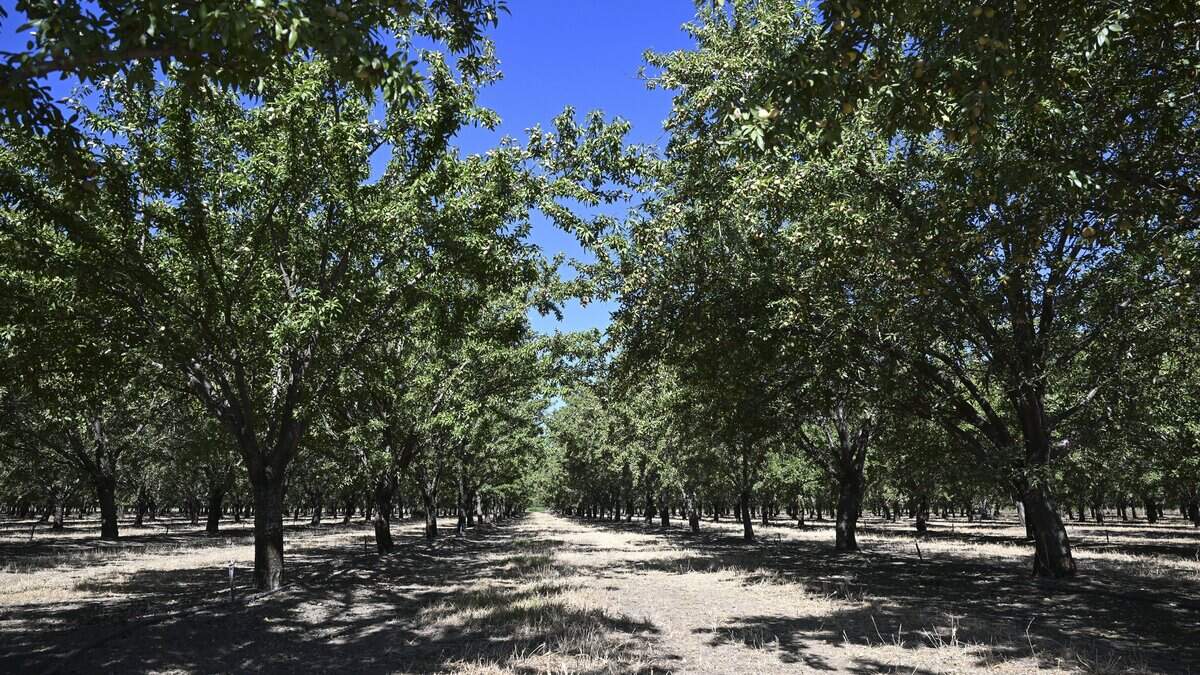
When Del Monte closed its Modesto cannery in April and cut ties with its contracted growers, Hardeep Bains lost around $300,000 of annual income. Spread over the length of his 15-year contract, that translated into a loss of about $4.5 million in potential earnings.
Read more Sacramento is transforming from the City of Trees into the City of Fees | Opinion
Instead of making money, Bains spent $8,500 to pull out his 30-acre Yuba City clingstone peach tree orchard and another $9,600 to rip the soil.
The money is coming out of his own pocket, he said, because when he lost his Del Monte contract, his bank also cut his loans for production. The canning peach industry faces challenges as consumer demand wanes with the greater availability of fresh fruit. The cling peach variety is typically not sold fresh.
Bains is pulling funds from his other crop yields: around 650 acres of pistachios, prunes and almonds. But even the prune trees are being taken out this year since he said he is no longer making money from them. From a financial perspective, Bains said he’s lucky he owns his ground outright.
He decided to dig into his own pocket further to buy a new nursery of almond trees for about $42,000. He made the decision to plant almonds because he wanted a commodity that didn’t require too much labor or input.
“As of right now, if you plant almonds, there are plenty of companies that will give you contracts for them,” Bains said.
Hundreds of acres of bulldozed trees, 70 cancelled contracts and an estimated $550 million lost later, some former Del Monte peach growers such as Bains are betting on almonds trees as their next move. Many Yuba-Sutter area farmers, who make up most of the canning peach growers in the state, are adding to their existing almond and other tree crop acreage. The almond trees are a newer self-pollinating variety called Yorizane, which require less labor and costs. While industry uncertainty still looms large, the growers hope these benefits, on top of a more stable almond market, will lead to returns.
The new almond supply is being added at a time when the state’s overall acreage has declined for four consecutive years. Within the last decade, California’s $5.6 billion almond industry saw supply outpace demand, which contributed to a drop in .
As with various commodities in the state, almonds have not been immune from factors such as consumer spending declines as a result of inflation and President Donald Trump’s tariff wars. Almonds are California’s highest valued export,
The state’s largest almond producer, Blue Diamond, is whittling down its Sacramento-based operations while still maintaining a significant presence in California.
Some almond growers in the southern Central Valley are pulling out thousands of acres of the highly water-dependent orchards, according to from the Almond Board of California and Sacramento-based agriculture industry data provider Land IQ. Farmers face water restrictions from the Sustainable Groundwater Management Act, or SGMA. The law is part of the state’s plan to limit groundwater usage in order to rebuild the supply after decades without pumping restrictions. Communities and farmers were pumping out more groundwater than nature could replenish.
Although the Sacramento Valley grapples with its own groundwater challenges, growers in the Yuba-Sutter area tend to have greater access to water due to nearby rivers fed annually by rain and snowmelt.
Like Bains, Raj Takhar, a small Yuba City grower with around 150 acres of owned and leased land, lost a $300,000 long-term annual contract with Del Monte.
Takhar’s 20 acres of cling peach trees were on leased land and had only been in the ground for about three years — not long enough for him to see any revenue.
He’s now planted almonds where his peaches were because he said the nuts will produce faster than other commodities and the buyers are there.
But Takhar already considers himself six years behind — the three years he spent taking care of the peach orchard and the three years he will spend waiting for the almond orchard to produce. He dug into his savings to spend tens of thousands of dollars switching from peaches to almonds. Canning peaches were viewed favorably by farmers because they are one of the few crops where growers get paid quickly for what they sell.
Takhar, who has a day job separate from farming, said he’ll likely sell his almonds to the same processor he uses for his six-year-old, 40-acre almond orchard.
“I have long-term leases, and I got to try to make fast money because they want their percentage also,” said Takhar, referring to the landowners he leases from. “They’re upset too because they went with us, and peaches are supposed to be quick money and then this happens.”
Peach, almond production levels
Canning peach production in the state took a significant, yet anticipated, hit this year following the Del Monte cannery closure.
The amount of canning peaches processed this year is expected to drop 29%, or roughly 61,000 tons, compared to last year, according to Pacific Coast Producers, the only major buyer and processor of California cling peaches left in the state. The company said in a statement that the total harvest is expected to come in around 150,000 tons.
Del Monte’s bankruptcy led to 50,000 tons of canning peaches without buyers in the Central Valley. Between 2024 and 2025, canning peaches saw a roughly 7% reduction in tonnage processed.
A tree pulling program seeded with $9 million from the U.S. Department of Agriculture and $1.5 million from the California Canning Peach Association began accepting applications this month. It is expected to save farmers millions of dollars in losses.
On the almond side, from 2024 to 2025, Sutter County saw a roughly 7.4% increase in producing almond acreage but a 3.22% reduction in overall value due to a decline in production per acre, according to the 2025 Sutter County Crop and Livestock Report released this month.
Read more Sacramento headlines this week: HeroRats, SCUSD budget crisis and more
Harbir Singh, who is a sales representative for Dave Wilson Nursery, has seen an increase in almond tree orders since the Del Monte bankruptcy. Singh works with Sacramento-area growers and also sells various cling peach tree varieties.
Other than almond trees, he knows growers planting pistachio orchards (a tree not sold by his nursery), with other farmers leaving their cling peach orchards in the ground with the hope that Pacific Coast Producers can award them contracts next year.
Harinder Dhanota, who farms a few hundred acres of owned and leased land in Yuba and Sutter counties pulled out 90 of his 100 acres of canning peaches, with the remaining orchard contracted to Pacific Coast Producers for this year. Thirty of those 100 acres was leased ground, which Dhanota said he lost when he couldn’t secure a contract.
While his business will likely remain downsized, he has already replaced 20 acres of peaches with almonds, adding to his existing 100 acres of the nut. He said he will plant another 40 acres next year. It will be more difficult to maintain his almond crop, Dhanota said, because he doesn’t have revenue coming in quickly from the peaches.
“It is getting harder and harder with the costs in California” to be in the agricultural industry, Dhanota said.
Moving forward
Growers who are moving on in the wake of the Del Monte collapse are experiencing a slew of emotions ranging from hope to despair.
Some farmers feel animosity toward the peach association for not getting ahead of the Del Monte bankruptcy and for not doing more to help farmers now that the damage has been done.
Rich Hudgins, president of the California Canning Peach Association, said it is a “situation no one is happy with.” If there had been a path forward that led to a better outcome, he said the organization would have taken it.
Growers worry about the complete consolidation of the canning peach industry. They also worry if all former Del Monte growers will make it in the agricultural sector as they wait for almond trees to produce.
Despite lingering tensions and uncertainty, members of the community have come together to support one another and are optimistic about the almond crop.
Yuba-Sutter grower Rob Bains has a land development and custom farm work business and is shouldering hundreds of thousands of dollars in costs for former Del Monte farmers until they get paid through the tree pull program. His friend, Scotty Olhiser, is donating his time to help with the removal, which keeps the costs down for growers. Rob Bains, who is not related to Hardeep Bains, grew around 150 acres of peaches for Del Monte — nine of which are left for Pacific Coast Producers — and partnered with other growers on hundreds more acres.
His primary business is in almonds — farming, shelling and packing several thousands acres. That’s why the Del Monte loss for him, which is millions of dollars, was more of a “pain in my side,” he said, versus a huge loss as it has been for smaller growers.
Rob Bains has already planted more almonds in place of canning peaches, with other fields left fallow for now as he considers what he can afford.
“It’s a scary time,” Rob Bains said. “…We are suffering as a community, but we are doing alright. We are survivors. That is all we know how to do.”
Rob Bains bought his new trees from Paul Hundal, the owner of Tudor Trees Nursery in Sutter County.
Hundal has advised former Del Monte growers to plant almond trees. The market is more stable, he said, especially as more orchards come out down south due to SGMA.
He’s offering discounts to former Del Monte farmers — 60 cents off a $9.65 tree. Included in that purchase is his free agronomy service for one year, he said. He has seen his almond tree sales pick up as his cling peach sales have dropped off.
“I tell (Del Monte growers): ‘It’s hard. I never wish what happened to you, but you’re going to be better off,’” said Hundal, who launched his nursery in 2008.
One grower’s future
Hardeep Bains’ almond trees will arrive in December or early next year. Once planted, the tree maintenance costs will continue coming out of his own pocket without any returns for the few years it takes the trees to produce.
While he knows what the almond market looks like now, Hardeep Bains wonders what it will look like when the trees start fruiting enough to sell. It’s a gamble that farmers make regularly when planting new commodities.
Even though he is betting on almonds right now, he may hang up the towel soon. He said he told his kids he would “never” let them get into farming as a primary income.
“I don’t want to do it anymore,” Hardeep Bains said. “I am looking for a way out myself.”
Read more Kyle Shanahan takes big step in his return from car accident in 49ers practice