 By admin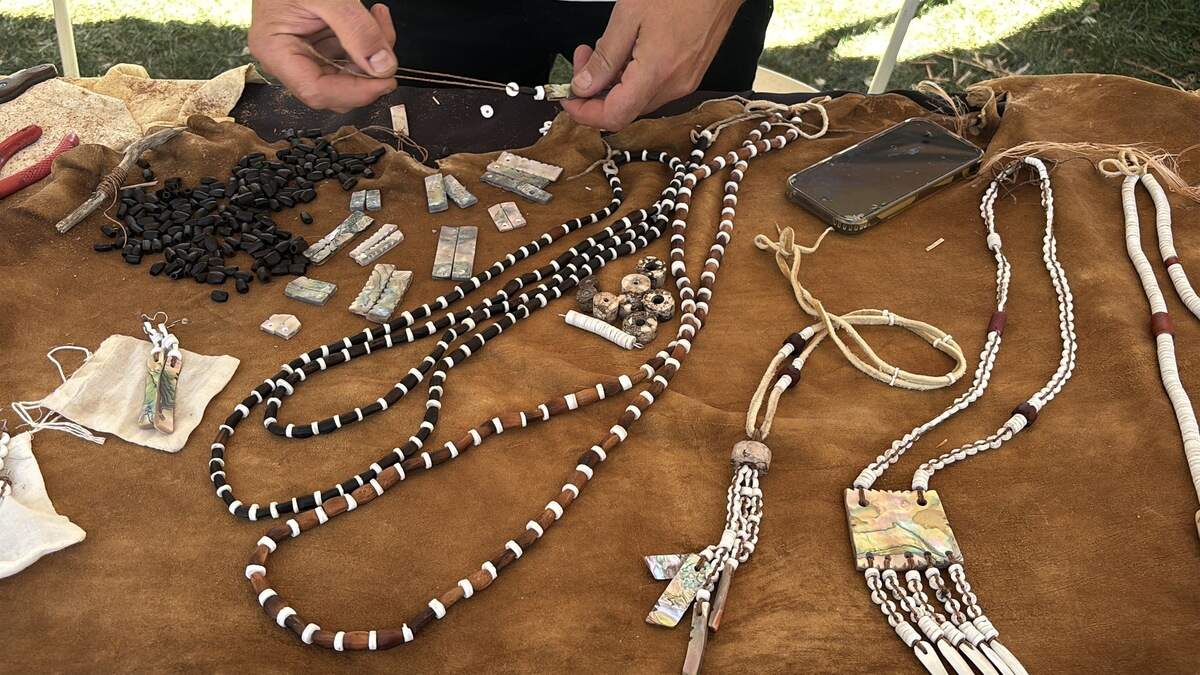
Tribal community members from across California are gathering this weekend on the Shingle Springs Band of Miwok Indians’ land for an annual summer celebration, in which non-native folks are invited to join in.
Read more After Del Monte, these California peach growers turn to almonds as next cash crop
The tribe’s 38th annual Lumáy, known in English as Big Time, got underway on Saturday, with a weekend full of cultural learning, traditional dancing and familial connection on the schedule.
Native American tribes across California have hosted Big Time gatherings for millennia, creating a space for the communities to pray together, find spiritual and physical healing, trade and sell goods and meet up with old friends and family members.
In Placerville, the Shingle Springs Band has hosted its Big Time at the end of the summer for nearly four decades. It is one of the few times that non-native members around the Sacramento area are welcome to immerse themselves in the Miwok, Nisenan, Maidu and other Californian tribes’ traditions.
“It’s very exciting, because we’ve invited probably 20 different tribes … to come here and pray,” said Malissa Tayaba, vice chair of the Shingle Springs Band’s tribal council. “I enjoy (non-Native) visitors, and this is the day that you would come, the weekend that you’d be able to see it all.”
The free Big Time festival continues Sunday with dancers, vendors and traditional cultural demonstrators at the Shingle Springs Rancheria.
Doing ‘good medicine’ for the community
On Saturday, the gathering’s 38th iteration opened with a crew of dancers performing traditional Native dances to welcome the greater Native Californian community to their event.
Tribal members from up and down the state, filled the Shingle Springs Rancheria for Big Time. Many had not seen each other in years or didn’t know each other but found common relatives or friends, and dove into conversation.
“That’s probably the root of the whole event: it’s about family,” Tayaba said.
A central facet of Big Time celebrations is the dancing. From 9 a.m. until past midnight, dancers and musicians from a variety of tribes and Indigenous backgrounds perform their “good medicine,” for event-goers, Tayaba said.
Decked out in regalia featuring feathers, jingles, beads and colorful fabrics, these dancers from across Californian and North American tribal communities did prayer ceremonies in the Shingle Springs Rancheria’s open-air dance circle.
“It’s a very special time where all of our families get together to pray for our families, for our future generations, for our elders, and mostly Mother Earth,” Tayaba said. “For all of her beings, not just for Native people, but for everybody.”
Not every tribe’s Big Time event is open to the non-native public, and Tayaba said the Shingle Springs Band’s decision to open its gates for the weekend-long celebration was “really hard” yet important.
“We really have to walk in these two worlds … (for) people who actually support the tribe, this is one of the opportunities where we can invite them to see our culture,” she said. “It’s just part of who we are and where we come from, so the rest of the world needs to know that.”
On Sunday, dancers and musicians from various Miwok, Pomo and Patwin tribal dance groups will continue their ceremonies at the Big Time event, as well as the Kalpulli Maquilli Tonatiuh Aztec dance troupe.
Honoring ancestral practices in modern days
Cultural craft practitioners lined the festival’s central walkway, with displays, live demonstrations and interactive activities helping teach attendees about centuries-old techniques for making everyday items.
Handcrafted beads, baskets, tools, weapons and even the string used to hold all of them together were represented by crafters from across California tribes.
Carson Bates, from the Northern Sierra Miwok tribe, has brought his Native cordage — or string-making — work to the Shingle Springs Band’s Big Time for about four years. Using dogbane wood, which is detoxified by drying it out, he carefully folds and peels the stems to extract the stringy outer layer.
Read more Sacramento is transforming from the City of Trees into the City of Fees | Opinion
By rolling up the wood strings into rope-like cords and sealing them with pure beeswax, they become an apt base for jewelry and other beadwork, as well as a strong rope for more practical uses.
“People that haven’t seen (cordage) before, they’re usually pretty interested,” Bates said. “I think it’s good to demonstrate it and show that we’re still doing it.”
Dixie Rogers and her mother, Claudia Rogers, traveled from the Karuk tribe in the Klamath Basin to share their hand-woven basketry and other goods. This is the first year the pair have been to the Big Time in Placerville.
Donning earrings and a necklace she wove herself, Dixie Rogers spoke to visitors in English and in Karuk language about her craft and the ways her tribe uses the native fauna of northwestern California to create sturdy, yet beautiful goods.
“It’s beautiful to see so many California Natives here … inspiring future weavers,” she said.
More than 90 Native vendors also sold a variety of traditional and modern goods alike. A booth with beaded and abalone shell jewelry sat directly opposite a booth selling butter-shaped squish toys.
According to Tayaba, vendors were historically a crucial part of Big Time events. Attendees would purchase new furs, beads, shells, feathers and fibers for the traditional regalia pieces they had been working on for years.
“That’s what Big Time is all about,” Tayaba said. “It’s an event that will go on forever, because it’s the same ceremonies that our elders were doing since time immemorial.”
Providing critical access to communities
In addition to celebrating ancient tradition, the Shingle Springs Band Big Time grounds itself in external affairs by educating Native community members about resources that can help them navigate the rest of the world.
Local Indigenous organizations supporting health, education, cultural connection and domestic abuse awareness, among other causes, provided information and resources to visitors who needed them.
At the Shingle Springs Health and Wellness Center booth, medical professionals like Claudia Stickman, a public health nurse with the wellness center, educated adults on common diseases like colorectal cancer, high blood pressure and diabetes. Next to her, kids learned how to properly brush their teeth and fuel their bodies as they grow.
“I think of it like, I’m not a mechanic, I learn as I go,” Stickman said regarding the importance of meeting Native community members where they’re at with health knowledge.
How to get to Shingle Springs Band of Miwok Indians Big Time 2026
Big Time is hosted at the Shingle Springs Rancheria, at 5281 Honpie Road in Placerville.
Signs along the roads entering the rancheria point attendees toward the Big Time festivities, where there is ample parking. Disabled and elder visitors can park in a separate, closer area with less of a walk to the festival setup.
Attendees can also park at Red Hawk Resort and Casino, 1 Red Hawk Parkway in Placerville, where there are free shuttles available to take visitors right to the celebration’s door.
“I hope that when they leave, (attendees) know that they’re loved, and that they have a space to come and get rid of whatever is bothering them, and then also energizing them with these songs,” Tayaba said. “Hopefully, they feel better when they leave here.”
Read more Sacramento headlines this week: HeroRats, SCUSD budget crisis and more