 By admin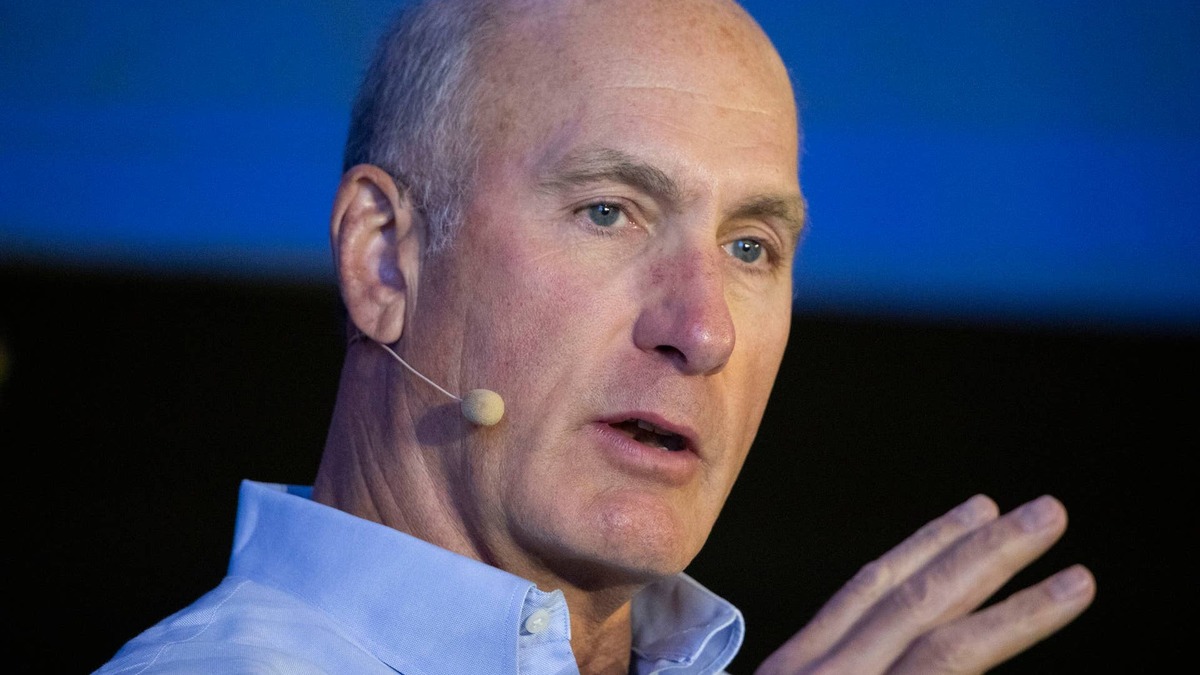
There are only a handful of industries in America where the infrastructure advantage is so deeply embedded that new competitors, regardless of their capital or tech, face a decade-long climb to approach parity. Telecom is one of them.
Read more Germany hunts Islamist suspect after Berlin Pride crowd ramming
But SpaceX’s Starlink is not a typical competitor. And AT&T (T) CEO John Stankey knows it.
Stankey appeared on CNBC’s Squawk Box on Wednesday, July 22, to discuss AT&T’s strong second-quarter results and field questions about the satellite threat directly. And his answers were measured, confident, and revealing.
AT&T closed the week on Friday, July 24, at $24.13, up 5.10% on the session following earnings, according to Yahoo Finance. The company reported Q2 revenues of $31.6 billion, up 2.3% year over year, and announced an accelerated $10 billion share buyback program for 2026.
Stankey’s core message on Starlink was that competitors are welcome. Yes. But they are arriving very late to a party that AT&T has been hosting for decades.
Also Read: History of AT&T: Timeline and Facts
What AT&T CEO actually said about Starlink – the infrastructure argument
Stankey did not dismiss satellite competition. In fact, he contextualized it in a way that tells you how AT&T thinks about the threat internally.
There are going to be new competitors, and they’re going to be folks that come in. But the reality is that they’re coming to the game very late after this industry has been established.
Stankey continued on Squawk Box. “They have to catch up with substantial amounts of infrastructure investment that’s been going on for decades inside hospitals, on university campuses, in stadiums, in tall buildings.”
That last sentence matters the most, and here is the reason why. Indoor coverage is the problem satellite cannot solve with the same economics as terrestrial networks.
More AT&T:
- AT&T stock price target cut puts dividend investors on alert
- AT&T may be left out of the Starlink deal everyone wants
- AT&T leaves rivals flat-footed as bankrupt carrier folds
Every high-rise apartment building, every hospital basement, every stadium concourse represents infrastructure that Starlink cannot serve from 340 miles above Earth.
AT&T handles more than 98% of traffic generated by its converged customers on terrestrial networks today, according to the Interview.
Satellite addresses the remaining fraction of time a customer walks off-grid. In fact, Stankey says AT&T will address that by next year through the partnerships they’ve already established.
Related: AT&T may be left out of the Starlink deal everyone wants
The scale comparison supports Stankey’s confidence. AT&T generated $31.6 billion in revenue in Q2 alone. According to a Reuters report, Goldman Sachs projected full-year 2026 Starlink revenue is approximately $15.6 billion.
AT&T notes that it has more than 100 million U.S. consumers across mobile and broadband. As noted by Idem Est Research & Advisory, Starlink has approximately 12 million globally, as of June 2026.
The wholesale strategy and why AT&T is not signing with Starlink as a main partner
Stankey drew a specific line on wholesale network agreements that has direct implications for how AT&T approaches Starlink and the broader satellite ecosystem.
Read more India PM Modi announces panel to overhaul exam system after protests
We do wholesale agreements when we think there’s a part of the market that we can’t address with our distribution, our brand and our product.
In U.S. suburban and metropolitan markets, AT&T can address those customers itself. The U.S. is also more disciplined than European markets, Stankey noted, precisely because American carriers have “very robust distribution, very well recognized brands, very pervasive infrastructure.”
Rather than a bilateral deal with any single satellite operator, AT&T prefers a consortium approach.
Related: Oppenheimer downgrades AT&T stock on SpaceX threat
“We want to partner with everybody in the satellite ecosystem,” Stankey said, explaining that aggregating volume across multiple low-Earth orbit constellations, including AST SpaceMobile, Amazon Kuiper, and SpaceX, gives AT&T coverage for the small percentage of off-grid traffic at economical pricing without creating dependency on any single provider.
This matters for investors tracking the AST SpaceMobile story, which I covered when Cramer called it a buy for the two-year horizon. AT&T’s consortium framing suggests the relationship is complementary but not exclusive, which limits both the upside and the risk for either party.
Kevin Carter/Getty Images
AT&T’s Q2 results and the buyback signal
The financial performance underneath Stankey’s July 22 Squawk Box commentary was genuinely solid, according to AT&T’s earnings release.
- Revenue of $31.6 billion, representing growth of 2.3% year over year
- Adjusted EBITDA reached $12.3 billion, up 5.2% year over year.
- Free cash flow was $4.7 billion, up from $4.4 billion.
- Advanced Connectivity service revenue of $23.5 billion grew 5.1%, with Advanced Connectivity operating income up 20.3%.
- Added more than 646,000 total internet net adds, including 367,000 fiber and 279,000 fixed wireless. Postpaid phone churn was 0.86%.
The $10 billion buyback acceleration is the number that sent the stock up 5.10% on the last session of the week. AT&T returned $4.1 billion to shareholders in Q2 alone, including $2.2 billion in common share repurchases.
The company is also on track to reach 40 million total fiber locations by the end of 2026 and 60 million by 2030, according to the same statement.
On the consumer side, my colleague reported that AT&T is raising prices by $5 per month for fiber and copper internet plans, starting August 16, targeting customers established between June 2024 and July 2025.
Price increases alongside volume growth are the combination that drives the margin expansion embedded in the Q2 results.
Also Read: AT&T Inc.Latest News and Stories
AT&T is up 0.64% year-to-date but has returned 89.07% over three years, according to Yahoo Finance. The stock had been range-bound for much of 2026 as investors debated the satellite threat.
Stankey’s direct engagement with that question, paired with a buyback acceleration and strong free cash flow, is why the Friday, July 24 session looked the way it did.
Related: AT&T quietly raises prices again as customer behavior shifts
The Arena Media Brands, LLC THESTREET is a registered trademark of TheStreet, Inc.
Read more Kyiv hit with missiles; Russia and Ukraine both report civilians killed in strikes
This story was originally published July 26, 2026 at 8:03 AM.