 By admin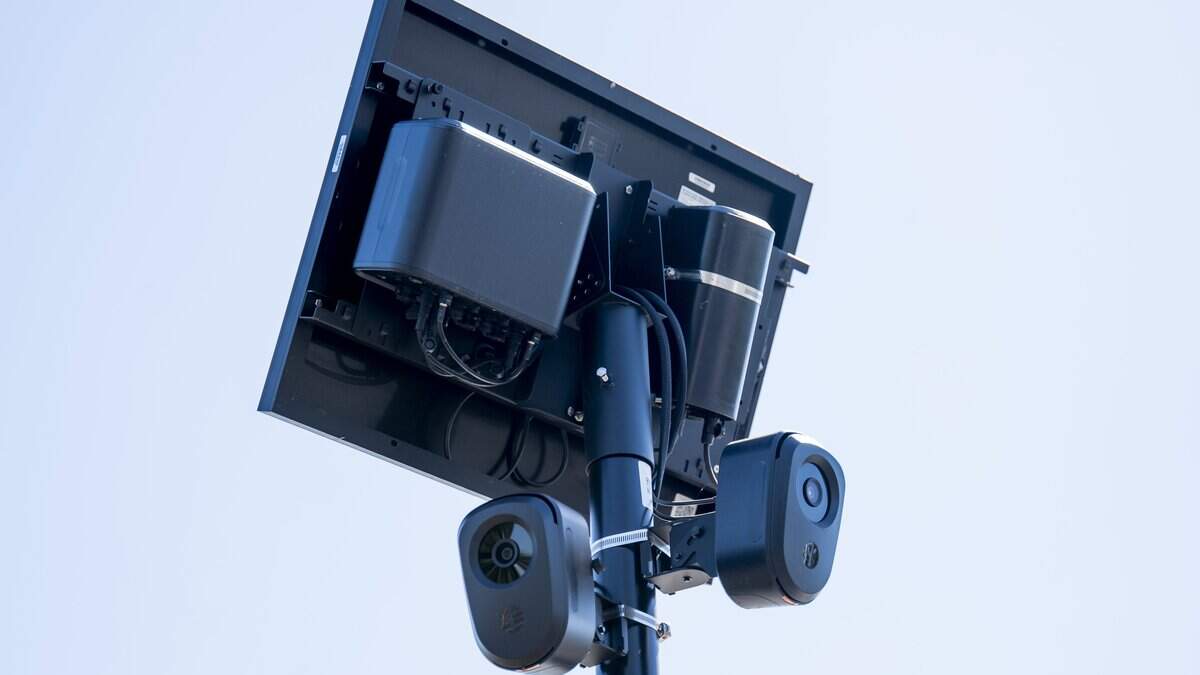
The Auburn City Council unanimously voted Monday to delay a decision on whether to continue using the city’s 12 Flock Safety license plate reader cameras amid concerns about privacy, data sharing and oversight.
Read more Cuban man ‘fortunate to be alive’ after floating on foam raft off Florida, feds say
The council voted 5-0 to gather more information and survey residents before deciding whether to keep the cameras, impose additional restrictions or terminate the city’s contract with Flock Safety. The cameras remain in operation.
A major concern involved the number of outside law enforcement agencies with access to Auburn’s license plate data. According to an Oct. 1 report from the Auburn Police Department, the city shares its data with 274 agencies and receives data from 197, including 180 agencies with reciprocal sharing agreements.
Council members also questioned how the city can prevent unauthorized sharing when software updates can change the system’s settings. A previous change in data-sharing settings went unnoticed by police until it was discovered through a public records request, according to comments at the meeting.
The debate came as other capital region communities reconsidered their use of Flock cameras. Folsom officials said last month that the city planned to discontinue using Flock’s technology, while the Grass Valley Police Department indefinitely suspended its use of the cameras in August following complaints from residents.
Auburn’s vote followed a Sept. 21 community town hall focused on the technology, where many residents expressed opposition to its continued use.
Councilmember Bridget Powers said she had spoken with residents who supported the cameras but had not yet met with opponents or had enough time to examine the Police Department’s responses to their concerns.
“I feel too rushed,” Powers said. “I feel like if we’re going to make a decision, we have to make a decision where the community is involved, both sides of the community, the chiefs involved, and and the city council, and we have more information.”
Mayor Kelley Davis agreed that the council needed more time, saying many residents do not attend public meetings or follow council agendas. She supported surveying the community before making a decision.
“We’re taking this consideration very seriously because we want to do it right,” Davis said.
Earlier this year, three of Auburn’s Flock cameras were stolen after someone disabled the devices and dumped them in a canal, according to previous Bee reporting.
At Monday’s meeting, Police Chief Bryan Morrison answered questions about the automated license plate reader system, which police say has helped expedite approximately 230 investigations involving stolen vehicles, violent crimes, burglaries, hit-and-runs and missing people.
The cameras photograph passing vehicles and record license plates and vehicle characteristics. Police use that information to identify vehicles connected to investigations, but critics have raised concerns about collecting and sharing information about people who are not suspected of crimes.
The department reported that 33 personnel have access to the system, including 21 full-time officers, eight professional staff members and four reserve officers. Five administrators, including Morrison, two lieutenants, an administrative sergeant and the communications supervisor, are authorized to approve data sharing.
» Roseville news in your inbox: Get our free Roseville email newsletter here
Auburn’s sharing arrangements do not include federal or out-of-state agencies, according to the department’s Oct. 1 report. But council members questioned how the city can ensure that other agencies properly handle the information once they gain access.
The department also shares license plate data with the Northern California Regional Intelligence Center, which analyzes information across jurisdictions to identify potential threats. The department said the center follows law enforcement information requirements and a 30-day data retention policy.
The department also said Flock does not directly connect to restricted law enforcement databases, including Department of Motor Vehicles records, the FBI’s National Crime Information Center or California’s Automated Criminal History System.
Questions about privacy and oversight
Council members questioned whether software updates could change data-sharing settings or introduce new capabilities without sufficient notice, and how the department detects potential misuse.
Katie Dauphinais, a public affairs specialist for Flock, said vehicle data is permanently deleted from the company’s cloud system after 30 days.
“After the 30-day rolling period. So your retention period is 30 days. After 30 days, that data is deleted. On the 31st day,” Dauphinais said.
The department said neither it nor Flock can access the information after deletion. Dauphinais said the deletion occurs automatically through the company’s cloud system and offered to provide council members with technical documentation explaining the process.
Morrison acknowledged that the department needs more formalized audits and updated policies to strengthen accountability.
The department’s written report said audits occur every 30 days and that users must provide a reason and case or incident number for each search. Morrison said the department is working to implement a more formal audit process.
Read more Hand battered and double fried: Korean fried chicken spot opens in Roseville
Auburn police also lack an efficient way to measure how often the cameras incorrectly identify license plates or vehicles, according to the department’s responses to questions raised at the September town hall.
Auburn has asked Flock to add a feature to track incorrect readings. Currently, when an alert is determined to be incorrect, dispatchers and officers communicate verbally, dismiss the alert and resume their duties.
The department is also evaluating a feature that allows users to suppress license plates that repeatedly trigger false alerts.
Police defend the cameras’ value
Morrison defended the technology as an investigative tool that helps officers identify vehicles associated with crimes, locate missing people and pursue leads more quickly.
The department said the roughly 230 investigations included 29 stolen-vehicle cases, 27 violent crimes, 14 burglaries, 11 hit-and-runs and 11 missing-person cases. Its presentation did not provide a complete breakdown or specify how many resulted in arrests or other outcomes.
Morrison said the system also helps investigators quickly rule out vehicles that are not connected to criminal activity.
Public comments largely opposed continuing the contract, with residents urging the city to remove the cameras and adopt stronger rules governing surveillance technology.
Bella Dolan, a part-time Auburn resident, questioned why the city needed to collect information on drivers who were not suspected of crimes.
“I value my right to privacy. I don’t want my movements systematically tracked every time I drive down a public road without my consent or a warrant,” they told the council. “Why should the entire population have to surrender their privacy because of the actions of just a few criminals?”
Councilmember Sandra Amara acknowledged those concerns but said the technology could help police identify criminals and protect residents.
“From my perspective, I want to sit here and keep our community as safe as we can be,” she said.
Amara also supported stronger safeguards and oversight if the city continued using the cameras.
What happens next for Auburn’s Flock cameras?
The city’s contract with Flock Safety runs through June 2028 and costs approximately $30,000 a year.
Terminating the contract early would cost at least $6,000, based on a fee of $500 per camera, although the final amount remains subject to confirmation from Flock.
The Police Department has an existing policy governing license plate reader use, but the City Council has not adopted a separate citywide policy for the technology.
Council members discussed stronger rules for data sharing, storage, training and oversight, along with a possible community advisory committee.
Councilmember Rachel Radell-Harris expressed reservations about continuing the city’s relationship with Flock and said Auburn should review the privacy policies of every agency receiving its license plate data to ensure they meet minimum standards for handling the information.
Radell-Harris also called for a community survey, questioning whether opposition at council meetings represented the views of all Auburn residents.
“I don’t want to ignore the folks that have very strong feelings on this topic, but I want to make sure that they’re representative of the entire community,” Radell-Harris said.
“I hate to keep kicking the can down the road,” said Councilmember Alice Dowdin Calvillo. “But this is really important, and we need to get it right one way or the other.”
Interim City Manager James Lindsay said the issue would not return at the next council meeting and that staff would provide a timeline after assessing the additional work required.
This story was originally published October 13, 2026 at 2:25 PM with the headline “Auburn delays decision on Flock cameras amid concerns over police data sharing.”
Read more Brawling teens overwhelm officers, force NC fair to close early, police say