 By admin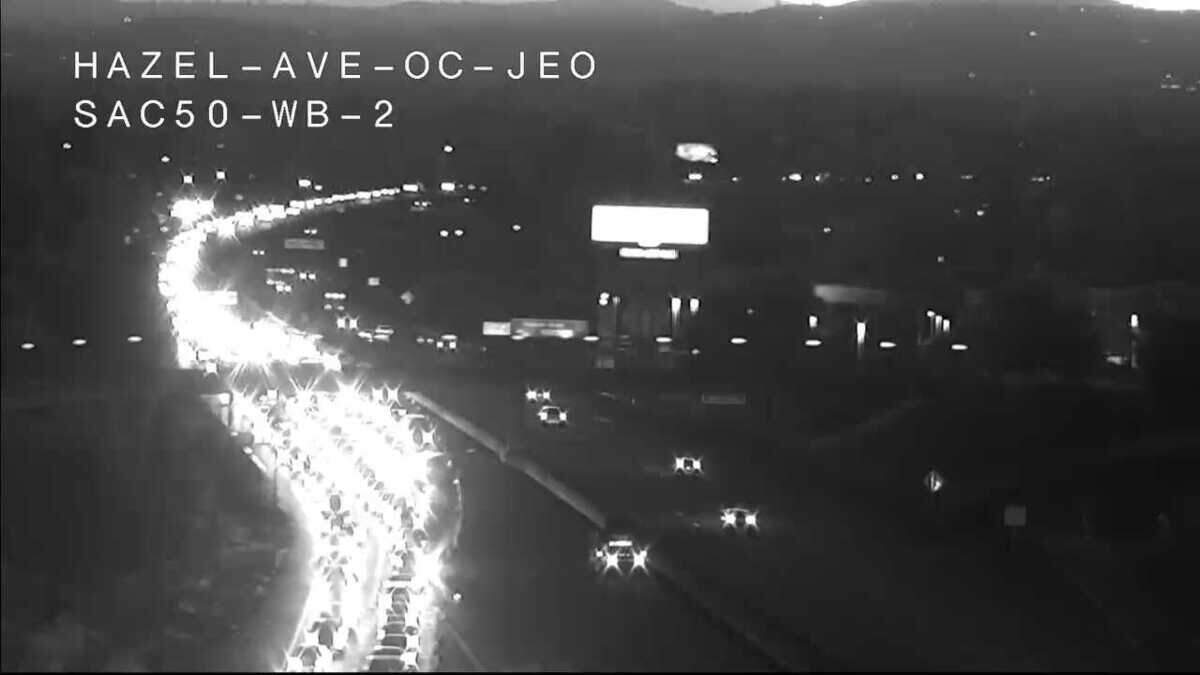
California state worker Marielle Rhodeiro’s excitement over her co-worker’s offer of a ride home from downtown Sacramento to Arden Arcade on Tuesday faded about 20 minutes into the drive, just a few blocks from where they had started.
Read more PG&E warns of possible weekend power shutoffs in Sacramento Valley, Sierra foothills
“We noticed it was heavy, but we didn’t really think anything about it until we tried to get onto 16th Street,” said Rhodeiro, a research data analyst with the California State Water Resources Control Board. The pair sat through six cycles of the traffic light before they could turn.
Rhodeiro was one of scores of capital region motorists stuck in freeway and surface street gridlock following two police pursuits and fatal shootings that forced officials to close portions of the major east-west freeway for hours. Westbound lanes were closed until 9:30 a.m. and the eastbound lanes were shut down for multiple hours after about 3:30 p.m.
The closures, especially the second one, had effects that rippled across other freeways and onto residential and city roads.
The resulting traffic from a shutdown on a critical freeway was not unique to the Sacramento area, but it provided insight into ways the region could build a more resilient road network, according to transportation experts.
The closures and resulting traffic
Officials shut down Highway 50 twice during the day Tuesday to investigate two separate fatal shootings connected to incidents that ended on the freeway.
The first, which happened overnight, followed a pursuit of a man spotted driving without headlights and ended when law enforcement officers fatally shot him near Hazel Avenue. Tuesday afternoon, a man suspected of fatally shooting a woman outside an Arden Arcade restaurant died from a self-inflicted gunshot wound after deputies stopped his vehicle on the freeway between Watt and Howe avenues.
The westbound and eastbound lanes of Highway 50 were shut down at different times on Tuesday for the investigations — back-to-back disruptions to the heavy commute between the capital city and points east including Rancho Cordova, Folsom and El Dorado Hills.
The first blockage caused a backup for hours on Highway 50. Vehicles were seen bumper to bumper around 6 a.m. Tuesday near Hazel Avenue, even as some were being diverted to Folsom Boulevard, Greenback Lane or other streets through Fair Oaks, Orangevale and Citrus Heights.
The second closure, which began before 4 p.m. near the Sacramento State campus, affected more than just Highway 50 drivers.
Rhodeiro and her coworker, who began their trip home via H Street, ran into issues at the intersection of C and 16th streets. Drivers trying to clear the intersection during a yellow light became stuck, blocking others from turning. The back-ups forced vehicles onto other freeways, including the Capital City Freeway and Highway 160.
“Once we got on to (Business 80), it was also just like bumper to bumper,” Rhodeiro said. “So we got off on Auburn (Boulevard) in order to just sort of bypass some of that.”
Rhodeiro typically uses Sacramento Regional Transit’s light rail for her commute. It offered several benefits, including bypassing much of the traffic and being subsidized by the state government. But on Tuesday, she was still “ecstatic” to be in a car instead of having to deal with a crowded train where some riders play their music out loud or take calls on speakerphone.
“There have been some mornings where I have literally watched (the train) pass through the station without stopping,” she said, adding that it was frustrating that there was a tracker for buses but not trains.
Rhodeiro said she typically could get home by car in about 20 minutes. On Tuesday, it took her about an hour, and she never ventured toward Highway 50.
A ‘hub and spoke’ style
When a major freeway shuts down, the traffic problems can quickly spread to surrounding roads, said Chandra Bhat, a professor and the Joe J. King Chair in Engineering at the University of Texas in Austin.
“There is so much of interconnectivity across the entire network,” Bhat said. “So, if one link has a reduction in capacity, it permeates, and it propagates.”
Read more Containment keeps improving on one fire in Big Sur — but not the other. Why?
Gridlock can spread to other roads as drivers seek alternate routes or apps such as Google Maps or Waze directing them onto streets that might not have the capacity to handle the additional vehicles. In Sacramento, other freeways feeding into the affected corridor, including Highway 99, also could experience spillover traffic.
Richard Sowers, a professor of industrial and enterprise systems engineering at the University of Illinois, likened Sacramento’s highway setup to a “hub and spoke” system, where multiple routes connect in a central location. While all transportation systems could experience this domino-like effect, a disruption closer to the “hub” could more quickly affect other routes, Bhat said.
Around Sacramento’s central grid, multiple highways extend in each direction. Farther east, however, two major freeways — Highway 50 and Interstate 80 — generally run east-west, said Susan Handy, a UC Davis professor of environmental science and policy.
“They’re not a lot of options when one of those major routes shuts down,” Handy said referring to other freeways.
While civil engineers could work to make a system more efficient, cities sometimes had to contend with structures and roads built long ago that could not easily be altered, Sowers said.
“When we’re trying to think through how to best do something, (it) should, in some ways, capture what can happen if something goes wrong,” Sowers said. “Sometimes, for various reasons, historical being one of them, that robustness just isn’t in place when we’re thinking about optimal network structure.”
Behavior and routine can also play a role in determining just how backed up road become. This is especially important in California, where freeways in busy urban areas often experience traffic levels during that “substantially exceed their capacity” at peak times, said Michael Manville, a professor of urban planning at UCLA.
Normally, residents can adjust their travel times to miss this heavier traffic, but on Tuesday the shutdowns were abrupt and long-lasting, making it more difficult for drivers to adapt.
“The result, rather than some people staying off the roads, are long queues that snake backward a considerable distance and can ricochet throughout the network,” Manville said, adding that the term “triggerneck” describes these situations.
Seeking resiliency
While these types of traffic effects were not unique to the Sacramento area, there were still ways the region could improve how its transportation system responded in times of crisis, Bhat said.
Those could include improving communication across the transportation system, adding off-ramps in certain areas and expanding or improving alternative forms of transportation, Bhat said. Agencies could also examine how efficiently closures were managed because congestion could increase exponentially the longer a major connector remained closed.
“When we have expected delays, like construction, we do a reasonable job,” he said, speaking generally, “but I think that we can do better in terms of adaptive approaches to dealing with these unexpected events.”
Bhat also cautioned against relying solely on freeway lane expansions to address these issues.
While Handy said some of Tuesday’s traffic could have resulted from having few alternate freeway routes east of the city of Sacramento, she said she would not want to see more freeways in the area. Instead, one way to improve efficiency could be to develop plans for how surface streets, which form a fairly extensive grid, could absorb diverted traffic and keep it moving.
“Do we have a system in place that would re-time the signal lights so as to help facilitate that higher volume of traffic on that street?” Handy said. “That’s the kind of thing that could be done to help improve the resiliency of the system.”
Read more Back-to-back freeway closures paralyzed Sacramento traffic. Why there’s no easy fix