 By admin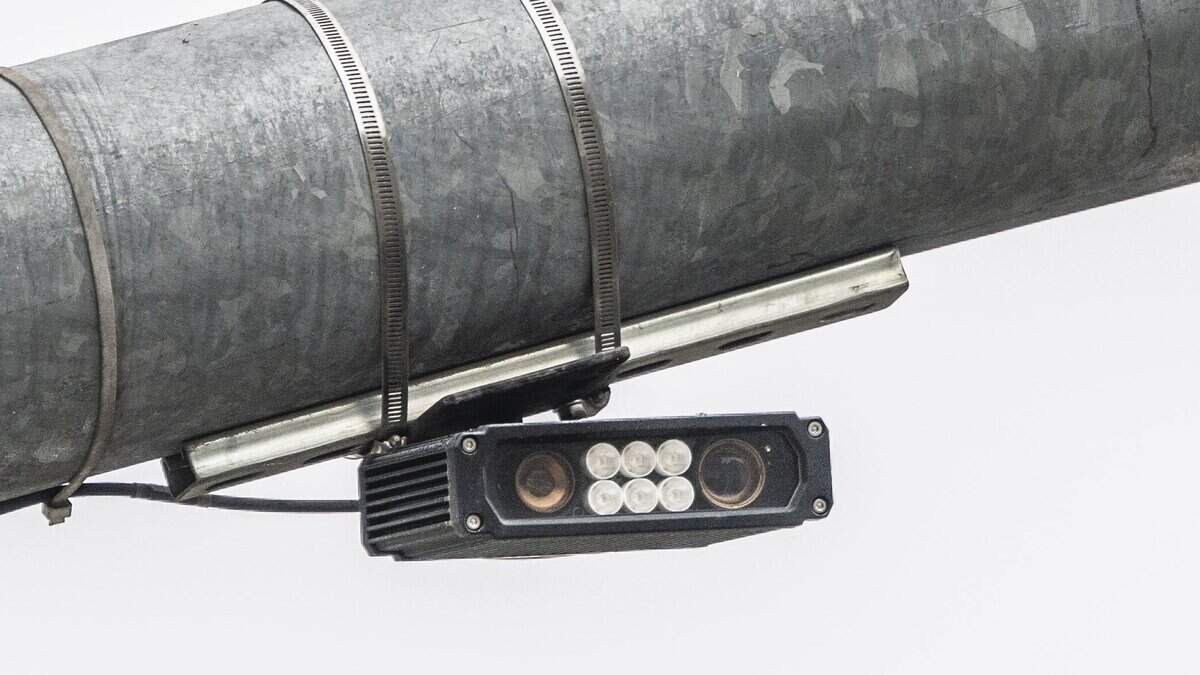
If you drive in Sacramento, your location is being collected and shared with the federal government.
Read more Back-to-back freeway closures paralyzed Sacramento traffic. Why there’s no easy fix
The Sacramento Police Department shares local vehicle license plate data with two of the five federal fusion centers in California, according to public records obtained by The Sacramento Bee.
Flock Safety, the most well-known and largest growing license plate reader camera company, is the subject of local and national controversy, with critics of the technology pointing to increasing cases of abuse within law enforcement agencies, poor accuracy and the mass surveillance network’s implications on privacy. Sacramento PD does not contract with Flock, but with Motorola Solutions and Axon, which provide similar technology.
Motorola automated license plate readers installed throughout the city captured data nearly 290 million times in the year of 2025 alone. The cameras don’t just capture license plates of those police suspect have broken the law, but of everyone who drives by one of the city’s 209 cameras. The detections are automatically uploaded to the VehicleManager system, Motorola’s specialized platform which allows law enforcement agencies to opt-in to data sharing with other entities.
According to a report obtained by The Bee, the department shares detection information with 165 agencies, including two federal fusion centers covering the greater Los Angeles and San Francisco regions.
Fusion centers are federally funded hubs where local and state agencies share intelligence with federal agencies, including the Federal Bureau of Investigation, the National Security Agency and the Department of Homeland Security — which includes Immigrations and Customs Enforcement and Customs and Border Protection.
State and city sanctuary laws preclude the police department from sharing information with outside entities for civil immigration enforcement. In an emailed statement to The Bee, a police spokesperson said the data shared with other agencies is being used in a “lawful manner.”
“We share data with other agencies in accordance with state law and department policy to assist other law enforcement agencies with solving crime,” they wrote. “Suspects don’t commit crimes based on jurisdictional boundaries so information sharing between law enforcement agencies is a force multiplier for detectives and police officers when solving investigations.”
A from the Northern California Regional Intelligence Center says that it may only share, disseminate or provide access to ALPR information to California state or local law enforcement in compliance with state law.
ALPR data and federal fusion centers
But many people — including state lawmakers — doubt that fusion centers are meaningfully keeping ICE from accessing this data. When requesting an audit of California’s five fusion centers, state Sen. Sabrina Cervantes, D-Riverside, cited a 2024 report which alleged that NCRIC shared information with ICE agents.
“It’s hard to think of data that ICE can’t get through fusion centers,” the Surveillance Technology Oversight Project report reads.
The relationship can also work the other way. In 2020, the San Francisco Police Department and its relationship with NCRIC came under fire when a local police officer submitted a photo of a suspect to the fusion center and received a match generated by facial recognition, circumventing a city ban on the technology.
Contention surrounding the city’s partnership with the California Central Intelligence Center — which is one of the three fusion centers not on the list of agencies Sacramento PD shares ALPR info with — was the driving force behind continued disruptive protests at Sacramento City Council meetings earlier this summer. Under the grant agreement, the city acts as a pass-through for about $800,000 in homeland security funds. It accepts grant money, a portion of which is sent to the county Sheriff’s Office to staff the CCIC.
Read more PG&E warns of possible weekend power shutoffs in Sacramento Valley, Sierra foothills
“Once Sacramento’s data enters the fusion centers, the city loses meaningful control over who accesses it, how it’s used, how long it is retained and whether it is shared beyond its original purpose,” resident Rhonda Rios Kravitz said at a June council meeting.
The council voted 5-2 to approve the agreement, with Caity Maple and Mai Vang dissenting, citing concerns about data sharing and transparency.
Beryl Lipton, an investigative researcher with the Electronic Frontier Foundation, said that the best way to ensure that sensitive information doesn’t reach the federal government is to “not collect that information at all.”
“Data is incredibly leaky — it’s very difficult to keep it where you want to keep it,” she said. “It’s important for public and officials to understand how share settings work, but it’s not going to be guaranteed that this data will be fully contained in the way they expect and want.”
Further privacy concerns
According to 2026 data through July 12, Sacramento is on track to collect at least 350 million license plate detections by the end of the year, a nearly threefold increase since 2023.
Around 430 Sacramento police officers are active users on VehicleManager. Another 320 users have accounts but have not accessed the system in months.
It’s not just license plate number and location that are detected and shared with other entities — ALPRs automatically capture and analyze aspects of the vehicle beyond make and model, including accessories, damage and bumper stickers. Motorola’s VehicleManager platform allows users to search for vehicles spotted in multiple places and can identify vehicles traveling or parked together. In promotional materials, Motorola says that the platform can identify trends that “generate leads” and “close cases.”
“And when you’re ready to intercept your vehicle of interest, VehicleManager provides a best-address location and time-of-day, day-of-week heat map to determine when the vehicle is most likely to be there,” a brochure for the platform reads.
Privacy advocates fear how this sensitive information could be used by bad actors, whether those are people within law enforcement agencies or hackers who obtain it illegally.
“Infrastructure-wise, having this amount of info on people, if it’s not in the service of public safety, actually contributes to an erosion of safety,” Lipton said. “Because if it were to be accessed by a bad actor, whether that’s someone in PD or anyone else, that’s a lot of very sensitive info that can be used in ways that we don’t have the imagination to envision right now.”
A July class action lawsuit filed by two UC Merced students against Motorola alleges that the company’s ALPRs violate California privacy law.
Read more Containment keeps improving on one fire in Big Sur — but not the other. Why?