 By admin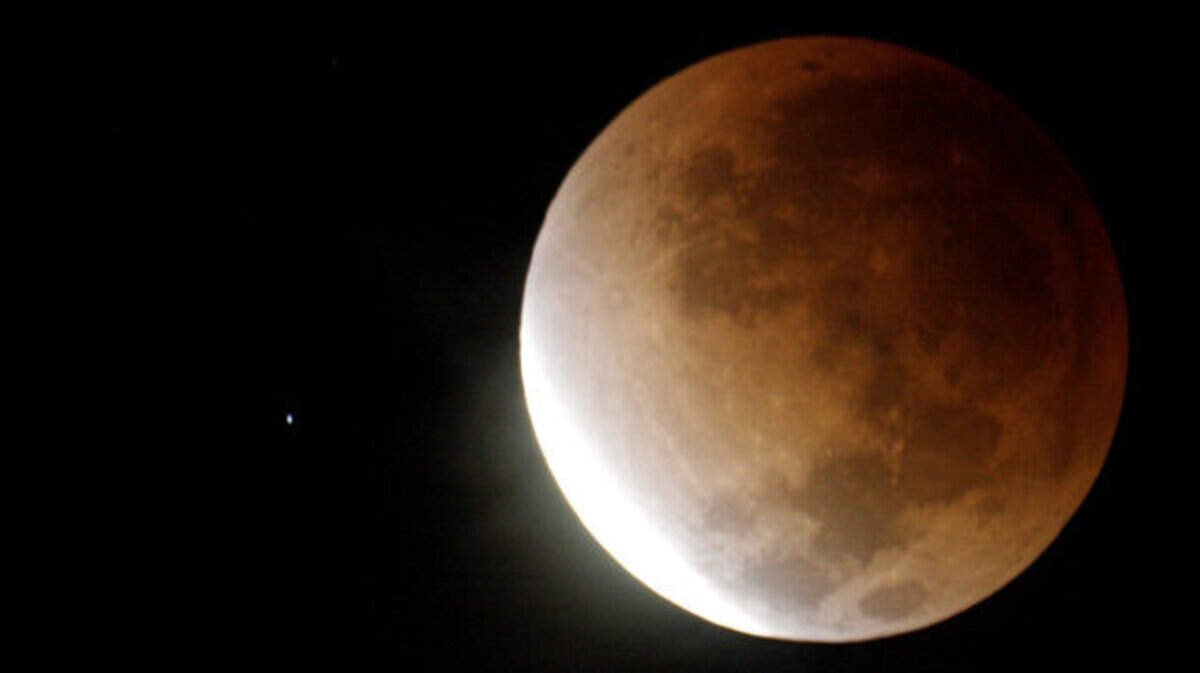
After spotting planets and watching the Perseid meteor shower, California sky watchers are in for another treat.
Read more Planned crematorium near Sacramento school cited for unpermitted work
The August full moon will undergo a partial lunar eclipse, undergoing its “deepest” color change until 2028.
“During a lunar eclipse, the moon appears red or orange because any sunlight that’s not blocked by our planet is filtered through a thick slice of Earth’s atmosphere on its way to the lunar surface,” NASA explained “It’s as if all the world’s sunrises and sunsets are projected onto the moon.”
Here are the best times to watch in California:
When is full moon in August 2026?
In August, the full moon will coincide with a partial lunar eclipse.
The full moon will reach peak illumination at 9:18 p.m. on Thursday, Aug. 27, according to online clock Time and Date.
Why is August’s full moon called the sturgeon moon?
August’s full moon is known as the sturgeon moon, according to the Old Farmer’s Almanac.
It’s named after the giant freshwater fish that were “readily caught” in the Great Lakes region during this part of summer, the almanac said.
What is a lunar eclipse?
According to Space.com, a lunar eclipse happens when Earth moves between the sun and a full moon.”
“During the event, the moon moves through Earth’s umbra, the dark center of its shadow,” the astronomy website said.
Why does the moon look red?
As the moon hits the maximum point of eclipse, “You may notice the shadowed region of the moon take on a reddish-orange color, as sunlight filtered through Earth’s atmosphere is bent onto the lunar surface,” Space.com said.
Read more If you’re a Sacramento-area teacher buying your own supplies, these groups can help
This phenomenon is often referred to as a “blood moon“ during a total eclipse.
However, sky watchers won’t see a true “blood moon” in August.
Why? “At no point will there be lunar totality — when the entire lunar surface falls under Earth’s shadow,” Space.com explained.
Earth’s shadow will cover 96% of the full moon during August’s celestial event.
What are best times to watch lunar eclipse?
According to Space.com, August’s partial lunar eclipse will be the first “very deep” partial lunar eclipse since September 2024 — and the “most impressive” sight for moon watchers for a while.
You have to wait until December 2028 to catch a full lunar eclipse in North America, Space.com said.
The partial lunar eclipse will start around 6:23 p.m. on Thursday, Aug. 27, according to Date and Time.
North and South America will have the best views of the blood-red moon.
“Viewing conditions will depend on the local weather, with western U.S. states, northern Chile and inland Brazil statistically offering the best odds of clear skies,” Space.com said.
The partial lunar eclipse will peak at 9:12 p.m. Thursday and end just after midnight at 12:01 a.m. on Friday, Aug. 28, Date and Time said.
Where are the best places to stargaze?
For the best views of shooting stars, planets and more, head away from the city.
The ideal stargazing locations offer “unobstructed views of the horizon,” National Geographic said.
“Mountains, moorlands, deserts and remote islands are good choices, thanks to their isolation, clear conditions and lack of light pollution.”
Read more California lawmaker fears ICE officers may ‘jump ship’ to local police after Trump