 By admin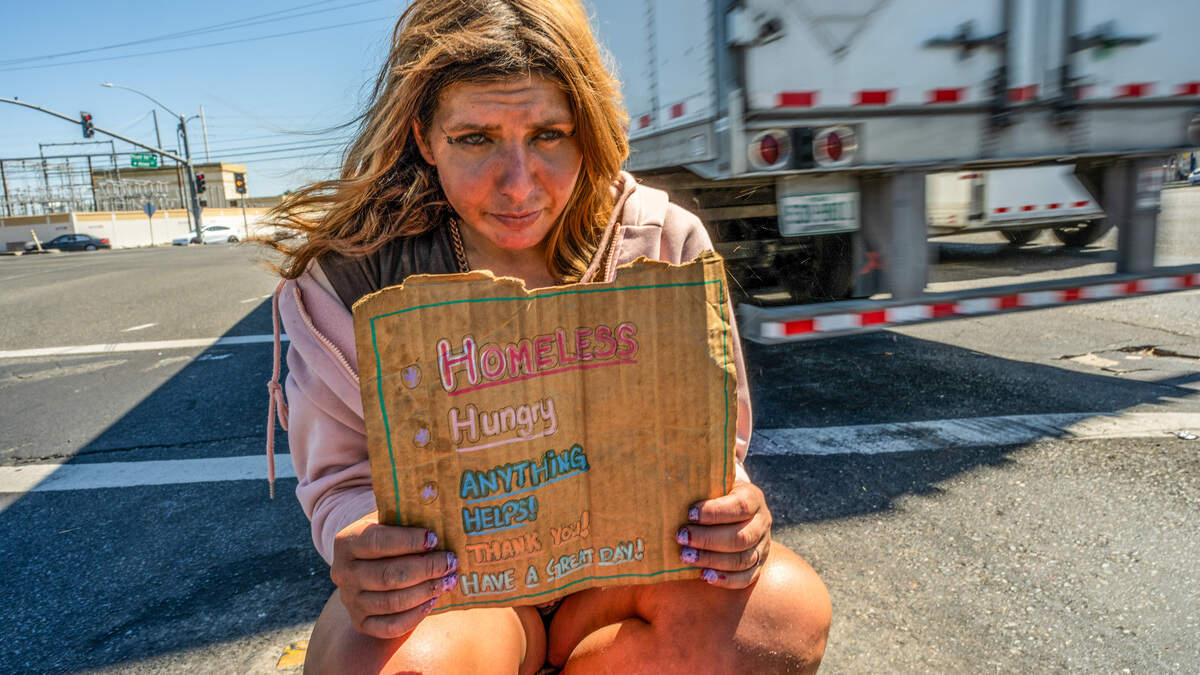
This column is the first of five detailing a promising college student’s descent into homelessness, and how government services have only exacerbated her downfall. It also is part of “The Poverty Line,” a series examining how safety-net systems are faring amid California’s rising affordability and mental-health crises.
Read more What you need to know about Proposition 40, the one-time billionaire wealth tax
Califia Carlisle’s life once resembled the 2017 movie “Lady Bird,” which featured a precocious Sacramento girl who attends St. Francis High School before moving onto college.
Carlisle attended Sacramento State and was within months of graduation before her boyfriend turned her onto OxyContin. That led to heroin.
For the last 10 years, Carlisle has lived among Sacramento’s homeless population. She camps somewhere near the university she once attended, usually around the Home Depot on Folsom Boulevard. By all outward appearances, she is addicted to stimulants, having lost many of her upper teeth. A typical conversation with her is disorganized, a symptom of her battle with schizophrenia.
Her current boyfriend said she can make hundreds of dollars a week asking for money with a simple sign on a busy boulevard median. “She helps everybody out here,” he said. Everyone, that is, except herself.
Carlisle exemplifies how and why California is failing on homelessness. Her loving father, 68-year-old Christopher Carlisle, has tried every conceivable social service and judicial process to get his daughter off the streets before she dies a premature death. But neither the law nor the judicial system has compelled the care Califia Carlisle needs. She has repeatedly returned to the streets after brief stints in jail or treatment, neither of which has reversed her downward spiral.
“I hold out hope, but I personally hold out less hope with each passing month,” he said.
Now 32, Califia Carlisle remains ill and adrift because that’s precisely what California’s mental-health non-system is designed to do.
More than a half-century ago, a Los Angeles assemblymember named Frank Lanterman began to reform a horribly flawed way of holding thousands of mentally ill Californians indefinitely in large institutions. In legislation signed by then-Gov. Ronald Reagan in 1969, California was supposed to transition away from these mental health prisons into community-based care for finite periods of time, with temporary care only compelled through court-ordered conservatorships.
Now, decades later, the compassionate, robust safety net envisioned by Lanterman and his counterpart, Nicholas Petris, has not materialized. Instead, California relies on an inadequate patchwork of publicly and privately funded mental health treatment programs. Publicly funded efforts focus largely on people who seek care, including the 11 walk-in clinics in Sacramento County.
The conservatorship process envisioned by Lanterman to compel care for those Californians who truly need it, such as Califia, does exist. Yet counties, law enforcement and hospitals are letting uncounted thousands languish on the streets, never getting treatment for addiction, mental illness or both.
“This is the dirty secret,” said Darrell Steinberg, a former state legislator and Sacramento mayor who has spent his political career trying to improve the state’s mental health system.
“The people who are the sickest of the sick are often least likely to get the help that they need,” Steinberg said. “Why? Because they’re the hardest to serve, and they’re the most expensive to serve. So the system has an incentive, a perverse incentive, to enroll others.”
Califia’s father enrolled her into drug treatment while she was still at Sacramento State, but her head and heart never embraced sobriety. Her mother, Veronica, formerly a geography and economics teacher at River City High School in West Sacramento, died last year.
Read more California’s Prop. 3, Prop. 40 target wealthy taxpayers. Here’s the difference
“We found out that we had the same drug of choice,” said Jenna Mozdy, also a Sac State student who was in treatment in 2014. They even used heroin together during rehab. “Neither of us,” Mozdy said, “wanted to be clean.” Mozdy got clean and is now a certified drug counselor in Santa Rosa.
Califia “ended up dropping out of school because of the drugs,” said Mozdy. “When Califia wasn’t doing well, it was apparent very quickly.”
On-and-off treatment efforts continued for another two years, with Califia living with one friend or another. Her options for sleeping on couches dwindled. By 2016, she was on the streets.
Christopher Carlisle kept trying to save her. On Feb. 16, 2017, he filed a petition in Sacramento County Probate Court. There, judges can compel care by appointing a conservator.
A psychologist who had evaluated Califia during a brief stint in jail declared that she lacked the capacity to give informed consent. The psychologist noted signs of severe panic, delusions, uncontrollable or intrusive thoughts. “I am recommending upon discharge from the Sacramento County Jail that she be placed in a drug treatment facility as soon as possible.”
That did not happen. Instead, she was released to the streets.
An investigator assigned to the probate court needed to interview Califia to determine whether the state should compel drug treatment. Califia wouldn’t cooperate. The investigator wrote that she was “unable to interview” Califia. So the court dropped the inquiry altogether.
A year later, Califia was again placed on a temporary, involuntary psychiatric hold. Under the 59-year-old Lanterman-Petris-Short Act, authorities may detain someone for evaluation and treatment for 72 hours. According to documents provided by her father, the treatment facility sought a conservatorship referral through the Sacramento County Public Guardian. Yet again, the system released Califia to the streets.
“She has not exhausted all community-based alternatives to conservatorship,” concluded a deputy guardian for the Sacramento County Department of Health Services. Califia told the guardian that she would participate in outpatient treatment. She did not.
Court records show multiple instances of Carlisle briefly ending up in hearings before judges over the next year, mostly for drugs and paraphernalia and loitering. And then she all but vanished from the court files.
“She got smarter at avoiding arrest,” her father said. “And she became less compliant. One of the aspects of schizophrenia, you don’t think anything’s wrong with you.”
Sacramento County appears to be one of the few urban centers in California where homelessness is getting worse. In this year’s person-by-person count of the county’s homeless, 7,458 were found, up 13% since 2024. Whatever we’re doing here isn’t working.
In the case of Califia Carlisle, no government agency or nonprofit organization is making any effort to end her homelessness, encourage treatment or offer shelter. What’s so frustrating is how that’s just fine by her.
Christopher Carlisle, nonetheless, had one final hope. Gov. Gavin Newsom and the California Legislature developed a new judicial process for parents like him to petition on behalf of those in need. The new system was named CARE Court. In Sacramento County, Carlisle was among the first to apply.
Read more What you need to know about Proposition 40, the one-time billionaire wealth tax