 By admin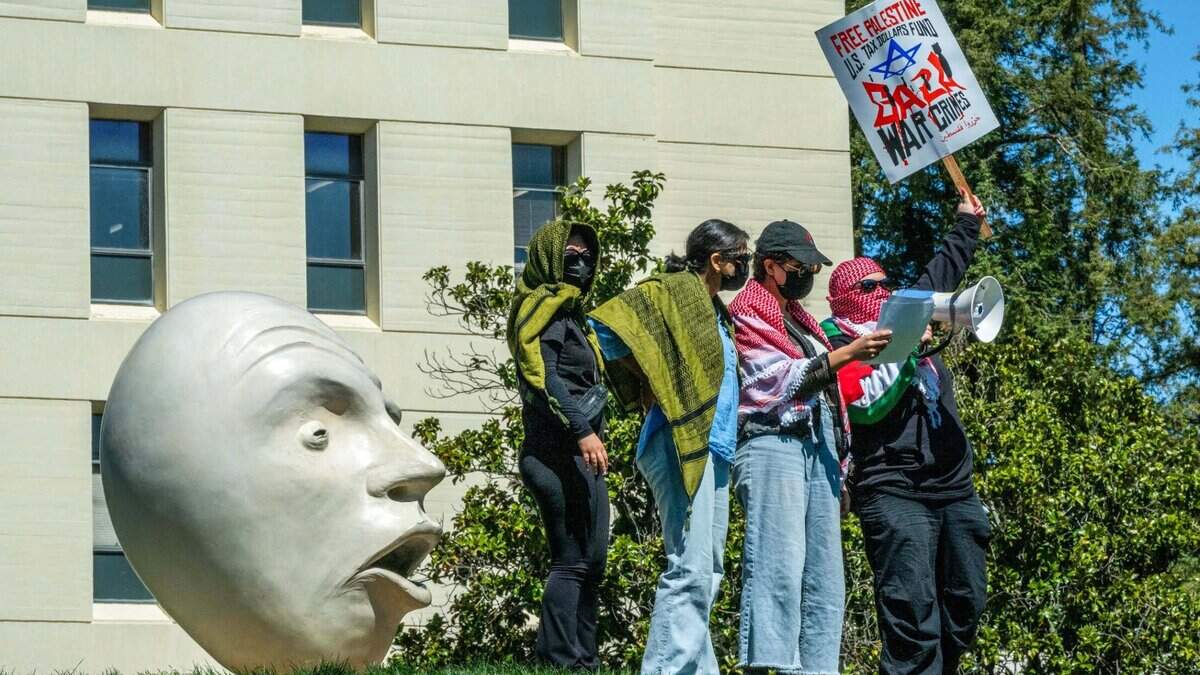
A bill pushing for greater transparency around implementation of campus protest rules at California’s public universities divided Democratic lawmakers in the final days the legislative session. After spirited debate in both the Senate and Assembly, it made it through with just enough votes in its favor. Now, it heads to Gov. Gavin Newsom’s desk for final approval.
Read more Stone beers are now being brewed at Firestone Walker in Paso Robles. Here’s how
Assembly Bill 2551, authored by Assemblymember Sade Elhawary, D-Los Angeles, would require the California State University and request the University of California systems to provide annual data on student code of conduct violations during protests disaggregated by race and gender. The reports would have to include descriptions of the disciplinary action imposed on those students.
The measure also asks that campuses host open forums before the end of 2027 to elicit student feedback on current time, place, and manner policies that restrict when, where and how protests are conducted on campuses. Elhawary said during a committee hearing TPM policies were “intended to prevent hostile campus environments” but had arguably increased hostility for students of color.
“Students of color report experiencing violent arrests at peaceful protests, targeted disciplinary actions, and bureaucratic barriers that suppress their right to protest, leading many student organizers to fear severe repercussions and reprisal,” Elhawary said. “As a former student activist myself while I was at UCLA, I care deeply about empowering all students and protecting their abilities to organize and advocate. Through data collection and student hearings, this bill helps ensure the equitable and consistent enforcement of time, place and manner policy.”
What prompted the bill?
The bill is a direct response to what the author calls unintended consequences of legislation passed in 2024. At that time, following encampments and rallies protesting the ongoing war in Gaza that swept campuses statewide, the legislature required the UC and CSU systems to develop uniform protest policies.
Jewish groups reported antisemitic incidents on campuses. The state passed a law asking the CSU and UC systems to enforce those protest restrictions and “prohibit violent, harassing, intimidating or discriminatory conduct” that creates a hostile environment on campus. The UC and CSU prohibited encampments, restricted masking to conceal identity when violating policies and put in place disciplinary actions to be utilized against those in violation.
Meanwhile, hundreds of student and faculty who participated in pro-Palestinian protests had already been slapped with legal and academic repercussions amid a crackdown on the movement.
In the time since, some students say the implementation of protest policies and the disciplinary actions meted out to violators didn’t just create a chilling effect on campus but also disproportionately targeted Muslim, Black and Brown students.
In a 2025 report, the Council on American-Islamic Relations-California — a sponsor of AB 2551 — raised concerns over the newly strengthened campus protest restrictions, especially given what it called “targeted enforcement” of the existing policies. The report said several California universities used law enforcement disproportionately in response to pro-Palestinian protests when compared with other events that violated the same policies. The University of California Student Association, a coalition of student governments across the system, has voiced similar concerns. However, these allegations of inequitable implementation are so far only anecdotal; there is no data to substantiate them.
That’s the gap Elhawary’s bill seeks to fill, by mandating that universities provide data on violations of campus protest policies, disciplinary actions taken, and the affected students disaggregated by race and gender.
Despite major amendments, the UC and CSU systems remained opposed to the bill throughout, worrying it could create uncertainty around their current policies and compromise student privacy. At a committee hearing Aug. 30, a UC spokesperson said disaggregation of the data could enable easy identification of involved students, given the number of total violations is a small number. In a February report, the UC system recorded 71 violations over a one-year period. The CSU system reported 201 violations in the 2024-2025 academic year.
Read more LGBTQ community celebrates Rainbow Festival after attack in Lavender Heights
The California Faculty Association, which represents 29,000 professors, lecturers, librarians, counselors, and coaches at the CSU, was a sponsor and strong voice in favor of the bill.
Why were lawmakers divided?
The bill required a simple majority to pass in both the state Senate and Assembly. It passed 23-12 in the Senate and 44-8 in the Assembly with 27 lawmakers who were either absent or abstained.
While the California Legislative Jewish Caucus took no formal position on the bill, six of its members in the Senate and Assembly raised concerns, including that its eventual intent was to repeal the student safety provisions they had fought for in the 2024 legislation that mandated comprehensive campus protest restrictions.
An earlier version of Elhawary’s bill did include a provision to sunset that 2024 law by 2029. Following strong opposition from Jewish California, an umbrella advocacy organization for Jewish groups statewide, the bill was watered down to leave the time, place and manner policies intact while pushing for greater transparency and conversation around their implementation.
“It was very concerning to our caucus to see an effort without a conversation to repeal that (2024) bill,” Assemblymember Jesse Gabriel, D-Encino, said on the Assembly floor. “I worry that the intent of this bill is to begin a process that will ultimately result in the repealing of civil rights protections.”
Other critics, like Sen. Josh Becker, D-Menlo Park, chided the bill’s “rushed” process and said it wasn’t well-thought-out. In June, the author decided to “gut-and-amend” a healthcare bill she had authored and the Assembly had already passed, and replace its contents entirely with a new proposed law to address the students concerns in the current legislative session. That process, critics said, made for inadequate discussion on what is a controversial topic.
Supporters of the bill urged their colleagues to see AB 2551 at face value as a “data bill” that affords the opportunity to evaluate the consequences of past legislation, and not on the basis of its pre-amendment version.
“My daughter sits on a CSU campus. She talked to me about having the feeling of having her voice stifled because of the policies of the university,” said Assemblymember Mia Bonta, D-Alameda. “As legislators, we have to create the space to examine the implementation and the impact of the policies that move forward, so that we don’t have any student feeling like they are risking being able to continue on with their education because an individual campus may or may not have gotten this right.”
The bill now awaits Newsom’s signature. The governor has until Sept. 30 to sign or veto bills passed by lawmakers.
Read more This Sacramento-area international market was our go-to for Labor Day picnic food