 By admin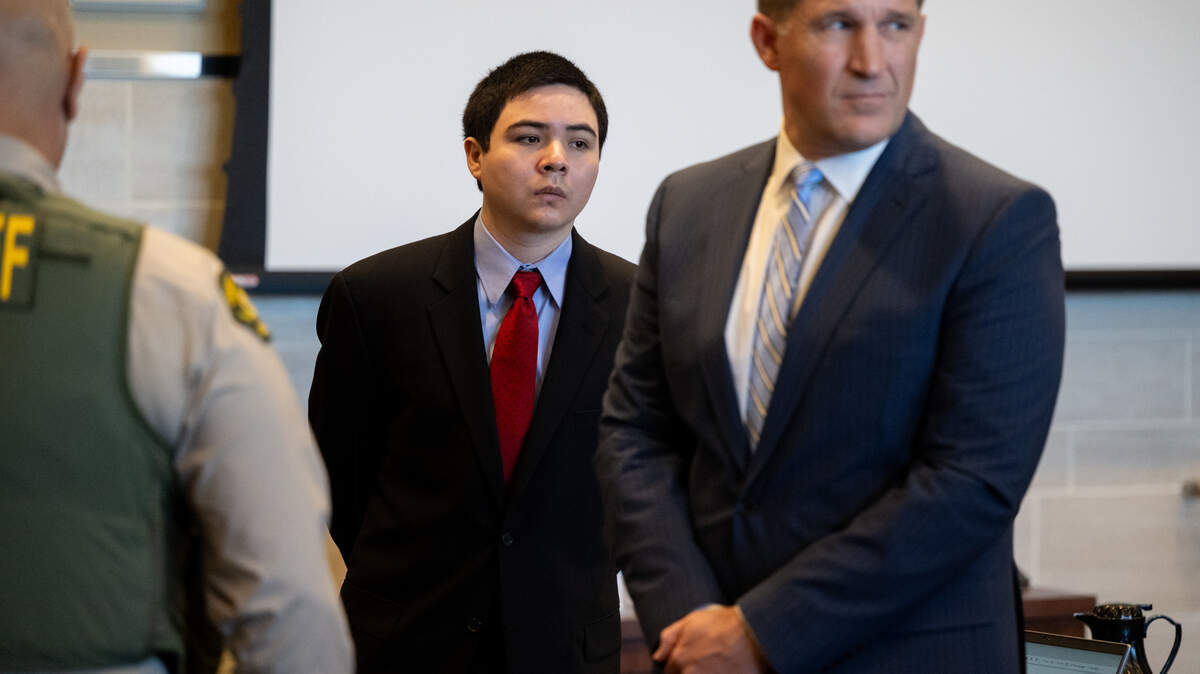
Yolo County jurors found Carlos Reales Dominguez guilty of involuntary manslaughter Tuesday but rejected second-degree murder charges in the stabbing deaths of two Davis men during a 2023 series of attacks that shocked the city.
Read more A’s rookie ‘resting comfortably’ after emergency surgery for ruptured testicle
Jurors found Dominguez not guilty of second-degree murder in the deaths of David Breaux, 50, and Karim Abou Najm, 20, but convicted him of involuntary manslaughter in both killings. They also found true allegations that he used a deadly weapon in each attack.
The jury also found Dominguez not guilty of attempted murder in the near-fatal stabbing of Kimberlee Guillory, who was attacked inside her tent at a downtown Davis homeless encampment days after the killings.
Dominguez, a former UC Davis student, had pleaded not guilty by reason of insanity in the attacks that killed Breaux and Abou Najm and critically injured Guillory.
The verdicts came after prosecutors argued Dominguez made deliberate choices during the attacks despite symptoms of schizophrenia, while defense attorneys argued his mental illness prevented him from forming criminal intent.
Yolo County Deputy District Attorney Alex Kian told jurors during closing arguments that Dominguez chose to attack his victims, repeatedly stab them and flee afterward.
“He made that choice to kill Mr. Breaux. He chose to grab the knife. He chose to lunge. He goes to Breaux and makes the choice to stab each consecutive time,” Kian said.
Defense attorney and Yolo County Public Defender Daniel Hutchinson argued the attacks were the result of a severe mental illness, not criminal intent.
‘No verdict can undo the tremendous loss’
“This is not a case of cannabis (use). This was a man with a mental health disease. Clinician after clinician in setting after setting said this man had a psychotic disorder,” Hutchinson said.
In a lengthy statement to The Sacramento Bee, Davis Police Chief Todd Henry extended his thoughts to the families and loved ones of Breaux, Abou Najm and the surviving Guillory.
“No verdict can undo the tremendous loss, pain, and trauma they have endured,” Henry wrote in part. “We continue to hold them in our thoughts and recognize the strength they have demonstrated throughout this long and difficult process.”
Henry later acknowledged the work of his department and Yolo County prosecutors in an “exceptionally demanding case.”
He also recalled the fear and uncertainty that gripped the city and how Davis responded: “We witnessed the strength of Davis, the willingness of neighbors to look out for one another, and people throughout our city supporting those who were grieving and afraid.”
What’s next for the trial?
The trial now moves to the sanity phase, where jurors will decide whether Dominguez was legally responsible for his actions at the time of the attacks.
Read more Bonta fights Trump EPA’s attempt to weaken ‘super pollutant’ regulations
The verdicts ended the guilt phase of Dominguez’s second murder trial over the attacks that killed Breaux in Davis’ Central Park and Abou Najm in Sycamore Park in April 2023.
Breaux was found fatally stabbed while sleeping on a bench in Central Park. Prosecutors said he was stabbed 31 times. Abou Najm was killed days later after being attacked while riding his bicycle through Sycamore Park. Prosecutors said he suffered 52 stab wounds.
Guillory was attacked in May 2023, days after the killings, and nearly died after she was stabbed through her tent at a downtown Davis homeless encampment. Guillory survived the attack and testified at Dominguez’s first trial and again during his retrial in June.
Dominguez remained emotionless as Yolo Superior Court Judge Samuel T. McAdam read the verdicts Tuesday afternoon in the Woodland courthouse during the second trial over the attacks.
Jurors at his 2025 murder trial deliberated for weeks before acquitting him on one murder count and failing to reach a verdict on another murder count. Jurors also deadlocked on the attempted murder charge related to Guillory’s attack.
McAdam declared a mistrial, setting the stage for the retrial.
Dominguez also faced an assault with a deadly weapon charge causing great bodily injury. Special circumstances alleged multiple murders.
Dominguez’s mental state at the time of the attacks was central to both trials. Diagnosed with symptoms of schizophrenia, Dominguez testified that he heard voices and saw “shadow figures,” which his defense argued were signs of his worsening condition.
Prosecutors at Dominguez’s retrial argued that despite his mental state, Dominguez chose to attack and kill Breaux and Abou Najm. They said he exhibited “goal-directed” behavior during the attacks and knew what he was doing when he stabbed the men.
“These were acts of aggression,” said Yolo County deputy district attorney Alex Kian said in his closing statement to jurors last week.
Prosecutors also argued that prolonged use of potent cannabis heightened his psychosis and led to the attacks.
But Hutchinson dismissed the prosecutors’ cannabis theory.
“This is not a case of cannabis (use). This was a man with a mental health disease. Clinician after clinician in setting after setting said this man had a psychotic disorder,” Hutchinson said.
McAdam ordered jurors to not talk to the media and summoned them back to the Woodland courtroom Wednesday to discuss how to proceed in the sanity phase.
Read more Amid SAT debate, University of California graduation rates hit record highs
This story was originally published July 21, 2026 at 4:17 PM.