 By admin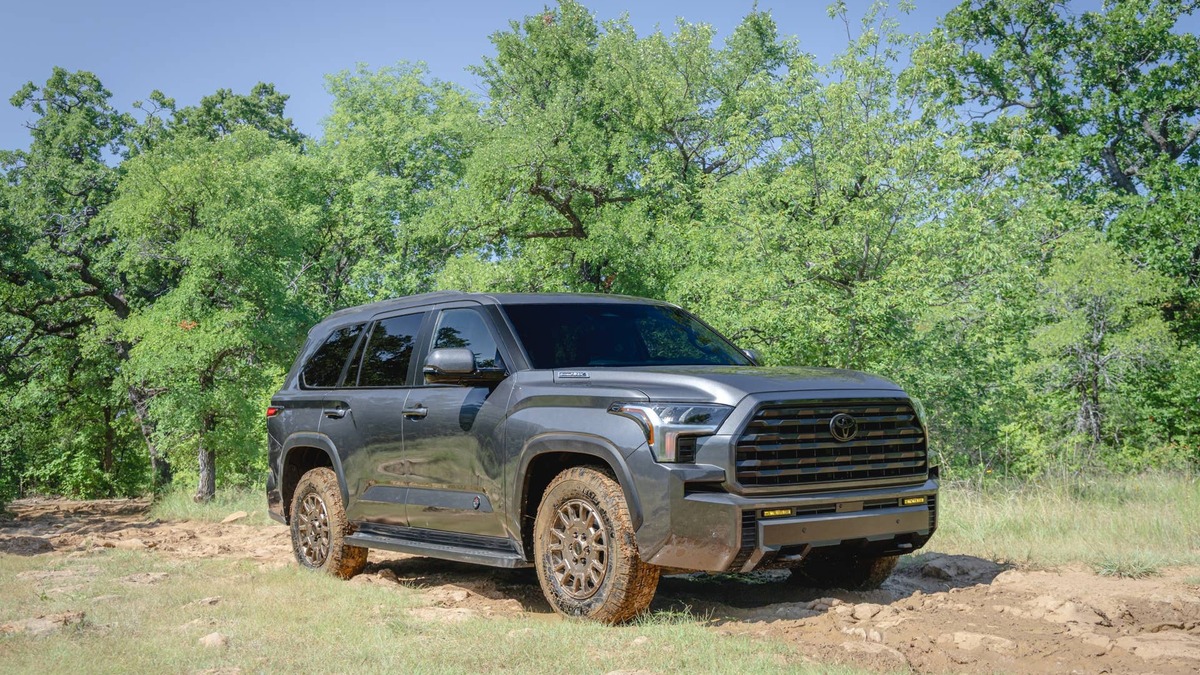
The headline score goes to Chevrolet, which is not where most people would expect this to land. Across model years 2018 through 2026 the Tahoe averages 74 out of 100 on reliability, and the Sequoia averages 71. Read no further and you would conclude the Chevrolet is the safer bet. Look at what those numbers are built from and the picture inverts: the Tahoe has drawn 34 recalls and 971 owner complaints across its run, while the 2025 Sequoia drew four complaints against a segment average of 32 and no recall campaigns at all. The scores and the underlying data disagree, and the underlying data is the more useful of the two.
Read more Viral photo gives Gaza family a bittersweet glimpse of their missing son
What’s New This Year
Chevrolet’s changes are cosmetic outside and mechanical underneath. A revised grille arrives with a new lighting signature, and Air Ride Adaptive Suspension becomes available on the RST for the first time. The engine range holds at three: a 355-hp 5.3-liter V8, a 420-hp 6.2-liter V8 and a 3.0-liter Duramax diesel, all through a 10-speed automatic. The 2026 Tahoe is the strongest year the nameplate has recorded, scoring 82 out of 100 with no recalls and no owner complaints on file.
Toyota’s full-size SUV continues with the powertrain that replaced its V8. The 3.4-liter twin-turbocharged V6 with hybrid assistance produces 437 hp through a 10-speed automatic, on a platform shared with the Tundra pickup and the Lexus LX. Eight trims were offered on the outgoing model year from $62,425 to $83,915. No NHTSA safety recall campaigns have been issued against the 2026 car.
Specs and Reliability Record
Chevrolet Tahoe
- Nameplate reliability score: 74 out of 100 across model years 2018 to 2026
- Recalls across that run: 34
- Owner complaints across that run: 971
- Estimated annual repair cost: $744
- Best model year: 2026 at 82 out of 100, no recalls, no complaints
- Worst model year: 2021 at 58 out of 100, with a complaint rate of 34.7 per 10,000 sold
- Common issues: engine and power train, concentrated in 2021
- Engines: 5.3-liter V8 at 355 hp, 6.2-liter V8 at 420 hp, 3.0-liter Duramax diesel
- EPA combined: 17 mpg with the 5.3-liter and rear-wheel drive, 24 mpg with the diesel
- Brand average: Chevrolet at 73 out of 100, $641 a year
Toyota Sequoia
- Nameplate reliability score: 71 out of 100 across model years 2018 to 2022
- Estimated annual repair cost: $642, below the full-size SUV average of $784
- 2025 model year recalls: none, against a segment average of 1.7 campaigns
- 2025 model year complaints: 4, against a segment average of 32 for 2025 SUVs
- 2026 model year recalls: none on file
- Repair frequency: 0.4 unscheduled shop visits a year
- Repair severity: higher than average probability that a repair is a major one
- Common issues: electrical system faults in 2018, power train concerns in 2020
- Engine: 3.4-liter twin-turbocharged hybrid V6, 437 hp
- Observed economy: 18 mpg overall in independent testing
- Brand average: Toyota at 76 out of 100, $482 a year
Chevrolet’s six trims run from the LS at $62,995 delivered to a High Country near $82,995. Toyota’s range spanned eight trims from $62,425 to $83,915 on the outgoing year, all sharing the same hybrid powertrain.
Warranty terms are three years or 36,000 miles basic and five years or 60,000 on the powertrain at both companies, which is standard for the segment and well short of what Korean rivals now offer on vehicles competing for the same money.
Powertrains and Driving
Complexity runs in opposite directions and it matters for the question in the headline. Chevrolet offers three engines, two of them naturally aspirated V8s with no turbochargers, no electric motors and no hybrid battery. The 5.3-liter has been in service in various forms for decades and the parts network is enormous. Simplicity of that kind is the strongest reliability argument any vehicle can make.
Toyota went the other way. The Sequoia’s 437-hp powertrain combines a twin-turbocharged V6 with hybrid assistance, which means two turbochargers, an electric motor and a traction battery that the Tahoe’s V8s do not have. On paper that is more to go wrong, and it is the reason the Sequoia’s reliability record is worth examining rather than assumed.
What the hybrid buys is output and efficiency. It produces 82 more horsepower than the Tahoe’s 5.3-liter V8 and returns better economy in the process, which is a combination the Chevrolet answers only with its Duramax diesel.
The scores and the complaint data disagree
Taking the nameplate averages at face value gives the Tahoe a three-point advantage at 74 out of 100 against 71. Two features of that comparison are worth knowing before it decides anything.
The spans are not equal. The Tahoe’s average covers model years 2018 through 2026, nine years including its strongest ever at 82 out of 100. The Sequoia’s covers 2018 through 2022, five years, and stops before the current generation had accumulated a record. Averaging nine years against five is not a like-for-like measurement, and the Tahoe’s is flattered by including a clean 2026 that the Sequoia’s cut-off excludes.
Volume tells a different story. Across its run the Tahoe has drawn 34 recall campaigns and 971 owner complaints. The 2025 Sequoia drew four complaints where the average for 2025 SUVs was 32, and no recall campaigns where the segment average was 1.7. Those are the raw signals the scores are built from, and on the years where both can be compared directly, Toyota is well ahead.
What Tahoe owners actually report
Chevrolet’s problems cluster and the cluster has a date. The 2021 model year scores 58 out of 100, the lowest in the nameplate’s modern run, with a complaint rate of 34.7 per 10,000 sold, and the dominant categories are engine and power train. That is the year to avoid on the used market and the one dragging the nameplate average down.
Everything after it improves. The 2026 car carries no recalls and no complaints on file and scores 82 out of 100, which is the best result the Tahoe has recorded. A five-year climb from 58 to 82 is a real trajectory rather than a statistical accident, and it suggests Chevrolet addressed what went wrong.
Repair cost is the part that does not improve. At $744 a year the Tahoe sits $102 above the Sequoia and well above the segment norm, which is a function of size, weight and the specialized service a three-ton V8 SUV requires.
What Sequoia owners actually report
Toyota’s record is thinner in both senses. The volume of complaints is low, four on the 2025 car against a segment average of 32, and the documented patterns are specific: electrical system faults on the 2018 model and power train concerns on the 2020. Neither has recurred at scale on later cars.
One detail deserves stating plainly rather than buried. At least one of those four 2025 complaints involves a reported crash and a reported injury. Four complaints is a very low number and severity is not the same as frequency, so a single serious report carries more weight in a small sample than it would in a large one.
The other qualification is repair severity. Independent data indicates that when a Sequoia does need unscheduled work, the probability of that repair being a major one is higher than average, even though it visits the shop no more often than its rivals at 0.4 times a year. Fewer problems, more expensive when they arrive.
Brand-level data points the same way
Neither of these vehicles exists in isolation and the manufacturer records are consistent with the model comparison. Toyota averages 76 out of 100 across 19 models against Chevrolet’s 73 across 17, and the repair cost gap at brand level is wider than at model level, at $482 a year against $641.
Complaint volume follows. On a per-model average Chevrolet draws close to 806 owner complaints against Toyota’s 616, though higher-selling nameplates naturally generate more filings and that normalization matters.
Read more 1969 Plymouth GTX for Sale With 27,600 Miles Shown
Both brands are trending upward on recent model years, which is worth saying because the direction of travel is favorable in both cases. The Tahoe’s own climb from 58 to 82 across five years is a clear illustration.
What repairs cost when they happen
Annual repair and maintenance runs $642 on the Sequoia against $744 on the Tahoe, a difference of $102 a year and $510 across five. Toyota’s figure sits below the full-size SUV average of $784 and Chevrolet’s sits above the benchmark it is measured against.
That gap is smaller than the brand-level difference suggests, and the reason is size. Both are heavy, three-row vehicles with large-capacity fluids and heavy-duty components, and neither is inexpensive to service. Anyone choosing between them expecting a Toyota tax break will be disappointed by the scale of the saving.
Insurance is the third ownership line and premiums on vehicles at this size and value sit at the top of the market regardless of badge.
What Five Years Actually Costs
Figures assume 12,000 miles a year over five years, 60,000 miles total, and fuel at $4.00 a gallon regardless of grade. Depreciation is excluded because no matched five-year figure exists for both, so treat the totals as purchase price, fuel and repairs.
Chevrolet Tahoe LS, rear-wheel drive
- Purchase price with destination: $62,995
- Fuel over 60,000 miles at 17 mpg: $14,118
- Repairs and maintenance at $744 a year: $3,720
- Five-year purchase, fuel and repairs: $80,833
Toyota Sequoia
- Starting price: $62,425
- Fuel over 60,000 miles at 22 mpg: $10,909
- Repairs and maintenance at $642 a year: $3,210
- Five-year purchase, fuel and repairs: $76,544
- Gap: $4,289 to Toyota
Repairs supply $510 of that and fuel $3,209, so the reliability difference is the smaller part of the financial gap and the hybrid powertrain is the larger one. Ordering the Tahoe with the Duramax diesel at 24 mpg combined reverses the fuel column entirely, cutting its fuel bill to $10,000 and turning the $4,289 gap into a $779 advantage for Chevrolet. Anyone choosing the Tahoe on running costs should be choosing the diesel. Toyota’s hybrid arithmetic works differently here than in its smaller vehicles, because the Sequoia’s system exists for torque as much as economy.
Which Version to Buy
On reliability alone the Tahoe with the 5.3-liter V8 is the answer in Chevrolet’s range, because it is the simplest powertrain either company offers: naturally aspirated, no turbochargers, no hybrid components, and decades of field data behind it. The Duramax adds emissions hardware and the 6.2-liter adds displacement and thirst without adding durability. Avoid the 2021 model year entirely on the used market.
Toyota offers one powertrain across every trim, so the reliability decision is made for you and the trim choice carries no mechanical consequence. That is an advantage in itself. Lower trims on smaller wheels are the sensible stopping point, since climbing the range buys equipment rather than durability.
Scorecard
- Nameplate reliability score: Chevrolet. 74 out of 100 against 71, though measured across nine model years to Toyota’s five.
- Recall frequency: Toyota. No campaigns on the 2025 or 2026 Sequoia against a segment average of 1.7, and 34 recalls across the Tahoe’s run.
- Owner complaint volume: Toyota. 4 complaints on the 2025 Sequoia against a 32 segment average, and 971 across the Tahoe’s nine years.
- Repair cost: Toyota. $642 a year against $744, a difference of $102.
- Repair severity: Chevrolet. The Sequoia carries a higher than average probability that a given repair is a major one.
- Current model year: draw. The 2026 Tahoe scores 82 out of 100 with a clean sheet, and the 2026 Sequoia has no recalls on file.
- Brand-level record: Toyota. 76 out of 100 and $482 a year against 73 and $641.
Tally: Toyota 4, Chevrolet 2, one draw.
So Which One Is More Reliable?
The Sequoia, and getting there requires ignoring the headline number. The Tahoe’s 74-out-of-100 nameplate average beats Toyota’s 71, but that comparison runs nine model years against five and includes the Tahoe’s best year while excluding the Sequoia’s. Measured on the signals underneath, Toyota leads on every count that can be compared directly: four owner complaints on the 2025 car against a segment average of 32, no recall campaigns on either recent model year against an average of 1.7, and $642 a year in repairs against $744. Brand-level data agrees at 76 against 73.
What the Tahoe does better is genuine and it comes down to the engine. Two naturally aspirated V8s with no turbochargers, no electric motor and no traction battery represent materially less that can fail than a twin-turbocharged hybrid V6, and the 5.3-liter’s parts network and service familiarity are unmatched. Its 2026 model year is the strongest the nameplate has recorded at 82 out of 100 with a clean sheet, and the climb from 58 in 2021 shows Chevrolet fixing what was broken. The Sequoia also carries a higher probability that any given repair turns out to be an expensive one.
Two situations justify the Chevrolet. If you intend to keep the vehicle past 150,000 miles, mechanical simplicity is worth more than a complaint-rate statistic, and a naturally aspirated V8 has fewer expensive failure modes than a turbocharged hybrid. And if you order the Duramax at 24 mpg combined, the Tahoe finishes $779 ahead over five years rather than $4,289 behind.
Take the Sequoia if you are choosing on the evidence rather than the score, because four complaints against a 32 average and zero recalls across two model years is not something a three-point nameplate average outweighs. Take the Tahoe with the 5.3-liter V8 if you value an engine you can have serviced anywhere, or with the diesel if the running cost is what you are optimizing.
Alternatives to Consider
The GMC Yukon shares the Tahoe’s mechanicals including the Duramax with a more premium interior for a modest premium. The Ford Expedition matches both on space with a 400-hp twin-turbo V6, though it averages 61 out of 100 against the Tahoe’s 74. The Toyota Land Cruiser uses a smaller version of the Sequoia’s hybrid in a more manageable footprint. And the Chevrolet Suburban answers the Sequoia’s cargo brief directly on the same platform as the Tahoe.
Frequently Asked Questions
Which is more reliable, the Tahoe or the Sequoia?
The Sequoia on the underlying data, at 4 owner complaints on the 2025 car against a 32 segment average. The Tahoe holds the higher nameplate score at 74 out of 100 against 71.
Which costs more to repair?
The Tahoe, at $744 a year against $642 for the Sequoia. Across five years that is $3,720 against $3,210, a difference of $510.
Which Tahoe model years should you avoid?
The 2021 car, which scores 58 out of 100 with a complaint rate of 34.7 per 10,000 sold. Its issues concentrate in the engine and power train.
Is the Sequoia’s hybrid a reliability risk?
It adds two turbochargers, a motor and a battery the Tahoe’s V8s lack. So far the record is clean, with no recalls on the 2025 or 2026 model years.
Read more Barclays resets Oracle stock price target
Copyright 2026 The Arena Group, Inc. All Rights Reserved
This story was originally published September 13, 2026 at 8:00 AM.