 By admin
Saturday morning marked a first for a small group of farmworkers who — despite living in Yolo County for years — had never visited the region’s well-known Davis Farmers Market.
Read more Roger Niello holds off Sean Frame in Sacramento-area Senate race as Democrat concedes
But they weren’t there to shop alongside the thousands of people who visit each week. Instead, they positioned themselves on opposite sides of the market and handed out flyers with a simple message: Let us be your neighbors all year.
“We want the government to hear us, the people to hear us so that we can find a solution,” said Noe Ozuna Lopez, one of roughly a dozen farmworkers distributing flyers. “With more support, there’s more power.”
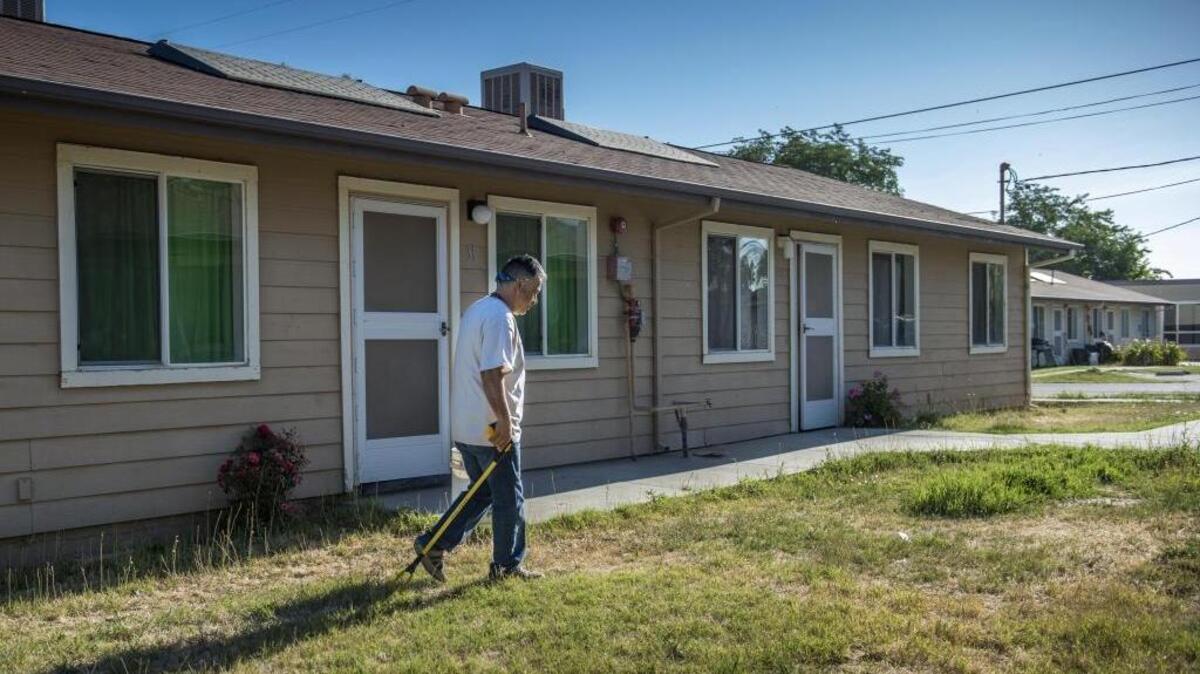
The farmworkers, some accompanied by their young children, live at the Davis Migrant Center — one of 24 state-subsidized complexes that provide affordable housing to farmworkers. The centers have operated on a seasonal schedule for more than a half-century, even as the needs and demographics of California’s agricultural workforce have changed significantly.
Today, most farmworkers no longer follow the harvest from one region to another or return to their home countries when the growing season ends. They prefer to remain settled in the communities where they work, raising families and putting down roots.
The state’s migrant housing system has not kept pace. The centers continue to close for three to six months each year, leaving units vacant and forcing families to find somewhere else to live until the next growing season.
For parents like Lopez, the annual closures mean choosing between uprooting their children from school or finding temporary housing that is far beyond what he can afford.
In past years, his family would return to Sinaloa, Mexico, when the center closed for the season. They decided to stay in the region in recent years to give their children access to a better education and avoid the violence in Sinaloa. The choice comes with a major financial burden.
At the Davis center, Lopez pays $12.50 a day to live in a modest home. Outside the complex, one-bedroom apartments in the region can cost between $1,500 and $2,000 a month, he said. He earns about $2,800 a month.
Read more Another child sickened with E. coli after outbreak spreads to SLO preschool
“You can’t live in this city with our salary,” Lopez said.
Last year, Sandra Quezada, a 31-year-old single mother of two, made a similar decision. She chose not to return to Mexico when the center closed. Quezada feared her children would fall behind in school and eventually follow her into the fields, where work is often physically demanding and low-paying.
A 2023 Sacramento Bee investigation found that annual closures perpetuate a cycle that compromises children’s chances of leaving low-wage work and keeps them coming back to the fields. Many families living in the centers have returned for generations.
Quezada, with her children in mind, helped distribute the flyers on Saturday that explained how the seasonal closures disrupt families’ lives and urged residents to call their local elected officials.
“This is a small action that not everyone is going to care about, but if we can make the right people care then hopefully one day there will be a change,” Quezada said.
The state has begun examining a potential solution. In September 2024, followed The Bee’s stories, Newsom signed legislation directing the California Department of Housing and Community Development to study the feasibility and potential impact of keeping the centers open year-round. The report is due July 1, 2027.
For Antonio De Loera-Brust, a farmworker advocate who grew up in Davis, Saturday’s effort highlighted a contradiction in a city that prides itself on its agricultural roots. The workers who sustain the industry often struggle to remain in the community or enjoy the same amenities — like a weekly trip to farmers market — as other residents.
“Being an agricultural community doesn’t just mean fresh farm-to-fork,” he said. “It means there’s people who live here or around here who make that industry possible. Farmworkers who are making this agricultural community possible should be able to fully benefit and experience it as full members.”
Read more Highway 50 in El Dorado County is a hot spot for wildlife road deaths. What to know