 By admin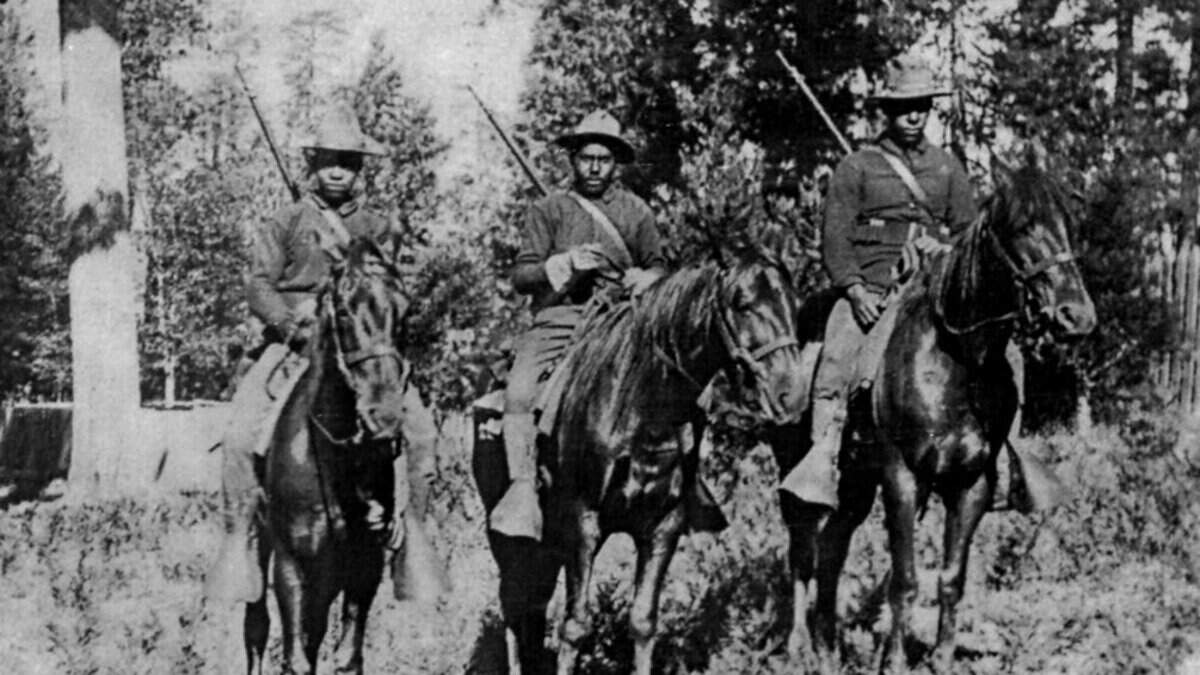
On July 28, 1866, Congress created the country’s first all-Black Army regiments as part of a post-Civil War military reorganization. 160 years later, a small group gathered on the steps of the California Capitol building to honor the legacy of those servicemen who came to be called the Buffalo Soldiers.
Read more Folsom Lake College student snags top prize at CA State Fair with digital art entry
The Buffalo Soldiers played important roles in the nation’s western expansion, escorting settlers, building infrastructure and keeping order on the frontier. They served in major campaigns, including the Indian Wars and the Spanish-American Wars, and as some of the nation’s first park rangers in Yosemite, Sequoia and General Grant (now Kings Canyon) National Parks.
“They fought on two fronts. They fought the enemy, and they fought systemic, institutional racism daily. They did it in a way that the current generation needs to take a look at,” said Michael Harris, chair of the California Buffalo Soldiers Project.
Tuesday’s commemoration of National Buffalo Soldiers Day served as a kick-off to a year of events organized by the California Buffalo Soldiers Project to mark the 160th anniversary of the corps. This weekend, the group is holding a luncheon near the Presidio in San Francisco, where the Buffalo Soldiers were headquartered.
Harris says the project will also tour several stops along the historic trail connecting the regiments’ outposts throughout California, with additional stops in Atlanta, New Orleans and Washington D.C.
Historians generally believe the Buffalo Soldiers were given their name by Indigenous tribes, although accounts vary over the exact origin of the name. Some say it was given to recognize the soldiers’ bravery. Others say it was due to the perceived resemblance of the soldiers’ hair to a buffalo’s mane.
Either way, the name stuck. Although the term was once used for Black soldiers at large, today it refers to the Army units formed from the 1866 reorganization: the 9th and 10th Cavalry Regiments and the 24th and 25th Infantry Regiments, according to the U.S. Army.
The last all-Black Buffalo Soldiers units were dissolved in the 1950s following the integration of the armed forces. July 28 was officially designated in 1992 as National Buffalo Soldiers Day by President George H.W. Bush.
Read more California environmental groups seek to stop development of ICE detention center
One of the most notable Buffalo Soldiers was Charles Young, the third African American to attend the U.S. military academy at West Point and the first Black superintendent of a national park. Young died with the rank of colonel but was posthumously promoted to brigadier general in 2022 in recognition of his service and the racial barriers he faced.
“This is right out of slavery and people of African descent stuck through it and did things that were just unimaginable. Today it’s much easier if you apply yourself, but part of applying yourself is knowing that you can do it because somebody else did it before you,” said Harris.
He says the California Buffalo Soldiers Project is working to have the contributions of Young and his fellow soldiers recognized permanently by the state and the city, hopefully through a memorial or commemoration near the Capitol. But the group has a larger goal of educating the public about the contributions of Black service members.
“Unfortunately, here in the community that I was born in, we don’t teach Black history and local Black history,” said Harris. “The most salient example is (that) today is National Buffalo Soldier Day — national. And it’s a secret.”
Sacramento resident Lisa Baker, who also works on the California Buffalo Soldiers Project, wants to see more community members immerse themselves in local Black history.
“I’m still learning,” said Baker. “I hope in the near future that we get more people that come to be more involved and actually want to participate where they’re actually sharing this in school.”
Read more ‘Time is of the essence’ to ban AI political ads says US Sen. Adam Schiff
This story was originally published July 28, 2026 at 4:49 PM.