 By admin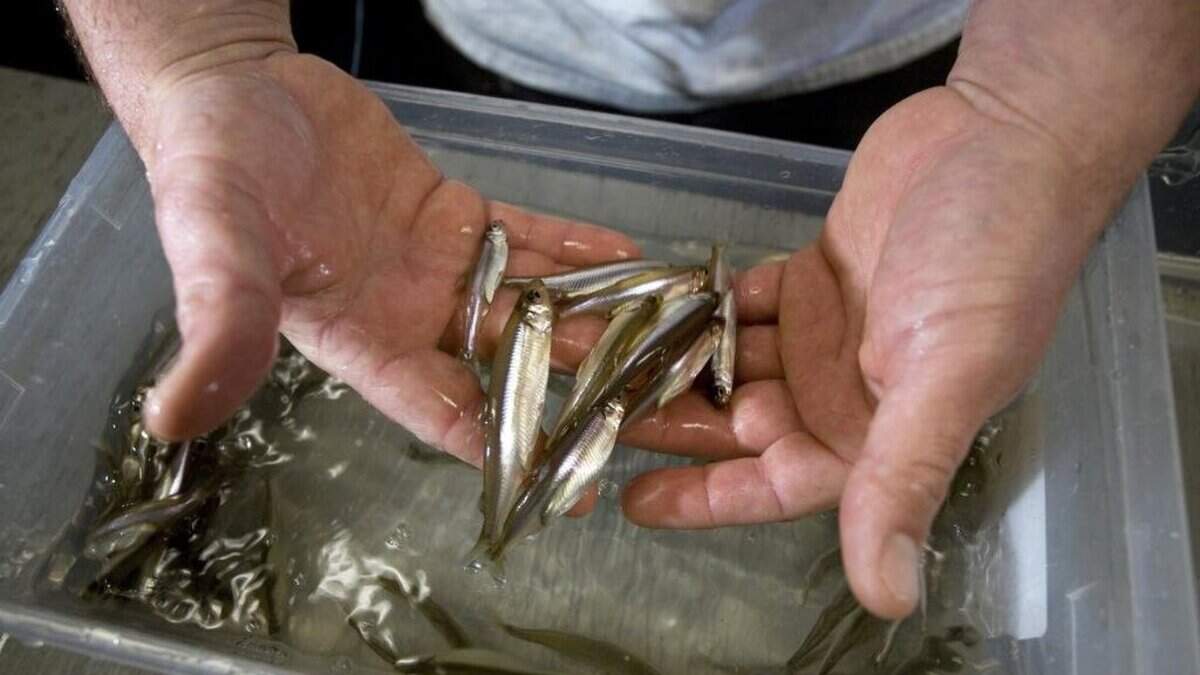
Since President Donald Trump took office for a second term, his administration has rolled back numerous environmental protections.
Read more Hotel on the way to Big Sur gets a major remodel and a new name. Here’s a look
The latest target is the Endangered Species Act, one of the nation’s bedrock conservation laws. Earlier this month, the U.S. Department of the Interior issued a new interpretation of what would constitute harming an endangered species that sharply loosens the act’s protections related to the degradation of protected wildlife’s habitat.
Though Republicans have long sought changes to how the act is interpreted, the rule change marks the most ambitious rollback to the landmark environmental law by the Trump administration yet.
The move has drawn a wide range of responses in Northern California.
Environmental organizations have decried the change as a complete gutting that will rapidly accelerate extinctions, and have sued in federal court. State officials have also indicated their opposition but have yet to take legal action themselves.
“California will continue to defend this critical federal law and protect our rare animals, plants, and the environment,” a spokesperson for Attorney General Rob Bonta said in a statement to The Bee this week. “We’re exploring all of our legal options.”
Among industries often constrained by the law meanwhile, the reaction has been more mixed. Some farmers cheered the change, including the industry’s principle advocacy organization, but at least some growers oppose it. Spokespeople for two major timber companies also offered conflicting views to The Sacramento Bee.
The new rule will “provide greater regulatory certainty for farmers, ranchers, water managers and landowners by reducing unnecessary permitting, consultation and mitigation requirements while maintaining the ESA’s core protections for threatened and endangered species,” the California Farm Bureau said in a post on its website.
The broad range of reactions is in keeping with a federal law that has long played a momentous role in the environmental disputes that have shaped urban development, water usage, agricultural land and many other elements of social and economic life in the state. If upheld, the Trump administration’s change would upend many of those debates going forward, particularly when they occur on federal land.
Immediately after the federal government issued its final rule change on July 10, environmental groups sued, with cases filed in both San Francisco and Seattle federal courts.
California Natural Resources Secretary Wade Crowfoot cast the change as another prong in a broad attack on environmental protections by the Trump administration. The president has defunded federal agencies, undone pollution limits and ended, with the U.S. Supreme Court’s blessing, the endangerment finding that allowed for the regulation of greenhouse gasses under the Clean Air Act and was put in place under President Barack Obama.
“We have environmental laws to protect both people and nature, and this is just the latest attack on these protections,” Crowfoot said.
Last May, California joined other states on a letter opposing the Endangered Species Act change after Trump’s Secretary of the Interior Doug Burgum, a Republican and the former governor of North Dakota, first proposed it.
Now, state environmental regulators are examining whether existing California laws, including the state’s own endangered species act, can provide a backstop if the Trump administration’s move survives court scrutiny, Crowfoot said. But he noted that about half the land in California is managed by the federal government, not the state.
What does ‘harm’ mean?
The dispute centers around the Interior Department’s interpretation of just one word in the act’s text: “harm.” The act makes it illegal to “harass, harm, pursue, hunt, shoot, wound, kill, trap, capture, or collect” endangered species. Since the 1970s, the federal government has interpreted harm to include any actions that degrade a species’ habitat, given the necessity of habitat for a species’ survival.
The U.S. Department of the Interior is recognizing that as the definition of harm, following a regulatory review and public comment period that began last year. Beginning in September, if a federal judge doesn’t intervene, only the nine other verbs in the act will constitute a violation of the law.
Destroying habitat of endangered California species like northern spotted owls or coho salmon, by cutting too many trees or draining too much water out of the forests and rivers in which they live, would no longer be a violation of the act.
“It’s nonsense,” said Kristen Boyles, an attorney with the environmental group Earthjustice, which filed the Seattle lawsuit. “It’s biological nonsense for sure. It’s legal nonsense from my perspective, looking at all the ways the statute talks about the importance of habitat.”
The other federal lawsuit came from environmental organizations in California’s northern coastal region, led by the Environmental Protection Information Center. That lawsuit names coho salmon, spotted owls, as well as a threatened seabird, the marbled murrelet, which lives largely out at sea but returns to old-growth coastal trees to nest, as species threatened by the change.
But those are just endangered species that fall under the jurisdiction of federal judges in the Northern District of California. All told, there are 91 species that live in California and are listed as endangered under the act, and another 51 species listed as threatened.
Among them are species that have shaped water development, agriculture and urban growth debates in the Central Valley and the Sacramento-San Joaquin Delta for decades, said Devon Pearce, a lead scientist with the conservation group Friends of the River.
Endangered and threatened fish species have carried particular weight in dictating how state and federal agencies regulate the flow of water into and out of the Delta. Agencies today balance irrigation and development needs with the water quality and temperature needed by endangered and threatened fish, ranging from winter run Chinook salmon and Central Valley Steelhead trout to diminutive delta and longfin smelt.
“The flow is the habitat,” Pearce said. “Without (enough water) flow, the fish aren’t going to be able to survive, even though that is maybe not directly killing them in that moment, they can’t survive there. They can’t reproduce.”
Farmers split on change
Though the California Farm Bureau supports the administration’s change, not all growers do. Bruce Rominger, who owns around 5,000 acres of farmland with his brother in Yolo County’s Winters, said he does not think the Trump administration’s method is the right way to amend the law.
Read more Reunited: 49ers to sign Deebo Samuel as injuries mount at receiver, source says
Push and pull over other more nuanced aspects of the Endangered Species Act, such as what marks a species as recovered or the concept of “incidental take” — the accidental harm to endangered wildlife that is an inadvertent byproduct of some industries the government considers essential — have gone on for years.
“I am not saying the ESA is perfect. I think it has been mishandled at times by various agencies, but I think this is not the way to go about making some reforms,” Rominger said. “I think it is important that we maintain the habitat and the species we have left.”
Former one-term Republican Congressman John Duarte, a Modesto farmer, offered a more conservative agriculturalist’s view of the Trump administration’s efforts to rein in the ESA’s scope.
In the past, the act has been applied to control how people used their land rather than to protect species, he said.
Duarte noted that he has run into trouble with federal environmental law through his farming. He was fined $1.1 million in 2017 by the U.S. Department of Justice for violating the Clean Water Act — a case where the federal government also mentioned alleged ESA violations during litigation, federal court records show, but did not ultimately include them in the settlement. The case was brought over a form of habitat destruction — Duarte plowed federally-protected wetlands and streams to plant wheat, court records show.
“I have firsthand experience in how Endangered Species Act restrictions and legislation that was originally intended for environmental protections become weaponized for land use restrictions and removed from their original goals,” said Duarte, who farms 600 acres.
Like Rominger, Crowfoot said the ESA can at times be too heavy handed, and said there was always room to tweak the law, particularly in an era where California is confronting a cost of living crisis some pin on regulations restricting growth.
“We’re very open-minded to honest conversations about how we modernize the ESA and other environmental laws to better protect the environment and enable the delivery of the infrastructure and the housing that we need,” Crowfoot said. But the Trump administration’s move on the Endangered Species Act fits a pattern of environmental protection rollbacks done without input from the state officials who respond to those laws on the ground.
“On all of these actions, there’s very little — like none to very little collaboration,” Crowfoot said, adding his agency often learns of federal actions at the same time as the general public, through Trump administration announcements.
Lawsuit names timber companies
The state’s fishing industry, both commercial and recreational, as well as its building trades all stand to be impacted if the Trump administration’s definition of harm wins out. The lawsuit filed in San Francisco, however, focused largely on another Northern California industry that has seen its share of high profile fights over endangered species: the timber trade.
In the lawsuit, environmental attorneys named two forest product companies that own large swaths of Northern California that are habitat for the marbled murrelet: Mendocino Redwood Company and Green Diamond Resource Company. The court filing noted that when the U.S. Fish and Wildlife Service listed the plump little seabird as threatened in 1992, the agency documented the logging of as much as 96% of the old-growth coastal forests the marbled murrelet once nested in had been logged.
The two timber companies own some of the remaining forest the bird uses or might use for habitat, according to the lawsuit, and do not yet have federal Habitat Conservation Plans that would lay out protections for the bird as logging occurs. Under the new rules, both companies are “reasonably likely to modify or destroy marbled murrelet nesting habitat,” the lawyers wrote.
Neither company is a defendant in the lawsuit, which is against the federal government and asks a judge to throw out the Interior Department’s new rule and send the agencies back to the drawing board. But in comments to The Sacramento Bee, spokespeople for the two companies both said that regardless of how the new ESA interpretation runs out, their timber operations will not destroy marbled murrelet habitat.
Environmental Protection Information Center, the group that filed the San Francisco lawsuit, did not respond to emails requesting comment.
Mendocino Redwood Company has managed the land in question for 25 years and voluntarily preserves all old-growth trees on its land, company vice president Dennis Thibeault told The Bee in an email.
Seven different state and federal agencies oversee the company’s logging operations, he wrote, and “there are numerous other protections that would prevent the modification or destruction of marbled murrelet habitat.” The lawsuit’s contention was “a narrative constructed without a factual foundation,” he wrote.
But the company did support the Trump administration’s change to the ESA, which he said lines up with past court rulings and would lessen uncertainty over the law.
“We support a clear definition of harm that is less subject to interpretation and more consistent with the court rulings over the years,” he wrote.
An official for Green Diamond Resources similarly said her company has no intention of destroying the bird’s habitat. The company is nearing completion of its Habitat Conservation Plan, policy director Elicia Goldsworthy said, which has been a ten-year process. Their hope is to get that plan submitted and accepted under the previous guidelines, to create certainty for their operations going forward regardless of how the federal rule change fares.
But she also took a different view of the Trump administration’s move, calling it one that injects more uncertainty for the company which has been able to successfully operate under existing regulatory schemes.
“We don’t see this as benefitting us in the long run,” Goldsworthy said, adding the company does not intend to get involved in the fight over the new ESA interpretation. Such a controversial change to the ESA was likely to be undone by the next Democrat administration, she predicted.
“Extreme policy just breeds more extreme policy, and it’s such an unstable environment to be operating in,” she said.
Read more Hollywood comes to El Dorado County. Film productions spent $8.7 million last year