 By admin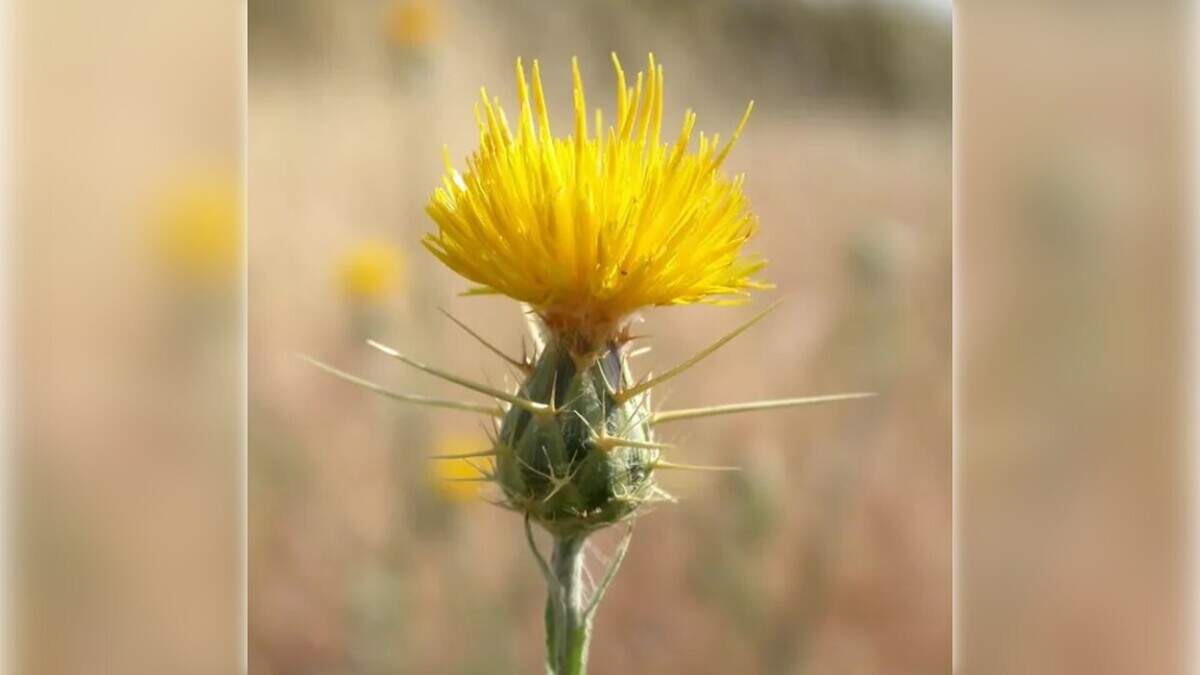
The National Park Service calls it “the plant that ate California.”
Yellow starthistle, a spiky winter plant, has invaded more than 12 million acres in the Golden State, the California Invasive Plant Council said.
Read more Gov. Gavin Newsom signs California law to ban AI actors in ads without disclosure
While California has plenty of invasive plants, yellow starthistle is considered “one of the most serious rangeland weeds” in the state, the council said.
It’s also difficult to eradicate thanks to its long root system and fire-resistant seeds.
Here’s what to know about yellow starthistle:
What is yellow starthistle?
Yellow starthistle, scientific name Centaurea solstitialis, is a bushy summer-blooming annual, the California Invasive Plant Council said.
It is common on California roadsides, rangelands and wildlands, University of California Invasive Pest Management said.
Yellow starthistle is part of the sunflower family, the National Park Service said.
It is native to Eurasia and came to California in the 1850s via South America, University of California Invasive Pest Management said.
Why is yellow starthistle a problem?
Yellow starthistle has invaded more than 12 million acres in California, the California Invasive Plant Council said.
“Yellow star thistle imposes a serious long-term threat because of its ability to produce large numbers of seeds and its growth during the hot summer months,” the National Park Service said.
It’s “considered one of the worst weeds in the western United States,” University of California Invasive Pest Management said
Read more Distinctive, Tahoe cabin-like South Land Park home sells
It absorbs moisture and crowds out native species, TreePeople said.
Yellow starthistle also can grow in “impenetrable stands” and block access to recreational areas, Invasive Pest Management said. It also can cause a fatal disease in horses if ingested.
The spines protect the plant from animals but can be “painful” for park visitors, the National Park Service said.
How can you identify yellow starthistle?
Yellow starthistle plants are gray-green and produce yellow, thistle-like flowers with stiff, long spines in late June and July.
Stems and roots are covered with loose, cottony wool, giving them a whitish appearance, University of California Invasive Pest Management said
It’s usually found below 7,000 feet elevation in dry, sunny areas.
A large plant can produce nearly 75,000 seeds, the California Invasive Plant Council.
How can you eradicate yellow starthistle?
Yellow starthistle is difficult to eradicate by mowing or burning because of its long roots and fire-resistant seeds, TreePeople said.
Insects and fungus are being studied as possible ways to control yellow starthistles, University of California Invasive Pest Management said.
They include some insects from the Mediterranean region, including weevils and flies, the California Invasive Plant Council said.
TreePeople suggests that homeowners remove the plant during early flowering by eliminating all above-ground stem material or pulling it out by the roots, if possible.
Read more Who oversees CA’s tax system? A guide to the Board of Equalization’s 1st District race