 By admin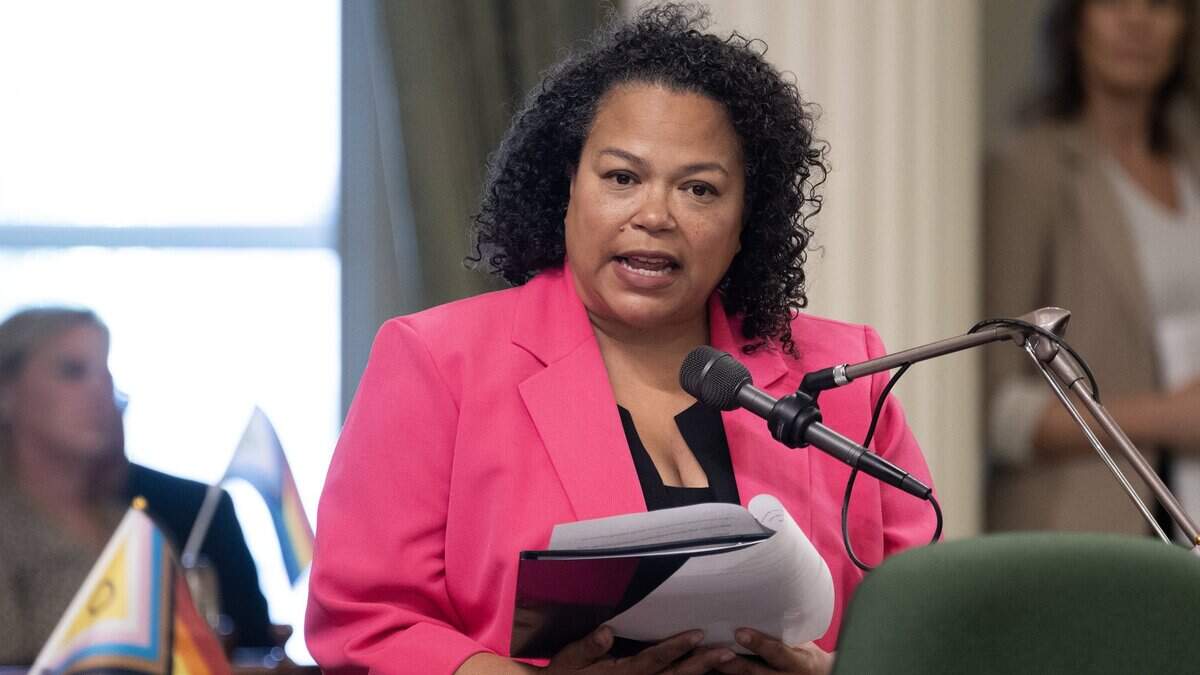
After months of contentious debate, California lawmakers voted Wednesday to advance a bill to Gov. Gavin Newsom’s desk that would protect the confidentiality of immigration service providers.
Read more 1 dead in Rio Linda multi-vehicle collision and fire, authorities say
Assembly Bill 2624, authored by Mia Bonta, D-Alameda, would allow immigration service providers to protect themselves from harassment or violence by making their addresses confidential. It would also prohibit publicizing personal information, such as the address or photograph, of an immigration service provider online for the purposes of harassment and violence.
Those against the measure, termed the “Safe at Work Act,” have argued it would limit the ability of independent journalists to conduct and publish investigations into immigrant-serving organizations. The bill passed by a 30-10 vote on the Senate floor Tuesday and a 59-19 vote on the Assembly floor Wednesday.
The legislation builds upon the “Safe at Home” program, an existing legal framework that extends these protections to victims of domestic violence, sexual assault and other forms of abuse, as well as healthcare employees who provide reproductive and gender-affirming treatment.
Immigration service providers have faced an uptick in targeted harassment online, Bonta said in a June 30 Senate committee hearing. Personal information is easily accessible to data brokers and bad actors through online public records databases, according to Bonta, posing a risk to those working in sectors such as legal aid, humanitarian relief, case management and advocacy.
“Advocates and workers are receiving death threats, being targeted at courthouses and facing coordinated online doxxing campaigns,” Bonta said. “At the same time, personal information is increasingly easy to access…This makes it easier for bad actors to threaten or harm those who are simply doing their jobs.”
The bill would provide participants in the program with a substitute address, shielding their personal information and rerouting their mail through the Secretary of State.
“As immigrant-serving organizations continue to provide legal services, know your rights education, rapid response and humanitarian assistance, staff are increasingly concerned about their personal information and how it could be used to harass and intimidate or harm them and their families,” said Monica Madrid, a state policy advocate with the Coalition for Humane Immigrant Rights, during the hearing. “AB 2624 provides a practical, proven solution by allowing eligible individuals to participate in the safe at home program.”
Also known as the ‘Stop Nick Shirley Bill’
Opponents of the legislation have dubbed it the “Stop Nick Shirley Bill,” referencing an online political influencer whose video accusing Somali-run Minnesota daycare centers of fraud went viral.
The December 2025 video had millions of views on YouTube. While several of its claims were debunked by independent media shortly after its release, the video triggered a series of government actions in Minnesota. In January, the Department of Health and Human Services froze federal funding for childcare in the state. The same month, over 2,000 Immigration and Customs Enforcement agents arrested and detained about 3,700 immigrants in St. Paul and Minneapolis.
In March, Shirley posted a video claiming hospice care centers in San Diego were responsible for over $172 billion in fraud. The video seized on a long-standing conflict between federal and state officials regarding alleged fraud in California, and sparked a federal investigation into the issue.
The renewed public attention to hospice fraud stemming from Shirley’s video spurred further opposition to the bill from Republican lawmakers. Assemblymember Carl DeMaio, R-San Diego, said on the Assembly floor April 16 that the bill would “stop citizen journalists from recording and posting evidence of fraud.”
Sen. Tony Strickland, R-Huntington Beach, said in an interview with The Sacramento Bee that if the bill is passed, he believes it will be challenged in court for violating the First Amendment.
Read more Cal-OSHA fines guide company in deadly Tahoe avalanche
“It makes it harder for investigative reporters like Nick Shirley to do what they’ve done and, quite frankly, I think we need more people looking at how we’re spending our money, and more transparency and accountability,” Strickland said.
Supporters say bill’s intention is to prevent harassment
However, Bonta and the bill’s supporters maintained the measure would only sanction those who distribute images and videos online with the explicit purpose of inciting or threatening violence against an individual.
“This bill was not intended to impede on anyone’s constitutional right to free speech, and certainly not intended to be secretive or shield us from the scrutiny or criticism that we should be getting,” said Sen. Lena Gonzalez, D-Long Beach, who presented the bill on the Senate floor Tuesday, in an interview with The Bee. “We should be held accountable. This is completely different.”
The bill states that “a person, business, or association shall not knowingly publicly post or publicly display, disclose, or distribute on the internet the personal information or image of any designated immigration support services provider” or others residing at their home address with the specific intent to either “incite a third person to cause imminent great bodily harm” to them or threaten them such that they have an “objectively reasonable fear for their personal safety.”
When concerns regarding the legislation’s effect on reporters surfaced in an April 21 Assembly committee hearing, Bonta said the bill would not restrict the rights of journalists as defined in California Evidence Code Sec. 1070, which outlines protections for any individual “connected with or employed upon a newspaper, magazine, or other periodical publication, or by a press association or wire service.”
While the Senate removed this reference to Sec. 1070 in a July amendment to the bill, doing so would not change the measure’s practical effect, Bonta said in an Aug. 18 press release. According to the release, the removal of the citation addressed a legal redundancy in the bill’s language.
“It is very clear in the legislation,” Bonta said at the committee hearing. “Constitutional free speech protections still fully apply. It does not prevent lawful reporting of matters of public concern, and the bill is narrowly focused on preventing misuse of personal information, not restricting lawful speech.”
Other lawmakers have claimed the language of the measure lacks specificity. In an April 18 video posted to Shirley’s X account, Assembleymember David Tangipa, R-Fresno, said the bill’s definition of “immigration support services provider” was broad enough to permit prosecution against individuals like Shirley, who often take video footage of such facilities and the individuals who work there.
“I am OK with the Safe at Home program, but to say that this is just a simple expansion to immigration support services I think is misleading,” Tangipa said in an interview with The Bee. “The devil is in the details.”
The measure’s provisions apply to facilities “where immigration support services are provided, including, but not limited to, nonprofit organizations offices, Department of Justice-recognized entities, community legal clinics, law offices, accredited representative sites that provide immigration legal services, and healthcare facilities,” the bill reads.
Shirley’s video on X, which featured Shirley approaching Democratic legislators as they walked from the Capitol to their offices on O Street, attracted widespread public awareness of the bill. The legislation’s heightened visibility has drawn harassment targeted at Bonta and members of her team, according to Bonta’s Wednesday presentation on the Assembly floor.
“Colleagues, I know some of you have felt the heat of this manufactured controversy in your own offices. I have, too,” Bonta said. “It’s designed to make us feel the political cost of standing with immigrant communities and making it feel like it is too high….When we support AB 2624 today, we are not only protecting the people who serve our immigrant neighbors, we are rejecting the idea that policy in this state gets written by hate and driven by clicks.”
Read more Prairie City Road in Folsom to close near Highway 50 next week for repairs