 By admin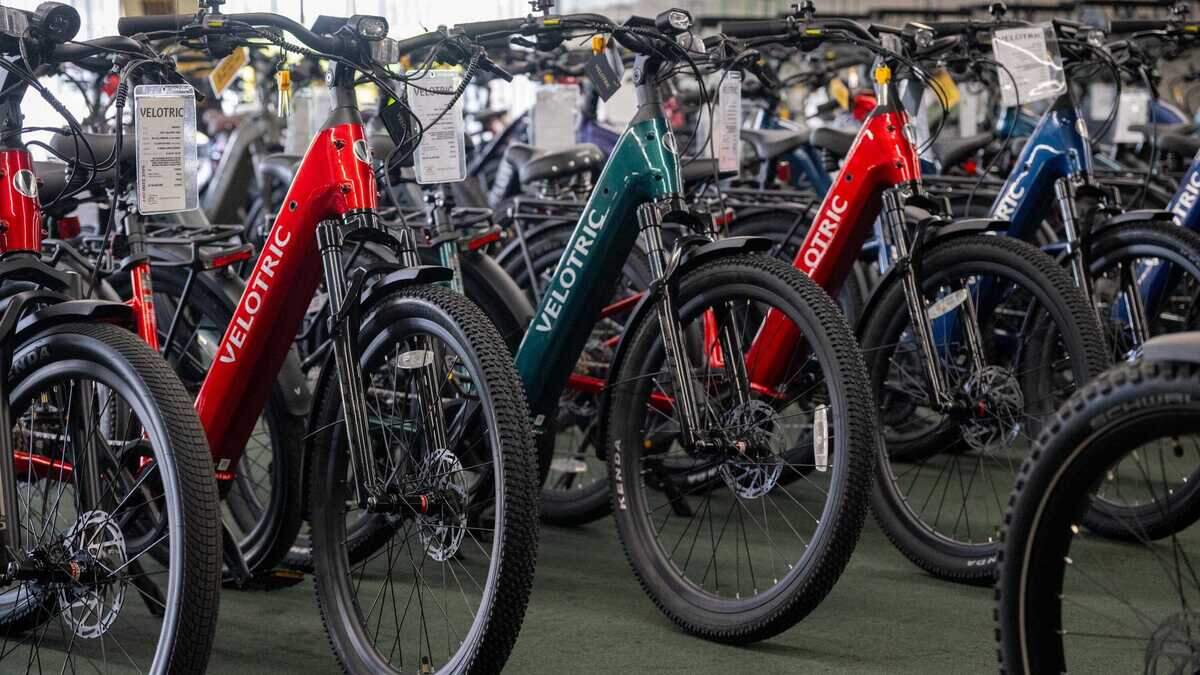
Every morning during the school year, about 30 e-bikes and e-scooters line the walls of the auditorium at Hiram Johnson High School, crowding near the few outlets providing midday charging power. Each one is fairly new, a part of a growing transportation trend that is outpacing regulations to mitigate risks, even as benefits are also noted.
Read more Earthquake rattles area near Johannesburg, CA: 2.7 magnitude reported on June 21
One of the e-scooters, an Aavowheel, belonged to freshman Isabella Lynch, 15. She began riding it at the beginning of the school year. Before that, she depended on public transportation, which was unreliable.
“The times tend to vary when the bus comes, and sometimes it’ll just drive past you,” Lynch said — a consequence of the bus route being shared with UC Davis students that can quickly fill up available space.
The e-scooter, she said one school morning, “was actually my dad’s idea because he wanted a reliable way I could get to school on my own without being late.”
The school year came to a close June 11.
For Lynch and many of her fellow students, e-bikes and scooters offer freedom to commute to summer jobs, classes and recreation. For officials wrestling with a partially unregulated form of transportation that, depending on the model, can travel more than 20 mph, they pose a threat to young, unlicensed riders and others around them.
While legal e-bikes for riders under 16 are limited to 20 mph, other related devices that are illegal to operate on city streets — e-motorcycles — have also grown in popularity.
“We have some kids that drive hazardously,” said principal Garrett Kirkland. “And we did have a kid lose a bunch of teeth and split his mouth open.”
The benefits — kids do show up on time more, he said — come with the risks: Students going too fast, breaking traffic laws, crashing and riding what “are starting to look like motorcycles,” he said.
Entities such as schools and city governments are attempting to keep up as use of the devices, which are commonly referred to as e-bikes, continues to skyrocket across the country.
The capital region is not immune to the struggle.
Across nearby communities, officials have reported more complaints, more crashes and more confusion over how to regulate the alternative mode of transportation.
But the data driving those concerns is not always clear. Because the devices are relatively new, hospitals do not always categorize the exact type of vehicle involved in a crash, and details such as speed are self-reported, meaning the data can be muddled. But officials do know this: More people are injured on e-bikes and related devices than before.
“It wasn’t anything we really even considered as a frequent event back in 2021,” said Dr. Rachael Callcut, trauma medical director at UC Davis Medical Center in Sacramento. “Now we see these patients almost every single day.”
First, what is an e-bike?
Under California law, electric bicycles fall into three classes.
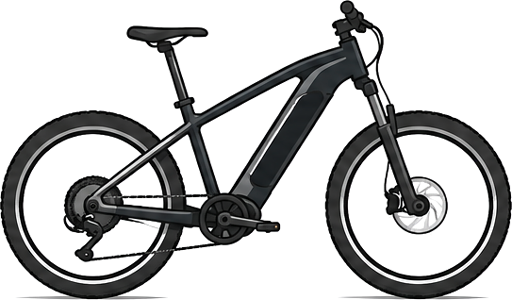
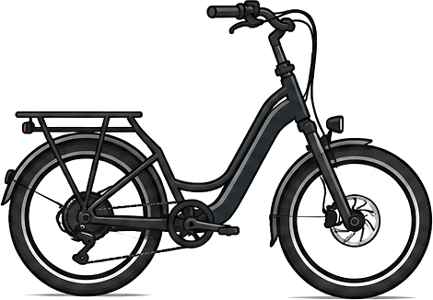
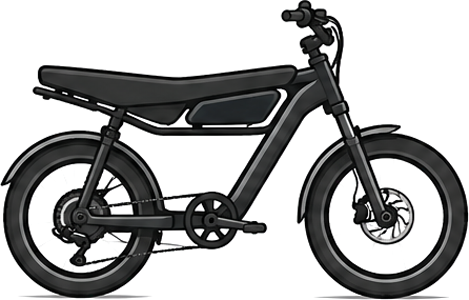
Class 1 bikes provide pedal assistance up to 20 mph. Class 2 bikes include a throttle but also stop assisting at 20 mph. Class 3 bikes provide pedal assistance up to 28 mph and require riders to be at least 16 years old.
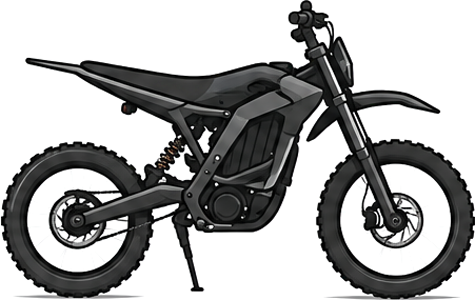
But many devices that resemble e-bikes operate more like motorcycles.
E-motos and electric dirt bikes can reach higher speeds and rely entirely on throttle power, and they are not legal on public roads or bike paths. Some are marketed or modified in ways that blur those distinctions.
“Any time a bike even has the capacity or ability to be unlocked past class 3, it is no longer a compliant bike in California,” said Jacob Stabler, CEO of Sacramento’s ATV Wholesale Outlet.
Not every electric ride is an e-bike
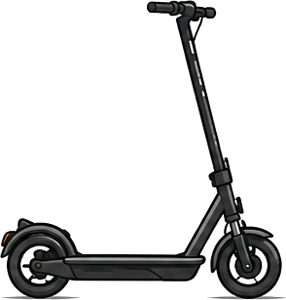
California law draws a clear line between legal e-bikes and faster electric vehicles based on how they provide power and their maximum assisted speed. Electric motorcycles, often called e-motos, and stand-up scooters follow different rules, including licensing, registration and where they may legally operate.
- Pedals
- Yes
- Throttle
- No
- Assistance
- Pedal-assist
- Top speed
- 20 mph
- Motor limit
- 750 watts
- Min. age to ride
- None
- Helmet req.
- If under 18
- Driver’s license
- No
- Registration
- No
- Pedals
- Yes
- Throttle
- Yes
- Assistance
- Throttle-assist
- Top speed
- 20 mph
- Motor limit
- 750 watts
- Min. age to ride
- None
- Helmet req.
- If under 18
- Driver’s license
- No
- Registration
- No
- Pedals
- Yes
- Throttle
- No*
- Assistance
- Pedal-assist*
- Top speed
- 28 mph
- Motor limit
- 750 watts
- Min. age to ride
- 16 years old
- Helmet req.
- For all riders
- Driver’s license
- No
- Registration
- No
- Pedals
- No
- Throttle
- Yes
- Assistance
- No
- Top speed
- Varies
- Motor limit
- >750 watts
- Min. age to ride
- 16 with license
- Helmet req.
- For all riders
- Driver’s license
- Yes
- Registration
- Yes†
- Pedals
- No
- Throttle
- Yes
- Assistance
- No
- Top speed
- Varies
- Motor limit
- N/A
- Min. age to ride
- 16 years old
- Helmet req.
- For all riders
- Driver’s license
- Yes
- Registration
- No
* California law defines Class 3 as pedal-assist. Some manufacturers sell Class 3 bikes with throttles limited to 20 mph, but the defining feature is pedal assistance up to 28 mph. † The DMV requires Off-Highway Vehicle registration; riders must possess a driver’s license.
Sources: California Department of Justice, Department of Motor Vehicles
Graphic: DANIEL HUNT • [email protected]
Some e-motos appear more powerful than traditional e-bikes. Kirkland said some resemble Harley-Davidsons, but he could not explain the exact difference between an e-bike and an e-moto.
Registration and a Class M1 license “may be necessary” to legally operate “motor-driven cycles” that fall outside e-bike standards in California, according to a California Department of Motor Vehicles spokesperson. E-motos designed for off-road use require an off-highway vehicle registration.
A surge in popularity
Sales of electric bicycles have surged nationwide in recent years.
Between 2019 and 2022, U.S. sales nearly quadrupled to 1.1 million from just under 290,000, according to the Light Electric Vehicle Association.
Sales continued even as prices remained high, with some models selling for up to $6,000. Retailers including Costco and Sam’s Club also sell models for about $500.
That growth has been reflected across the capital region.
ATV Wholesale Outlet in Old Foothill Farms did not sell electric bicycles until 2021, when Stabler used his own money to purchase a handful to test demand. As of earlier this year, electric devices made up about 80% of the business’s sales, he said. The business is even listed on Google as “ATV Wholesale Outlet (Electric Bikes and Powersports).”
Older adults often buy e-bikes to return to cycling with less physical strain, while younger riders tend to gravitate toward faster electric dirt bikes, which are not street-legal.
“We are seeing the most danger and having a lot of issues … with the electric motorcycles, then followed by electric scooters,” said Sgt. Jeremy Day of the Sacramento County Sheriff’s Office. “The least issues that we see are with e-bicycles.”
Despite safety concerns, law enforcement officials and advocates say e-bikes can provide significant benefits when used properly.
They offer an affordable transportation option that does not require a license, reduces reliance on gasoline and makes cycling accessible to older adults and people with health limitations.
“A lot of our customers haven’t ridden in decades,” Stabler said. “Whatever their ailment is, the e-bikes are offering a solution that traditional bikes can’t offer.”
Arden Arcade resident Bill Davidson, 63, bought an e-bike a year before retiring and now regularly completes long rides across the region, something he said would not be possible with a traditional bike. One of his longest rides was about 75 miles, and he said he was aiming for a 100-mile trip.
Injuries are rising
At the UC Davis Medical Center in Sacramento, doctors have seen a sharp increase in patients injured in crashes involving electric devices.
In 2025, more than 340 patients treated at the hospital were injured in e-bike or e-scooter crashes, part of a broader rise in trauma cases tied to those devices. That represented more than a fourfold increase from the 70 cases in 2021.
“When you motorize something, you’re changing the risk equation,” Callcut said. “You have to have that judgment to know to slow down.”
Read more Update: R-3 FA #2 Fire in Washoe – June 21 status
Adults accounted for the majority of trauma cases — about 220 — compared with approximately 120 pediatric cases.
However, among children younger than 15, the share of trauma cases tied to e-bikes and scooters rose to 8.5% in 2025 from less than 0.6% in 2021, according to hospital data. Adult cases — those involving people 16 and older — also increased, though less sharply, from 1% to 3.25%.
“I can’t really think of another thing… where we’ve seen such a dramatic increase over such a short period of time,” Callcut said.
One caveat, Callcut said, was that many patients were transferred or referred to the hospital because it is a Level I pediatric trauma center, making the data “a bit more dramatic.” But, she added, the trend was generally the same at other trauma centers across the country.
The data show a clear rise in injuries — but not always what type of device is responsible.
Hospitals and law enforcement agencies do not consistently distinguish between e-bikes, scooters and e-motos, complicating efforts to understand the trend. In addition, the speed recorded in medical records is often self-reported by the patient, Callcut said.
Injuries involving e-bikes continue to happen and one cyclist, 60-year-old Julie Veress, died after crashing with an e-bike rider in Davis, though police determined the teen was not at fault. On May 9, a 12-year-old e-bike rider was airlifted to a hospital after being struck by a vehicle in San Luis Obispo, according to the local police department. An 81-year-old veteran died after authorities said he was struck by a teenager on an e-motorcycle in Lake Forest.
What the data shows — and doesn’t
A report from the Mineta Transportation Institute, commissioned by the state and released last year, found that electric bicycles account for a small share of overall transportation-related injuries compared with cars, even as hospitalizations have increased.
In 2023, electric bicycle riders made up about 1% of transportation-related hospital patients in California, compared to 62% for motor vehicle occupants. Still, hospitalization rates were higher for e-bike riders than for drivers or passengers in cars.
“Both are problems and should be treated to serious policy analysis and work,” said researcher Asha Weinstein Agrawal. “But e-bikes are not the most dangerous things on our roads.”
The report also found that many e-bike rider hospitalizations include crashes with motor vehicles and that available data often does not distinguish between legal e-bikes and higher-powered devices.
Local response and efforts
Law enforcement agencies across the capital region reported more issues tied to electric devices, though not always from traditional e-bikes. Some agencies have taken steps to address the problems.
• In Rancho Cordova, a teenager was arrested in February after leading police on a chase on an electric motorcycle that reached speeds of 55 mph, according to authorities.
• In Folsom, the police department recorded twice as many “e-bike” collisions from 2024 to 2025, increasing from 11 to 22, respectively, according to a presentation at a January Folsom City Council meeting. The data in the presentation, however, did not differentiate between an e-bike and an e-moto, Cmdr. Andrew Bates said. Police began giving children written warnings in 2023 to educate them and their parents about e-bike laws, Bates said.
• Sacramento County Park Rangers partnered with other agencies in a targeted enforcement operation this summer to address “unsafe e-bike and e-motorcycle activity” on the American River Parkway, according to a county news release. Since Friday, rangers have been able to pursue misdemeanor charges for certain violations due to recent changes to county ordinances.
• In Rocklin, school officials banned Class 2 and Class 3 e-bikes on elementary and middle school campuses after the police department said 13 of 17 injury crashes involving e-bikes in 2024 involved children.
• In the San Juan Unified School District covering most of Sacramento’s eastern suburbs, Safe Routes to School representative Natalee Dyudyuk said she and her coworkers focused on informing parents about e-bike rules. Many parents, she said, recognized the advantages of the devices but “don’t realize that there are actually some legal requirements.”
• Galt passed an urgency ordinance late last year setting speed limits and equipment requirements for electric devices and giving police authority to tow them. Officials said the changes followed complaints about helmet use, speed and unsafe riding behavior.
“A lot of people did not realize what the law was,” said Lois Yount, Galt Joint Union Elementary School District superintendent. “Now that they know that the police department can enforce it, we’re seeing more students wearing helmets.”
• At the state level, lawmakers have introduced bills aimed at tightening regulations on e-bikes, including marketing and clarifying device classifications. Assembly Bill 1569 would require the State Department of Education and the California Highway Patrol to develop a standardized electric bicycle safety and training program for students in grades seven through 12.
Education gap
Officials, advocates and researchers agree that a lack of understanding is a major factor. Rules for e-bikes and other two-wheel vehicles are contained within the DMV’s California motorcycle handbook, but general traffic knowledge is not commonplace.
“It’s very confusing to figure out — if you actually read the state vehicle code — what the rules are,” Agrawal said.
Authorities, such as the Folsom Police Department, have turned to education, stopping riders to explain the laws and working with schools to promote safety.
Some proposed legislation would recommend student and parent e-bike trainings include ”safe mounting, braking, signaling, yielding, and riding protocols,” according the bill’s text.
Advocates said parents often do not understand the legal limitations of the electric dirt bike their child asked for or how to interpret confusing labeling from manufacturers.
Davidson, the whose e-bike journeys have taken him beyond his Arden Arcade neighborhood, said he has seen numerous ads for “e-bikes” — including a device with a 3,000-watt motor and a bike with two 750-watt motors — that he considered obviously fishy. But he owns four e-bikes and has done his homework.
As communities across the Sacramento region work to respond, officials said the challenge was keeping pace with a rapidly evolving category of devices — and making sure riders understand the difference.
The discussion over “e-bikes,” cycling advocates say, is more nuanced. Still, it is one that needs to be had to educate the public and move forward, especially as sales continue.
As the school year ended at Hiram Johnson High School, officials were already preparing for e-bikes in the fall. The school plans to install grant-funded, solar-powered charging stations capable of charging up to 40 devices to reduce the cluster around available outlets. And they will offer training to keep students safe on their e-bikes.
“It’s hard to get students to engage in that conversation if you have already communicated to them that you disapprove of it,” said Susan Rubert, Hiram Johnson’s community school specialist. “If we’re willing to work with them, they are going to be more willing to engage.”
Read more Update: Whittemore Fire burns 20 acres in Modoc County