 By admin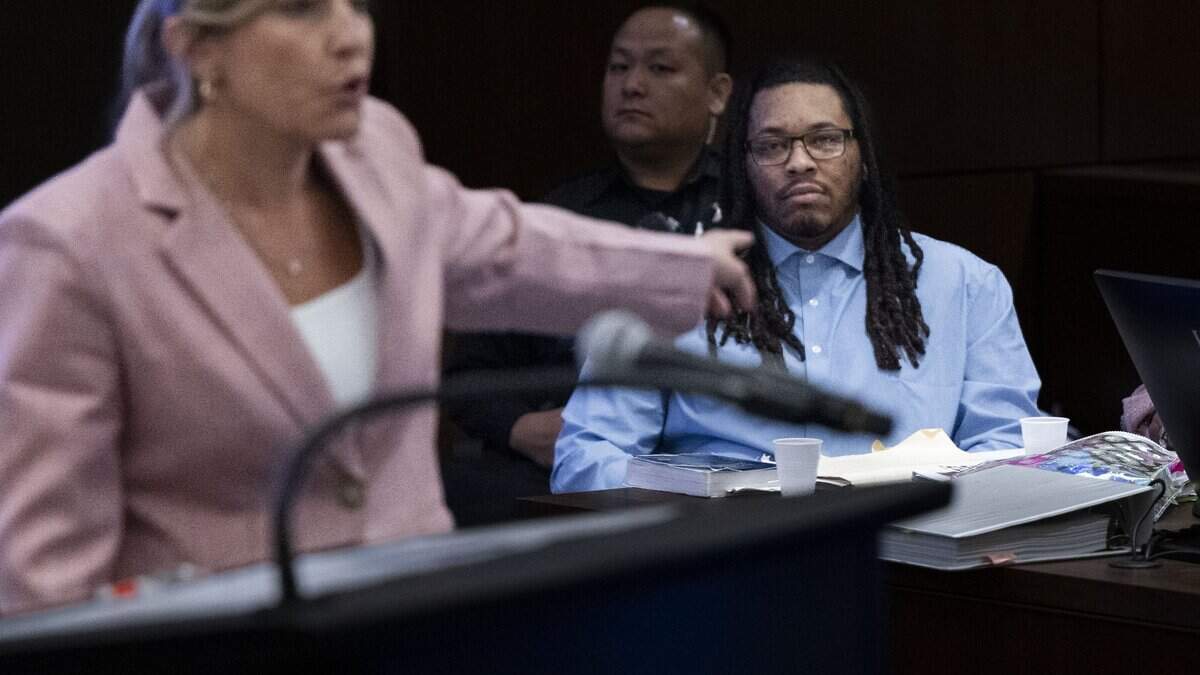
Mtula Payton and Dandrae Martin turned a downtown Sacramento street corner bustling with nightlife into a battleground in a gang shootout fueled by rivalry and retribution, a Sacramento County prosecutor told jurors Tuesday.
Read more A third of California community college districts sued by part-time faculty
“They engaged in a gang-motivated standoff; a gang-motivated shooting and a gang-motivated murder,” Sacramento County deputy district attorney Megan Eixenberger told jurors in her closing statement as the K Street mass shooting trial neared its end Tuesday in a Sacramento Superior Court courtroom packed with families, attorneys and onlookers.
When the shooting stopped just after 2 a.m. on April 3, 2022, six people were dead and another 13 were wounded in the worst mass shooting in Sacramento’s history. Three of the dead — Sergio Harris, 38; Joshua Hoye-Lucchessi, 32; and Davazia Turner, 29 — were involved in the shootout.
The other three victims were bystanders: Yamile Martinez, 21; Johntaya Alexander, 21; and Melinda Davis, 57, who were killed in the hail of bullets after being unable to escape.
“They brought their gang rivalry to a public square,” Eixenberger said. “They transformed a public space into a battlefield.”
Payton and Martin each face three counts of murder in the deaths of Martinez, Alexander and Davis, along with weapons charges and special-circumstance allegations of multiple murders. Martin’s brother, Smiley Martin, who was wounded and later arrested after the shooting, died in 2024 in the Sacramento County Main Jail while awaiting trial.
Both Payton and Martin took the stand in the final days of trial. Payton freely acknowledged his gang ties and said he carried a gun that night, but testified that he and Martin, who also was armed, fired their weapons in self-defense.
“Everybody was running in the same direction as me. People were getting shot around me. I was scared,” Payton testified last week.
Payton attorney Reed Kingsbury argued earlier in the trial that Payton’s rounds, fired behind him as he ran toward 10th and J streets, were not responsible for the women’s deaths.
No matter, said Eixenberger.
The dead and wounded, or the hundreds of panicked clubgoers left scrambling for safety at 10th Street and K Street as the clock struck 2 a.m., did not matter.
Read more Federal judge in California bars courthouse immigration arrests nationwide
Instead, Eixenberger said, “what mattered was settling a score.”
Martinez had driven from Fresno to watch a concert at Golden 1 Center and experience Sacramento’s nightlife. Alexander was heading home after a night out when she was fatally shot. Her sister lay on top of her to try to shield her from danger, Eixenberger said. Davis, who was unhoused, lived on the streets and ultimately died there.
“She took a bullet to the chest where she lays her head at night,” Eixenberger told jurors. Davis was found dead near 10th and J streets.
Prosecutors Eixenberger and Brad Ng, through testimony from a veteran Sacramento police gang expert, the detective who led the investigation, frame-by-frame surveillance video from the K Street entertainment district, and witness interviews, sought to show the intertwined street gang rivalries that they said brought Harris, Hoye-Lucchessi, Turner, the Martins and Payton to 10th and K streets.
Defense attorneys Kingsbury and Martin’s attorney, Linda Parisi, argued that the men reacted to a spontaneous burst of gunfire when they opened fire.
Eixenberger dismissed the defense theory, citing former Sacramento police gang expert and current Lincoln police Capt. Zach Eaton.
“All of these men are gang members. What was important was respect,” Eaton testified earlier at trial, explaining the intricate web of gangs, alliances and offshoots that make up Sacramento’s street underworld.
Payton and Martin could have escaped without shooting into the crowded street corner, the prosecutor argued. They did not.
“If no one had a gang element, there is no conflict. If there were no guns, there would be no shootout, there would be no murder,” Eixenberger said. “If that wasn’t gang-related, Payton walks away. Martin walks away. But, this is about respect. They can’t walk away from that.”
Prosecutors are scheduled to resume closing arguments Wednesday before Sacramento Superior Court Judge Michael Bowman.
Read more ‘Democratic voters don’t like billionaires’: strategists reflect on wild primary