 By admin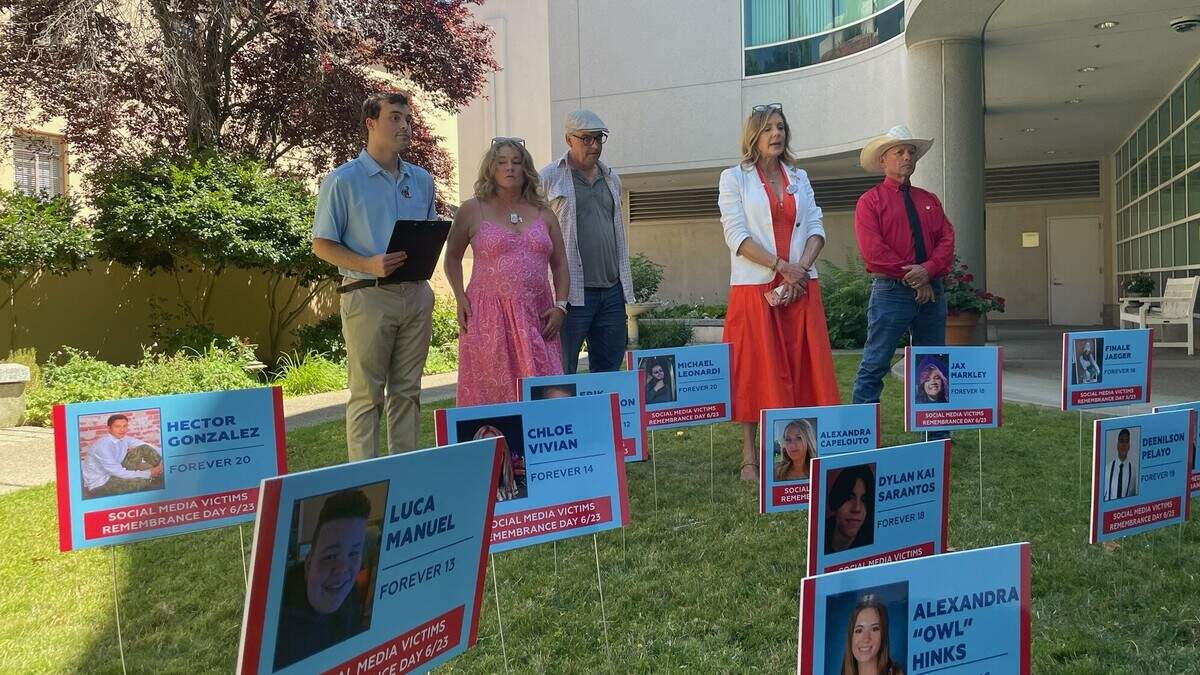
In less than 24 hours, Julianna Arnold had traveled across the country, testified at a California Assembly hearing and was a lead speaker at a press conference calling for a federal law to change how social media companies are regulated.
Read more Esparto, a year later — how the deadly blast engulfed families. ‘Lives are ruined’
But on Tuesday afternoon, in a small garden near California’s Capitol, she took another opportunity to honor her daughter Coco and other children whose loved ones say were victims of technology giants.
Four years ago Coco died after she was given a prescription pill laced with fentanyl by a man she met on Instagram. She was 17.
“These were real lives and real families that were broken and nearly destroyed because of what has been done by these social media companies and the effect that they had on our children,” Arnold said in front of signs showing many young Californians, including Coco, who were no longer alive. About two dozen advocates and loved ones of the people pictured looked on.
The event was held in tandem with a much larger remembrance ceremony in Washington, D.C. Arnold had planned to be there, but was contacted by the office of Assemblymember Rebecca Bauer-Kahan, D-Orinda, about honoring the day in Sacramento. So she got on a flight Monday to make it back to California.
Bauer-Kahan and Assemblymember Diane Dixon, R-Newport Beach, are teaming up on a bill that would proclaim June 23, 2026, as Social Media Harms Victim Remembrance Day. The measure, which was introduced earlier this month, had not been formally adopted by the time the day started.
The duo is also pushing a resolution that calls on Congress to make changes to Section 230 of the federal Communications Decency Act of 1996. It prevents lawsuits against internet companies for the content posted on their websites and also as long as the businesses make “good faith” attempts to remove obscene, excessively violent, and other material from their websites — even if it’s not protected by the First Amendment.
Advocates say the law has been abused by social media companies to shield themselves.
Read more California launches dashboard to track AI-related unemployment claims
“Section 230 is a key factor in the social media-driven mental health crisis,” Bauer-Kahan said. The resolution passed an Assembly committee later in the day. It calls for Congress to pass a bill that would repeal the section in two years.
“The two-year sunset window is not intended to remove all reasonable protections, but rather to provide a firm deadline to ensure that Big Tech participates in Section 230 reform efforts in good faith in order to restore appropriate balance and accountability,” the resolution says.
Representatives for industry trade groups NetChoice and TechNet did not respond to emails requesting comment about the remembrance day or the call for changes to the federal law.
Major technology companies have resisted the changes advocates are calling for. And Arnold worries that federal lawmakers could actually pass more laws that are friendly to the industry, despite their years of advocacy on the issue. She is a co-founder of Parents RISE!, an organization started by loved ones of young people who died who are pushing to change laws across the country that will be tougher on social media companies.
Family members for three other young people who died spoke at the small garden near the Capitol, mourning the loss the futures for their brother, daughter and grandson that they never got to see.
Arnold then told the group that she hoped to grow the event in future years.
“Hopefully not with the number of people we have,” she said, “but the number of people whose lives are being touched by knowing more information and understanding what’s really happening.”
Read more Esparto, a year later — how the deadly blast engulfed families. ‘Lives are ruined’