 By admin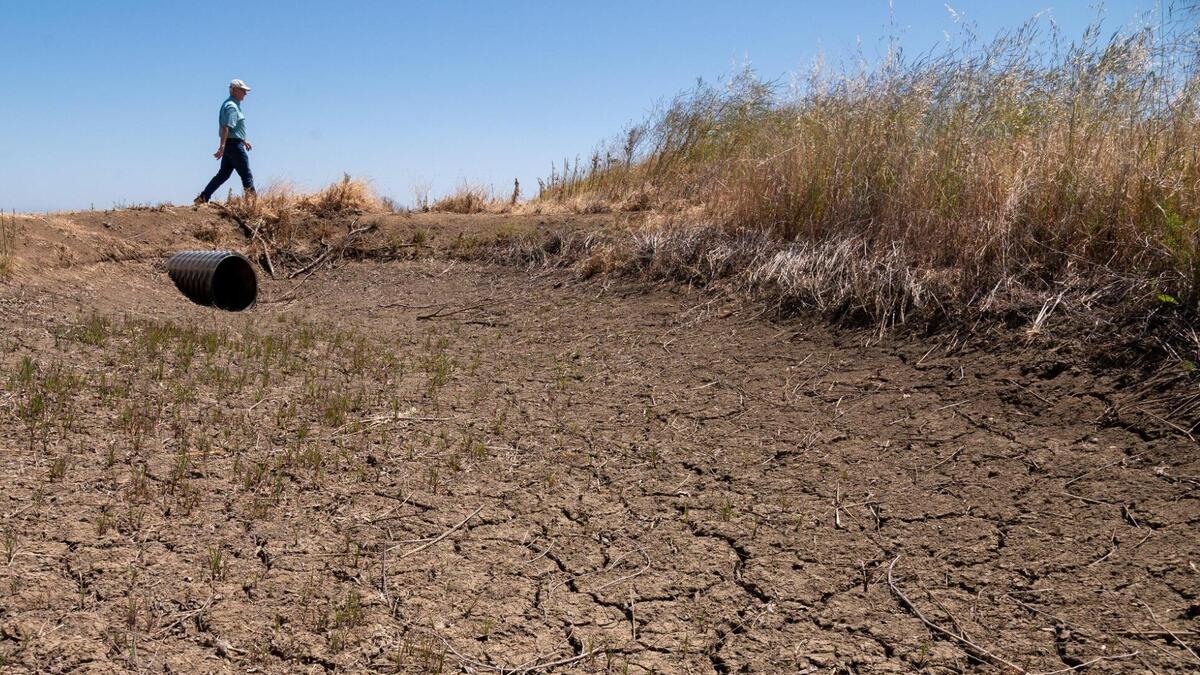
Fall has arrived in California.
After a scorching summer with temperatures climbing above 100 degrees, nearly 70% of California is now experiencing either abnormal dryness or drought, according to the latest date from the U.S. Drought Monitor.
Read more Sac State QB Jackson Sharman has been battered and bruised but won’t stay down
The return of dry conditions marks a sharp shift from earlier this year.
In January, none of California was experiencing drought conditions, marking the first time in 25 years that the state had been completely drought-free, according to the U.S. Drought Monitor.
Months of hot, dry summer weather have since erased that milestone.
Despite the arrival fall, temperatures are forecast to remain above normal across much of California through the end of the year, according to the National Weather Service’s Climate Prediction Center’s three-month forecast published on Sept. 17.
“Several states are setting records for continued warmth during this late summer to early fall period,” the U.S. Drought Monitor said in its national drought summary released Tuesday, Sept. 22.
At the same time, a potentially historic “El Niño is strengthening” in the Pacific, according to federal forecasters.
This could bring wetter conditions to parts of California later this fall and winter.
Here’s a look at California’s current drought conditions, water supplies and what El Niño could bring in the months ahead:
BEHIND THE STORY
MORE
Why we did this story
Our community-driven series — How to California — is here to answer your questions about state laws, history, culture, recreation and travel in the Golden State.
McClatchy’s service journalism team, focused on helping our readers navigate daily life, works in communities across the state, including San Luis Obispo, Fresno, Merced, Modesto and Sacramento.
Ask us your questions — big and small — by emailing [email protected] or filling out a form here.
How much of California is experiencing drought?
Nearly 69.7% of California was abnormally dry or worse, according to the U.S. Drought Monitor’s weekly report released Thursday, Sept. 24.
The latest map reflects conditions observed through Tuesday, Sept. 22.
About 23% of the state was experiencing moderate drought, with conditions affecting portions of Northern California, the Sierra Nevada and Southern California.
In total, an estimated 2,429,674 California residents were living in drought-impacted areas, according to the U.S. Drought Monitor.
About 30% of California remained free of drought or abnormal dryness.
No part of the state is currently classified as being in severe, extreme or exceptional drought.
Which parts of California are abnormally dry?
As of Thursday, abnormally dry conditions stretched across portions of Northern California, the Central Valley, the Sierra Nevada and Southern California.
Areas affected included portions of Sacramento, Placer, Yolo, Sutter and El Dorado counties, as well as parts of Stanislaus, Merced and Fresno counties.
Which parts of California face the worst drought?
Moderate drought has developed across portions of Northern California, including Del Norte, Modoc, Lassen and Siskiyou counties.
Moderate drought conditions were also present in parts of Southern California, including Inyo, San Bernardino, Imperial and Riverside counties.
How full are California lakes and reservoirs?
Despite the return of drought conditions, California’s major reservoirs remain in strong shape.
As of Wednesday, Sept. 23, California’s reservoirs held an estimated 22.9 million acre-feet of water, or about 106% of the historical average for that time of year, according to the California Department of Water Resources.
Read more Carrot Top is in crisis. Now his lawyer is pointing fingers in Florida
As of Thursday, Sept. 24, these were the current water levels at California’s major lakes and reservoirs:
- Shasta Lake — 55% of capacity
- Lake Oroville — 50%
- New Bullards Bar Reservoir — 73%
- Folsom Lake — 44%
- Camanche Reservoir — 85%
- New Melones Lake — 64%
- Don Pedro Lake — 76%
- Lake McClure — 55%
- Pine Flat Lake — 16%
- Millerton Lake — 44%
- Castaic Lake — 95%
- Diamond Valley Lake — 97%
- Lake Casitas — 95%
- Lake Cachuma — 86%
- San Luis Reservoir — 70%
- Lake Sonoma — 62%
- Trinity Lake — 69%
What’s in store for fall weather in California?
Fall weather will vary widely across California.
The National Oceanic and Atmospheric Administration’s Climate Prediction Center’s three-month forecast also calls for above-normal temperatures across California from October through December.
“Normal” is based on the average of all temperatures from 1991 to 2020.
That means California residents could see periods of cooler weather as fall progresses, but the overall three-month outlook favors warmer-than-average conditions across much of the state.
How will El Niño impact fall weather in California?
El Niño is a climate pattern involving changes in ocean temperatures and atmospheric conditions across the tropical Pacific.
According to the Climate Prediction Center’s Sept. 10 update, “El Niño is strengthening,” with a greater than 90% chance of a very strong event during the Northern Hemisphere in fall and winter 2026-27.
The agency said there is a chance of a historic-strength El Niño during October through December, meaning it could exceed the power of previous El Niño events dating to 1950.
“With an event of this magnitude, the chances of experiencing impacts consistent with El Niño are larger, though not guaranteed,” the Climate Prediction Center said.
On Sept. 21, Gov. Gavin Newsom proclaimed a state of emergency to prepare for the potentially historic El Niño season.
The proclamation directs state agencies to stage flood-fighting supplies, prepare infrastructure and help communities reduce risks from flooding, landslides and coastal hazards.
Will El Niño bring more rain to California?
Parts of California could see more rain than usual this fall, but precipitation forecasts vary by region.
The Climate Prediction Center’s three-month outlook from October through December shows above-normal precipitation in Southern California, while much of the rest of the state has “equal chances” of seeing precipitation above or below average.
The Old Farmer’s Almanac 2026 fall forecast is also calling for a wetter-than-normal season.
“Above-average rainfall is anticipated for the West Coast,” the Old Farmer’s Almanac said.
While an El Niño event does not guarantee storms or floods, it does increase the odds of repeated rounds of heavy rain and mountain snow, The Sacramento Bee previously reported.
This means El Niño could impact rainfall, mountain snow and reservoirs across California.
Have a question about life in California?
How to California— a guide to help you live, work and enjoy life in the Golden State, is here to help.
We’ll answer your questions — big and small — about state laws, history, culture, recreation and travel.
Ask your questions in the form below (can’t see it? Click here) or email [email protected].
Read more Read the Mississippi State Medical Examiner’s autopsy report of Nolan Wells
This story was originally published September 24, 2026 at 1:26 PM.