 By admin
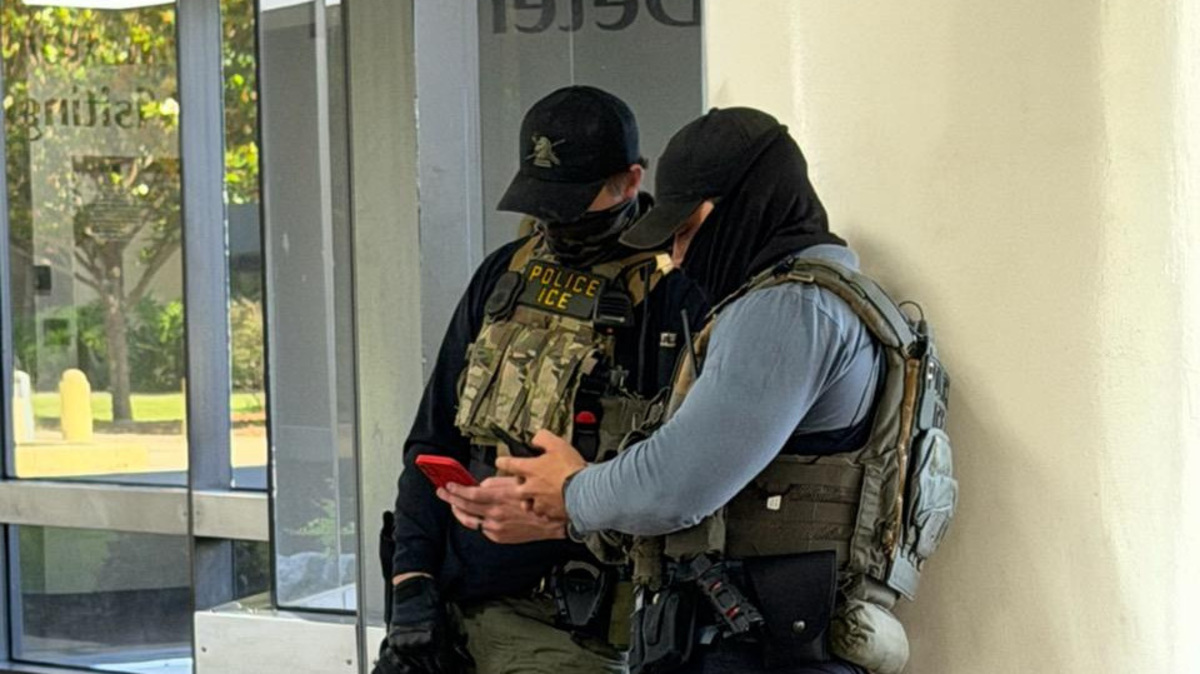
The impact of a new state law prohibiting federal law enforcement agents from making civil arrests within 1,000 feet of courthouses without judicial warrants is largely unclear in Ventura County.
Read more ASEAN, China fail to conclude South China Sea code of conduct
California Senate Bill 873, which takes effect Jan. 1, is an effort to protect undocumented immigrants’ access to the judicial system.
However, in places like Ventura County, where the main jail is a frequent location for U.S. Immigration and Customs Enforcement officers’ arrest of undocumented immigrants, the law does not include language regarding civil arrests at jails within the 1,000-foot zone of the courts.
The California Attorney General’s Office as well as the office of one of bill’s co-authors did not provide The Star with information on how the bill might impact jails.
Representatives from the Ventura County Sheriff’s Office and County of Ventura’s County Counsel told The Star they do not believe the bill precludes civil arrests inside the jail’s release lobby.
Other local leaders, however, are hopeful that the law will apply to the main jail and when it takes effect Jan. 1 it will lead to an increased sense of safety among undocumented immigrants.
“It is important to ensure we are following the laws that are in place because the laws are informed by the community,” Ventura County Supervisor Vianey Lopez said. “I see this bill as another way to ensure that our communities are welcoming of everyone in the community, no matter who they are or where they came from.”
The Department of Homeland Security did not respond to questions.
About the bill
Existing California law prohibits a person from being subject to civil arrest inside a courthouse without a federal judicial warrant, and Senate Bill 873 extends that protection to 1,000 feet outside of the courthouse.
Kate Chatfield, executive director of the California Public Defenders Association – a cosponsor of the bill – said her staff has witnessed an increase in ICE agents apprehending undocumented immigrants as they enter and exit court, even dragging them out of their cars in the parking lots.
That deters many of her clients from attending court, harming not only the undocumented immigrant community but also democracy, she said.
“If people are afraid to go to court, they essentially have no access to their own judicial system,” she said. “A functioning democracy requires a functioning judicial system.”
The law focuses on court proceedings and does not mention jails, though Chatfield said if a county’s jail is within 1,000 feet from its courthouse, civil arrests inside or immediately outside of the jail would also violate the law, as there are no exceptions.
Allison Westcott, communications director for State Sen. Eloise Gómez Reyes, who co-authored the bill, said her office deferred the interpretation of the bill as it relates to jails to the attorney general’s office as it would be responsible for enforcement.
A spokesperson for the AG’s office, however, said that the agency was unable to provide any legal analysis.
Civil arrests that violate the bill would constitute false imprisonment, and individuals who either violate or assist in the violation of the bill would be liable for civil damages of $10,000.
The bill would require court security to request that the law enforcement agents who enter the courthouse identify themselves and the enforcement action they intend to take and request a copy of their required judicial warrant. If court personnel are aware the person named in the warrant has an attorney, they must request that the agents allow the attorney to review the warrant.
The bill does not, however, require the federal agents to present their warrant to anyone unless security personnel requests it. Chatfield said she is aware that many courthouses do not have security personnel outside the building. That, she said, is one of the limitations of enforcing the law.
“It would be an area of improvement,” she said of the enforcement aspect.
Chatfield said they have to be cognizant of federal laws that override contradicting state laws, often referred to is federal preemption.
She said she feels the Legislature and governor are doing what they can within the limitations that exist to resist ICE and protect residents.
“I hope it will be effective,” Chatfield said.
Local interpretation
Though California law largely prohibits local and state law enforcement agencies from assisting federal immigration enforcement agencies, it gives them the option to notify ICE when certain individuals – such as those convicted of or held to answer for robbery, residential burglary or rape – are released from jail.
Read more Tens of thousands of Czechs rally against government media funding plan
The sheriff’s office voluntarily cooperates with ICE, and during the Oct. 20 TRUTH Act forum, Fryhoff said that of the office’s roughly 169 notifications to ICE in 2025, federal agents picked up 114 individuals from the jail – more than double the number picked up in either of the previous two years.
When Lopez asked Fryhoff how SB 873 would be enforced locally, he confirmed the jail was roughly 100 or 200 yards from the court but suggested the law could be overturned in federal court.
“If you look at all the other laws that the state has created to try and limit federal authority, they’ve all been overturned by the courts; they have no standing to tell the federal government what to do…” Fryhoff told Lopez. “Your choice will be to break the law or break the law.”
Wescott, however, said Gómez Reyes worked closely with Attorney General Rob Bonta’s Office on the bill’s language and has full confidence in the office’s ability to enforce the law, citing his recent lawsuit challenging ICE’s arrests at courthouses.
In separate emails, Capt. Robert Yoos, sheriff’s office spokesperson, and Tiffany North, county counsel, said their agencies do not believe the SB 873 prohibits ICE arrests in the main jail’s release lobby.
“The arrests they are making are unrelated to a scheduled court appearance and thus do not prevent anyone from attending court to address a legal matter,” Yoos wrote.
However, if an incident in the location appeared to violate the law, the sheriff’s office would document it and submit it to the Ventura County District Attorney’s Office or the California Department of Justice for review, he said.
In an interview, Lopez said she understands that many Ventura County residents’ sense of safety has been impacted by the sheriff’s office’s voluntary cooperation with ICE.
“I am hopeful that we can work to create safer spaces and perhaps gain some trust from the community,” she said.
Volunteer documentation
Willie Lubka, the executive director of immigration advocacy nonprofit Buen Vecino and a representative of ICE Out of Ventura County, said he supports Senate Bill 873 because he knows that a significant number of undocumented immigrants in Ventura County are not showing up to the Ventura County Superior Court because of the frequency of ICE’s presence in the government center and wants to prevent that.
He said he was upset that Fryhoff did not commit to enforcing Senate Bill 873 during the forum.
“We expect him to maintain his posture of being an enforcer of the law, and he should observe and enforce this law just like he would any other,” he said.
Buen Vecino’s volunteers work closely with other nonprofits that serve the region’s immigrant community, such as VC Defensa and 805 UndocuFund, to not only protest ICE arrests inside the jail lobby but also observe and document them.
He said it is likely that the volunteers will measure the 1,000 feet circumference around the court building and document any civil arrests that occur within that circumference to send to the DA’s Office or the attorney general in order to hold accountable both federal and local officers who are involved or present.
Lubka said it is unfortunate that the enforcement aspect of the law is not stronger and that even if the sheriff’s office and court personnel do enforce the law, the ICE agents can simply wait just beyond the 1,000 feet mark to make their arrests.
“It’s not, unfortunately, all that uncommon when there’s a law that is a law but there’s no specific … enforcement mechanisms, which make a law much weaker,” he said. “I would rather have that than what they’re doing now.”
Makena Huey is an investigative and watchdog reporter for the Ventura County Star. Reach her at [email protected]. This story was made possible by a grant from the Ventura County Community Foundation’s Fund to Support Local Journalism. The foundation plays no role in story selection. The Star retains full editorial control.
This article originally appeared on Ventura County Star: New law’s impact on ICE arrests at Ventura County main jail unclear
Read more ‘You silver-tongued devil’: Man reads WWII love letters his dad never told him about
Reporting by Makena Huey, Ventura County Star / Ventura County Star
USA TODAY Network via Reuters Connect
Copyright Reuters or USA Today Network via Reuters Connect
This story was originally published November 15, 2026 at 5:30 AM.