 By admin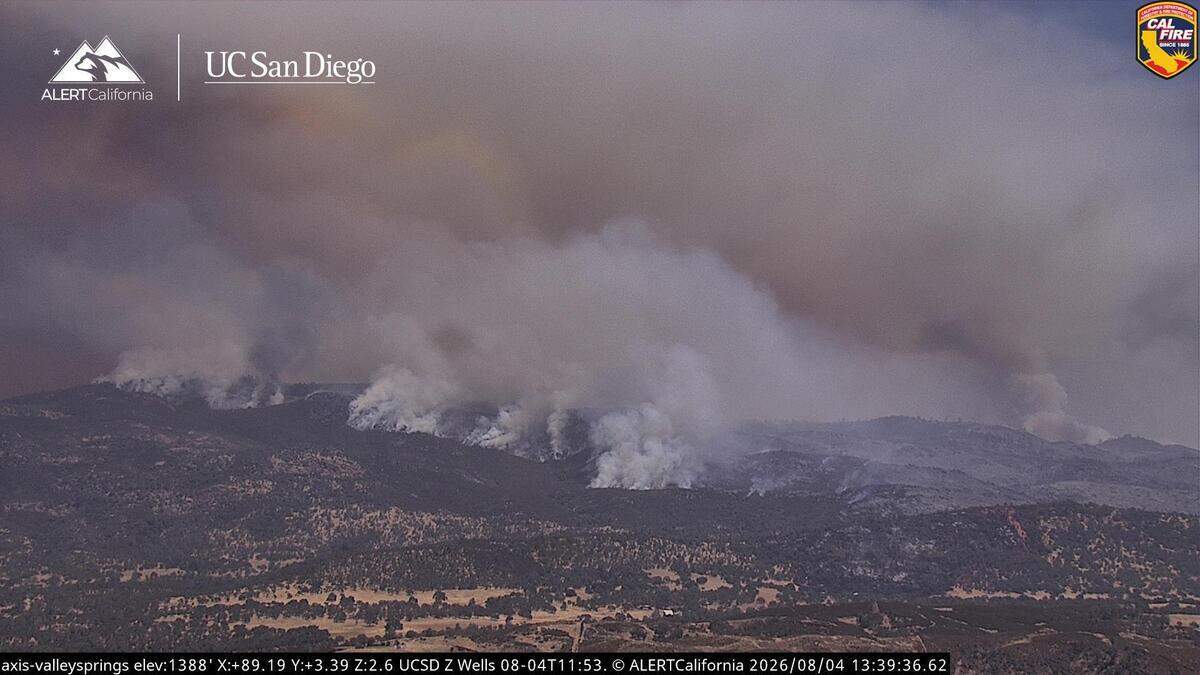
The Gann Fire burning in Calaveras County south of New Hogan Reservoir grew overnight and throughout the day Tuesday, burning across 3,760 in less than 24 hours.
Read more CalSTRS boasts 13.9% return, bringing progress toward pension obligations
Officials have ordered evacuations across a wide swathe of rural Calaveras County. The evacuation zone begins about three miles north of Copperopolis and covers a largely rural and sparsely populated area. No significant population centers are under orders yet, though the evacuation mapping website Genasys showed areas on the outskirts of Copperopolis and Angels Camp were under evacuation warnings.
The state fire agency continues to escalate its response to the fire, with helicopters and VLAT (very large air tankers) planes providing water and retardant drops as well as overhead observation of the flames, according to officials. The fire is burning largely through brush oak woodlands, Cal Fire Tuolumne-Calaveras Unit spokesperson Emily Kilgore told The Sacramento Bee. It is growing in all directions, Kilgore said, and flame activity has been high at times.
The conflagration began near Hogan Dam Road and Gann Road, according to the Calaveras County Sheriff’s Office.
An evacuation center had been established at the Valley Springs Veterans Hall at 189 Pine Street, according to officials. American Red Cross volunteers were on scene there for assistance. An evacuation center for livestock had been established at the Calaveras County Fairgrounds in Angels Camp.
Read more 14-month-old child fatally struck by truck in family’s Placer County driveway
Smoke from the Gann Fire is impacting the Sierra foothills and will drive a meaningful dip in air quality, according to Sacramento Bee meteorologist Sean Macaday. Smoke from wildfires in the Pacific Northwest, most notably the Spokane Complex Fires, is reaching the Sacramento Valley, though it is not thick enough to create hazardous air quality.
On Tuesday morning, Gov. Gavin Newsom announced that Cal Fire was sending 20 fire engines and four rescue teams to fight fires in Washington and Oregon, joining other state resources already engaged in those states.
“While California continues to support wildfire response efforts, resources across the state remain strong and available,” Newsom said. “These deployments do not impact California’s ability to respond to emergencies and protect communities at home.”
Read more Oregon fires are bringing smoke to Sacramento skies. What it means for air quality