 By admin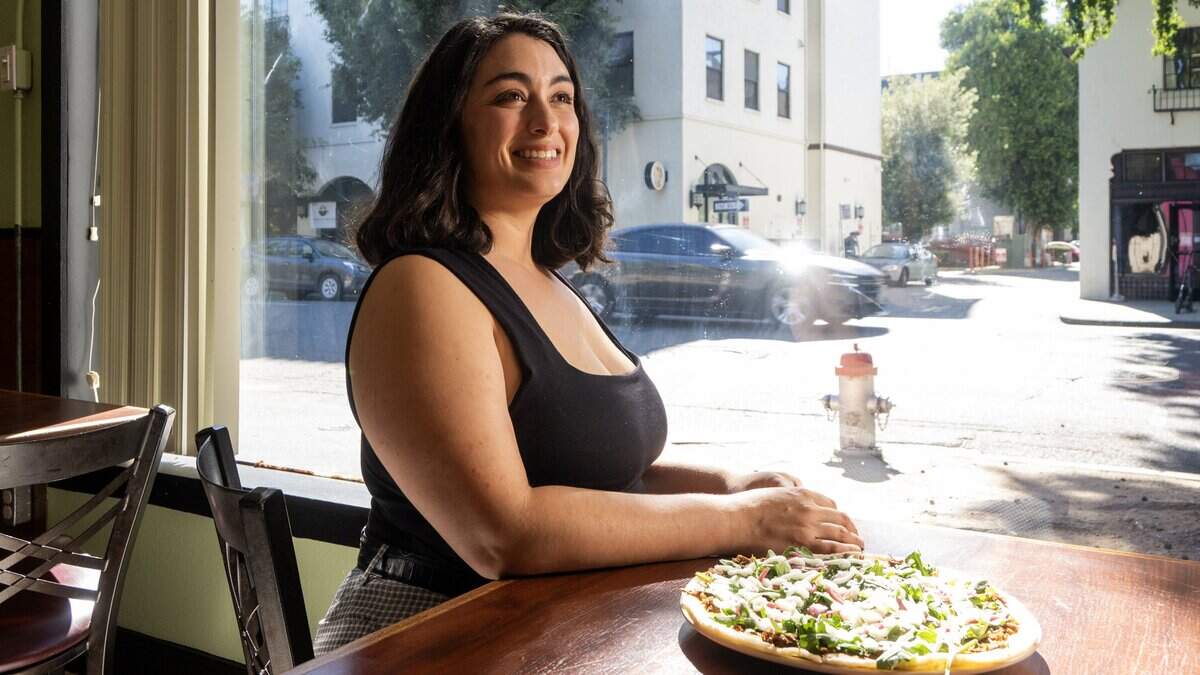
Recently, The Bee reported on the opening of a reinvented Bud’s Buffet downtown, which serves a Chipotle-esque fast-casual Mexican menu using halal meats. This is not to say that it is a fusion of Mexican and Arab food. Rather, it is merely an ingredient choice.
Read more California’s data center backlash is loud—and deeply misplaced | Opinion
However, Sacramento does in fact have a restaurant that merges these cuisines in an elegant and very personal way.
Kasandra Kachakji grew up at the inflection point of these two cuisines. Her father is Syrian, and her mother is Mexican. They met in San Jose. Together they formed a union not just of themselves, but their cultures.
“My dad cooked more than my mom for sure, but my mom brought in a lot of these essential flavors and ingredients like corn tortillas and the spiciness and the sour and all the stuff that you see less of in Arabic food,” Kachakji said.
She took those influences with her into her adult life, augmented by her time working with Bay Area Palestinian chef Reem Assil.
“I worked at Reem’s farmers markets, worked in her bakery, and then was working as her assistant for a while as I was building up my business. I learned how to work on the saj from her, learned how to work the dough. And she’s been like a great mentor and a great friend” she said.
A saj is the domed griddle used to make Arab flatbreads, which form the backbone of Meza’s menu. In keeping with the cross-cultural theme, here they are called pan arabe.
“We made dough in the restaurant, and someone at the farmers market would stretch the dough, and then that person handed it off to the stage person on what we call our dough pillows. They are literally just little pillow rounds that we stretch our dough on, and then the person working the saj takes that dough pillow and slaps it onto the top of the saj. It cooks the bread; we usually just cook it on one side until it’s cooked through. Then they’ll top it with meat, with the lamb or chicken or cheese za’atar, depending on what someone’s ordered, and then hand it off to the next person to add any finishing toppings,” she said.
The fusion Arab-Mexican Meza California launched last December as a brick and mortar business at 1415 16th St. after three years as a pop-up concept at local farmers markets.
Of course there are dips; where would Arab cuisine be without meza? Smooth hummus ($9), sweet-nutty muhummara ($10) and smoky eggplant baba ghanouj ($9) stay true to their roots, while creamy labneh ($8) gets a Mexican twist with a chunky chile morita oil. Get the sampler ($18) so you can try them all.
Read more Court hearing delayed for man shot 7 times by ICE agents in Patterson. Here’s why
At their most basic, the flatbreads are topped with za’atar, a blend of Mediterranean herbs and sesame seeds, plus fresh tomatoes, cucumber and mint.
That’s perfectly delicious, and Meza offers it, but Kachakji uses the flatbread as a canvas for her culinary creations. The Viva Palestina ($17) stays strictly Arab with braised sumac chicken, caramelized onion, pomegranate molasses, arugula and sumac pickled onion. The batata harra quesadilla ($14) transports the flatbread all the way to southern Mexico, with melty Oaxaca cheese, spiced sweet potato, cilantro and green onion.
The most indicative of the restaurant’s culinary sojourns though is the taco arabe ($21), topped with braised al pastor-spiced lamb with arugula, pickled onion and toum, a creamy, intensely garlicky sauce.
If you’ve ever seen al pastor being made on a vertical spit and thought it reminded you of shawarma, you’re on to something.
“It was brought to Mexico by Lebanese immigrants to Puebla, and then in Mexico it got turned into pork al pastor. So we’re kind of running it back with lamb,” Kachakji said. All the meats are, of course, halal.
Meza does not serve alcohol, but the beverages they do serve are no less influenced by the intersection of the two cultures. The limonada arabe ($5), infused with mint and orange blossom, is refreshing and fragrant. Kachakji makes a requisite hibiscus tea; the jamaica rosada ($5) gets a lift with the addition of rose.
Kachakji is specific in calling out the Arab roots of her food, as opposed to generically calling it Mediterranean.
“Arabic food and Mexican food are both just inherently political by who claims them and where it comes from. A lot of Arabic food in particular is being kind of erased too, in particular. So we like to claim really strongly that we are making Arabic food,” she said.
In that spirit, Kachakji puts her money where her mouth is.
“We do a lot of fundraising, for NorCal Resist and different other fundraisers for Palestine specifically. We’ve worked with Asian American Advocacy Network, and we did a Know Your Rights training to help businesses learn how to support their workers and also their community. And then we have signs in the window that say ICE is not allowed inside,” she said.
Read more Historic Sutter Slough Bridge to see lane closures next week. See where