 By admin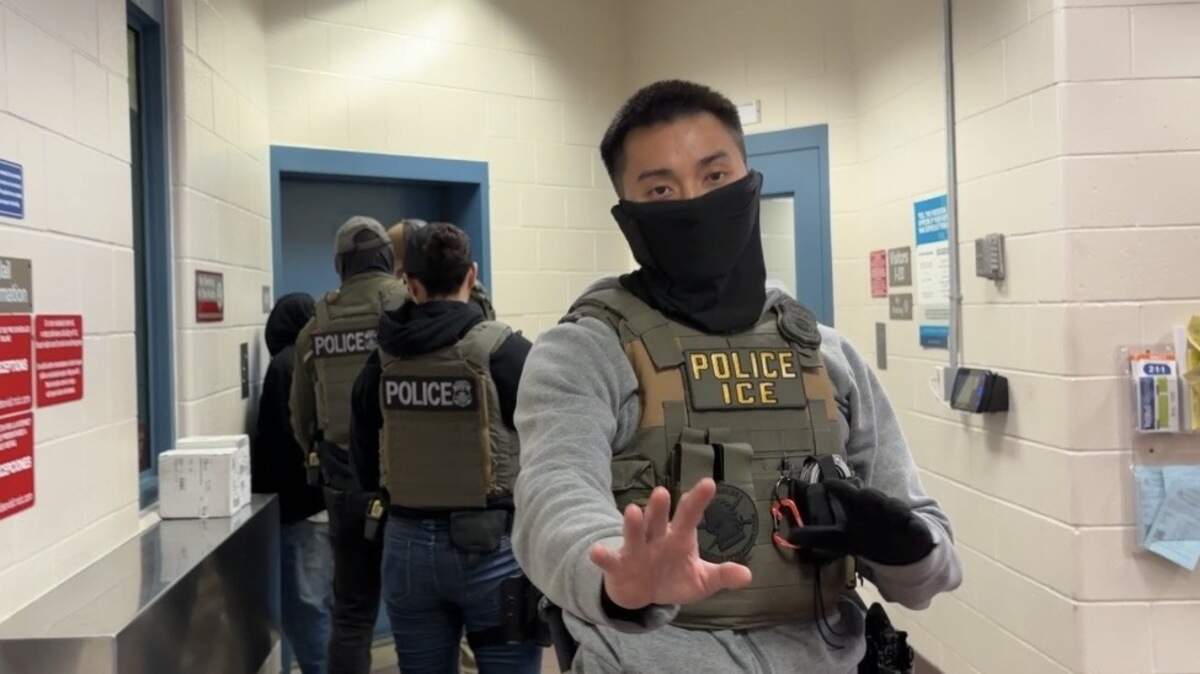
The San Luis Obispo County Sheriff’s Office may have violated state law by neglecting to notify inmates about ICE requests, according to records reviewed by The Tribune.
Read more Paramount delays Warner Bros. merger as court weighs California’s antitrust suit
State law requires the Sheriff’s Office to immediately notify an inmate if ICE inquires about them. But, the records show that the Sheriff’s Office neglected to inform at least three inmates that federal immigration agents were looking for them before they were released from custody.
The Sheriff’s Office said paperwork isn’t always processed in time to notify an inmate about ICE requests before their release, and the jail isn’t allowed to delay a person’s release — even if the paperwork isn’t finished, agency spokesperson Tony Cipolla said.
An anonymous group of citizens started monitoring ICE activity at the San Luis Obispo County Jail after President Donald Trump took office last January.
Over the past few months, the group submitted Public Records Act requests to the Sheriff’s Office for records documenting its communication with ICE about inmates taken into custody by the federal agency on jail property.
The group wished to remain anonymous to protect themselves and their families from retaliation by the federal government.
The Sheriff’s Office reviewed the records at The Tribune’s request and confirmed their authenticity.
The records included official requests from the Department of Homeland Security, emails between ICE and the Sheriff’s Office, and internal documents from the Sheriff’s Office.
After discussing the contents of the records with The Tribune, Jehan Laner, an attorney with the Immigrant Legal Resource Center, called on the San Luis Obispo County Board of Supervisors and the California Office of the Attorney General to investigate the Sheriff’s Office for compliance with state law related to cooperation with federal immigration agents.
Sheriff’s Office did not notify inmates about ICE requests, documents show
The 2016 TRUTH Act, or the Transparent Review of Unjust Transfers and Holds Act, requires the Sheriff’s Office to notify an inmate if ICE submits a hold, notification or transfer request regarding the inmate — even if the Sheriff’s Office doesn’t comply with the request.
The records indicate that the Sheriff’s Office failed to notify three inmates about ICE requests before those inmates were released from jail.
On Feb. 28, an inmate was booked into the San Luis Obispo County Jail.
The Tribune will not share the name of the inmates to protect them and their families from retaliation by the federal government.
That same day, ICE sent a “request for advance notification of release” form to the Sheriff’s Office, which the Sheriff’s Office declined to comply with because the inmate did not have a qualifying conviction under the California Values Act, the records show.
The Sheriff’s Office marked the request form with a red “will not comply” stamp.
The inmate was released from jail that same day — but then taken into custody by ICE from the bus stop near the jail, according to eyewitness accounts shared with the citizen group.
It appears that the Sheriff’s Office did not notify the inmate that ICE was looking for him, as required by the TRUTH Act.
The Sheriff’s Office uses an internal form to notify inmates when ICE makes a request about them.
On the Feb. 28 form, a Sheriff’s Office employee checked a box that said, “the department will take no action/will not communicate with DHS/ICE regarding its request.”
Then, a section of the form required a signature from the inmate. It said, “By signing this form, you acknowledge that the San Luis Obispo Sheriff’s Office has notified you of the above information and that you understand this information.”
The notifying employee from the Sheriff’s Office signed the form on Feb. 28, but instead of a signature from the inmate — the form says “NIC” on the inmate signature line, which means “not in custody.”
This means the inmate was released from custody before they were notified that ICE was looking for them.
Another inmate, booked for alleged illegal clam fishing on March 15, was taken by ICE when the Sheriff’s Office released him into the jail lobby on March 16.
ICE submitted a “request for advance notification of release” on March 16, which the Sheriff’s Office declined — indicated by the red “will not comply” stamp on the form, records show.
The inmate’s release notification form also says “NIC” — “not in custody” — on the inmate signature line, but includes a signature from the notifying employee on March 16.
Finally, a third inmate was released from jail on March 22 and taken by ICE on the same day from the lobby, the citizen group said.
ICE sent the Sheriff’s Office a request for the inmate’s release date and time on March 22, which the Sheriff’s Office again declined to do — according to a red stamp on the form that says “will not comply.” His notification form from March 22 also said “NIC” on the inmate signature line.
Laner, the Immigrant Legal Resource Center attorney, said it seems the Sheriff’s Office violated the TRUTH Act by failing to notify these inmates about the requests from ICE.
Sheriff’s Office says notification timing can vary during processing
Cipolla, the sheriff’s spokesperson, said jail staff sometimes process an inmate’s paperwork during or after their release, depending on when the inmate was booked, when the jail received the ICE request and when the inmate is required to be released.
“Reviewing requests requires criminal history review, which takes time amongst other duties such as fingerprinting, photographing, health screenings, sobering activities,” Cipolla said in an email to The Tribune. “After a determination is made, departmental forms are created and copies are made. The documents must then be delivered. Subject to timing, documentation delivery may occur after the person has left the building.”
Meanwhile, state law prohibits the Sheriff’s Office from delaying a person’s release from jail — even if the Sheriff’s Office is still processing the inmate’s paperwork, Cipolla said.
Another delayed notification
In August, the Sheriff’s Office waited too long to notify an inmate that ICE was looking for her. Unlike the other inmates, she received the notification, but the Sheriff’s Office provided it later than required by the TRUTH Act, the records show.
On Aug. 7, a woman was booked into San Luis Obispo County Jail.
Then, on Aug. 8, a San Luis Obispo County Sheriff’s Office correctional technician emailed an ICE agent and said the inmate “was charged with a qualifying charge under SB 54 but is unsentenced. We will notify you once the IP is settled in court,” according to emails provided to The Tribune.
On Aug. 9, ICE submitted a “request for advance notification of release” regarding the woman.
Then, on Sept. 26, ICE submitted another “request for advanced notification of release” to the Sheriff’s Office regarding the inmate.
The Sheriff’s Office seemingly did not notify her of ICE’s request for communication until Feb. 19, when the agency gave her a document that informed her of its plans to transfer her to ICE custody.
According to Section 7283.1(b) of the TRUTH Act, the Sheriff’s Office should have notified the inmate immediately after receiving the ICE request in August. Then, it was required to provide a second notification in February about the plans to transfer her to ICE custody.
Read more Sacramento County adopts new rooster rules after noise complaints. What to know
Her sisters were waiting in the lobby to pick her up when the Sheriff’s Office handed her over to ICE in the sallyport on Feb. 19, citizen witnesses told The Tribune.
Did the sheriff comply with unsigned federal warrants?
The Sheriff’s Office may have additionally complied with two unsigned warrants — a murky area of the law.
On May 14, 2025, a Department of Homeland Security employee emailed the Sheriff’s Office an unsigned federal arrest warrant for an inmate whose name was redacted on the document, according to documents procured in a Public Records Act request by a different group, the immigrant rights advocacy nonprofit Buen Vecino, based in Ventura County.
The Sheriff’s Office responded that day, and said, “the warrant has been received, and we will contact you when the subject is available for pickup.”
On May 15, the Sheriff’s Office emailed the Department of Homeland Security to announce that the inmate was ready for pickup.
The Santa Maria ICE supervisor emailed the Sheriff’s Office on May 16, 2025, to inform the jail that two of his officers would pick up the inmate that day at 10 a.m.
The Sheriff’s Office did not necessarily violate the law if it complied with an unsigned federal warrant, Laner said.
If the inmate had a qualifying conviction under the California Values Act, the Sheriff’s Office could lawfully transfer the inmate to ICE without the need for a judicial warrant, she said.
“Hearing that all they were using was an unsigned judicial warrant — it raises questions for me, but I can’t definitively say without looking at that person’s criminal history whether or not they violated state or federal law,” Laner said.
On July 15, the Sheriff’s Office received an unsigned federal arrest warrant for a different inmate, whose name was redacted on the document. On July 21, the Sheriff’s Office emailed the agent to say that the man had completed his sentence and would be ready for pickup on July 23 at 11:59 p.m.
After some coordination, the Santa Maria ICE supervisor said an ICE officer would pick up the inmate on July 22 at 11 a.m.
The Sheriff’s Office said it had a signed copy of the July 15 warrant on file, but it did not share that document with The Tribune.
“Occasionally, we receive incorrect documents,” Cipolla said in an email to The Tribune. “The process to obtain a correction is to contact the source and communicate the deficiency. Any corrected document would stand as the final document. We would not act on an incomplete warrant, only communicate the deficiency. In the case of the July 15, 2025, warrant, it appeared we originally received an incomplete (unsigned) warrant. A request would have been made to correct the deficiency. We then obtained the signed warrant which we have on file.”
Laner urged the Sheriff’s Office to review its procedures to ensure compliance with state law.
She also encouraged the San Luis Obispo County Board of Supervisors and the California Office of the Attorney General to investigate whether the Sheriff’s Office’s procedures are complying with the law.
Should the Sheriff’s Office cooperate with ICE?
The Sheriff’s Office is not required by law to cooperate with federal immigration agents.
In fact, Sheriff Ian Parkinson chose not to comply with the majority of ICE requests in 2024 while Joe Biden was president, he said at the county’s TRUTH Act Forum in January.
“In 2024, it made zero sense to be turning people over, even if they had a prior conviction, because they would turn around and come right back in,” he said at the meeting.
In 2025, however, “the border was secured,” Parkinson said, and ICE increased its ability to pick people up from the jail. So, the Sheriff’s Office started complying with detainers when permitted by state law. The Sheriff’s Office released 69 inmates to ICE custody in 2025, he said.
Laner said the Sheriff’s Office should end all voluntary compliance with ICE.
The Sheriff’s Office maintained safety in the county in 2024 when it only transferred one inmate to ICE custody, she said.
“San Luis Obispo has already lived through a period where they were not voluntarily complying with ICE, and the sheriff was still able to undertake his public safety responsibilities,” Laner said. “So there’s no reason why all of a sudden the sheriff needs to start cooperating with ICE and potentially lead to the violation of people’s rights.”
Willie Lubka, the executive director of Buen Vecino, agreed.
Buen Vecino was part of a coalition that advocated for the passage of the California Values Act. The nonprofit organization submitted a Public Records Act request that uncovered the unsigned warrants — a batch of records separate from the documents uncovered by the anonymous citizen group.
While Buen Vecino is concerned about the Sheriff’s Office potentially violating state law, the organization has a larger goal: to encourage law enforcement to end any compliance with ICE requests.
“We believe that there should be no cooperation between local law enforcement and ICE, and that any cooperation, regardless of the good intent behind it or any potential benefits that anyone may see from it, that it causes far more harm than good,” Lubka told The Tribune.
Law enforcement cooperation with ICE discourages people from mixed-status households from calling 911 during an emergency, Lubka said. He recently met a family who didn’t call the police when they heard gunshots outside their house because they knew local law enforcement cooperates with ICE.
Additionally, people experiencing domestic violence in a home where someone is undocumented are far less likely to call the police for help. The abuser could be arrested, put in jail, and then deported — and the family could lose a breadwinner, he said.
“The purpose of not working with ICE is to increase community trust, which builds community safety for everyone,” Lubka said. “We have a sheriff who seems to be either unaware of or deliberately ignoring that really, really powerful reality for the community.”
Meanwhile, Lubka said it’s unjust to hand inmates over to ICE.
Right now, there’s effectively two justice systems: one for citizens, and one for non-citizens, Lubka said.
When citizens are convicted of a crime, they serve their court-mandated sentence, and they are released back into society with a second chance.
When non-citizens are convicted of a crime, they also serve their court-mandated jail sentence, but many of them are then deported — an additional punishment that wasn’t issued by the court, he said.
“Their crime was the same, but the citizen, the white person, gets to go home to their family, whereas the person who did this exact same criminal act and paid their debt to society and was incarcerated doesn’t have the chance to return to their life — they’re thrown away,” Lubka said.
When law enforcement officers cooperate with federal immigration agents, they contribute to this injustice, he said.
“We are not advocating that people who commit crimes should not be held accountable,” Lubka said. “They should be — just on an equal basis, regardless of citizenship status.”
This story was originally published July 24, 2026 at 11:00 AM with the headline “SLO County sheriff may have violated state law when cooperating with ICE, records show.”
Read more Paramount delays Warner Bros. merger as court weighs California’s antitrust suit