 By admin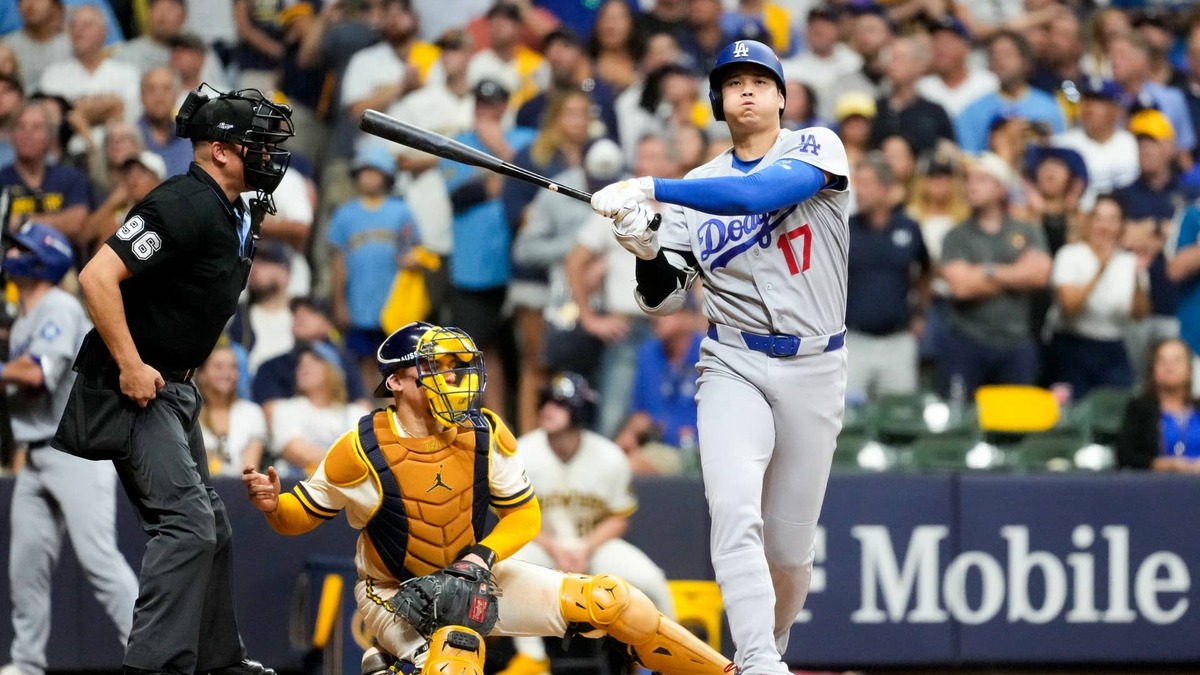
In a move my therapist would approve of, I will be taking a break from my repeated calls for the Mariners to take themselves seriously as an organization in order to talk to you about the fate of all of baseball.
Read more Payton Pritchard Has Earned a Chance to Prove Himself As Long-Term Celtics Starter
Specifically, I think we need to talk about what a World Series without the Los Angeles Dodgers may look like.
The Dodgers are currently down 2-0 in the National League Championship Series against the Milwaukee Brewers. That’s a beautiful thing, given that the Dodgers 2026 payroll is $339.32 million (2nd in MLB) compared to the Brewers at $146.21 million (19th). It’s even more delightful when you consider that this Dodgers roster is actually worth far, far more than that.
See, if you’re blissfully uninformed, the already advantaged (read: big market) Dodgers have been bending the MLB’s rules further in their favor using two huge loopholes: deferred contracts and revenue-sharing exceptions.
The granular details of how both loopholes have been and continue to be exploited by the Dodgers are myriad, but I’m going to do my best to explain the resulting larger consequences as well as their import on the coming lockout negotiations (based on the most intelligible reporting available to layman fans like me).
Dodgers revenue-sharing loopholes lend unfair advantage
But, wait, hold on – based on the title shouldn’t I be arguing that the Dodgers losing would be bad for baseball? No, that was just a way to get you in the door. The goal here is to show you that if the Dodgers lose they still need to be held responsible for their advantageous, uh, creative accounting.
What am I talking about? Well, while we all take in the postseason, the league and media alike are (for once) in agreement that a lockout is looming, so much so that they are setting official ground rules for behavior during the length of the negotiation. By and large, the majority sentiment is that the need for a Salary Cap is exemplified most starkly by – you guessed it – the superstar-laden, free agent magnet Los Angeles Dodgers.
“Three straight titles, leading into a new CBA, by a team that is flexing its financial might and scooping up top free agents left and right? What further evidence could you possibly need for a salary cap,” Adam Morris writes for SB Nation.
With that foundation, what if I were to tell you that the Dodgers have been given an advantage under the current revenue sharing agreement that allows them increased salary flexibility and thus a distinct leg up when it comes to contract negotiation and landing said free agents?
I would imagine if you were at the MLB negotiation table this December, that would be something you would want to correct.
The whole situation is laid out in year-by-year detail in this brilliant analysis by Jake McKibbin, but all of this is true and has been since 2012.
Due to a deal struck with the MLB at the time (because the Dodgers owner at the time was facing bankruptcy due to a bad divorce, because apparently they can’t catch enough breaks), the Dodgers don’t pay the same amount into the revenue share as other teams, leading to millions upon millions saved year over year.
They pay only a capped share of their TV profits into the shared MLB pool, with a 4% increase each year over 25 years (this has since been revised, but still is a pittance given that the Spectrum deal is valued at $8.35 billion over the same period).
The net impact cannot be understated; for instance, in the first year of super-duperstar Shohei Ohtani‘s contract, the Dodgers saved the entire value of said contract* in revenue sharing avoidance (*deferred contract, more on that below).
“The Dodgers are saving over $60 million per year even now, halfway through this slow walk back to paying full freight. In the first year of Shohei Ohtani’s contract, they saved the entire salary ($68 million) they deferred to after the end of Ohtani’s deal in revenue-sharing avoidance alone,” McKibbin details. “They were required to put that much into escrow, and they could easily do so, because they had all that extra cash they didn’t have to pay into the league’s shared pool. If the next CBA changes nothing about the fundamental revenue-sharing structure, the Dodgers will surpass $1 billion in cumulative savings in the first year of the new deal[in 2028].”
Read more Dave Roberts Won’t Bench Shohei Ohtani, and It Could Cost the Dodgers Their Season
What’s an extra Bill(ion) between friends? Kidding, it might be the incredible competitive edge the Dodgers have enjoyed as they accumulated the last two World Series titles. That makes their potential downfall to the ‘small-market’ Brewers all the sweeter. But it isn’t the Dodgers only sin.
The MLB must not cut the Dodgers a deal based on deferred salaries
Here is where I slip out of ‘let me tell you about something interesting that you might not know about’-mode and into ‘pleading with the MLB not to cut the Dodgers another break for the love of everything holy’-mode.
Bear with me / hear me out. Or, Dodger fans, feel free to go to the comments and call me mean names and yell about why your franchise *is* baseball more than any of the 29 others for some reason. You were going there anyway.
So the Dodgers got a $2 billion+ tax-shelter sweetheart deal in 2012 because MLB was afraid of the consequences of bankruptcy. Let’s not make the same mistake in 2026 and give them a grandfathered, lightening of the blow when it comes to the back-end of the massive deferred contracts they have been giving their superstars.
If you’ve been living under some kind of unfairness shelter since before 2023, Ohtani’s deal is once again emblematic of this practice, which has allowed the Dodgers to impossibly stack their payroll with massive contracts, promising to pay the majority of their value at a much later date. From the week of Ohtani’s signing, when the media was still in shock:
“The Dodgers announced Monday they had signed the two-time MVP, after Ohtani had agreed Saturday to a 10-year, $700 million contract, by far the richest in the history of North American professional sports,” ESPN’s Alden Gonzalez explained. A source said then that the majority of the contract would come in deferred money; under this structure, however, Ohtani is deferring more than 97% of his earnings. The deferred money — totaling $680 million — will be paid to Ohtani between 2034 and 2043, a source said.”
Quickly, if you want the competitive advantage further explained, Gonzalez added:
“Ohtani’s cost toward the Dodgers’ competitive balance tax payroll — which typically uses the average annual value of contracts, in this case $70 million, but discounts deferred money… The collective bargaining agreement does not place a limit on the amount of money that can be deferred, but teams have to set aside the present-day value of the deferred money — in Ohtani’s case, around $44 million in cash each year — in an escrow account.”
That escrow money? Yeah, that’s the same cost I mentioned earlier, was covered by the Dodgers revenue sharing savings. I’m tired, boss.
These twin loopholes have allowed LA to add superstar upon superstar due to their increased roster flexibility, most recently adding Kyle Tucker before the 2026 season and (more infamously) Detroit Tigers ace RHP Tarik Skubal before the postseason push.
They’ve gotten better and better, their already massive payroll – that already eclipses any small-market team’s – only a fraction of what it should be.
In response, my ask is simple: Don’t let the Dodgers off the hook. Put a stop to their revenue-share dodging (sorry) and don’t give them any grandfathered exceptions alongside the new salary cap or payroll regulation.
The latter is simply a case of calling their bluff. Make them pay the price for the gamble they made with their deferred contracts. The Dodgers think the MLB will never come down on them because they are too big to fail. They saw that come to fruition in 2012. Prove them wrong. Don’t do it again – for the love of baseball.
Read more Why Vinicius Junior Is Breaking the Heart of Jose Mourinho
Latest MLB News & Notes
- Milwaukee Brewers’ bullpen is on historic run against Dodgers in NLCS
- Blue Jays Need to Sign Randy Arozarena or Seiya Suzuki (or Better Yet, Both)
- The Chicago White Sox Should Sign Tarik Skubal
- MLB’s New CBA Proposal to Players Is Intriguing, But Falls Short on Salary Cap
Copyright 2026 The Arena Group, Inc. All Rights Reserved.
This story was originally published October 14, 2026 at 4:23 AM.