 By admin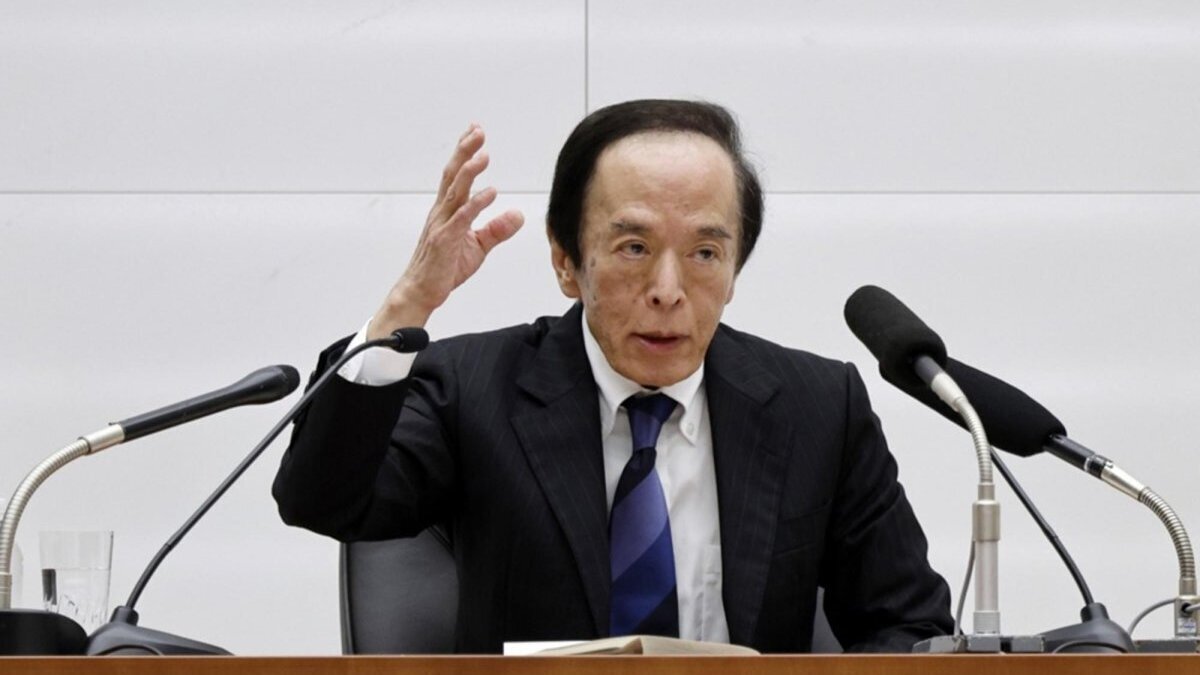
Aug. 2 (Asia Today) — The United States has joined Japan in intervening in foreign exchange markets to support the yen, marking the first coordinated yen-buying operation by the two countries since 1998.
Read more Toyota expected to post fifth straight profit drop, investors weigh Japan quake fallout
The Federal Reserve Bank of New York purchased yen on behalf of the U.S. Treasury on Friday as Japanese authorities carried out their own large-scale intervention, according to reports by the Financial Times and Reuters.
The dollar closed at 157.40 yen in New York on Friday, the yen’s strongest level against the dollar since early May. The exchange rate had traded above 162 yen before the interventions.
The Financial Times reported that the New York Fed sold euros and bought yen through Goldman Sachs and Morgan Stanley, citing three people familiar with the transactions. The newspaper did not disclose the amount purchased by the United States.
The operation was the first U.S. intervention involving outright yen purchases since 1998.
The United States also participated in coordinated Group of Seven intervention following Japan’s 2011 earthquake and tsunami. That operation, however, involved selling yen to restrain the currency’s sharp appreciation.
Bessent note points to $5 billion to $10 billion yen purchase
Evidence that the United States was considering direct intervention emerged unexpectedly during a Cabinet meeting at Camp David in Maryland on Friday.
A Reuters photograph showed a notepad in front of Treasury Secretary Scott Bessent bearing the words “To Do” followed by “Buy Japanese Yen (JPY) $5-10 bil.”
The amount would be equivalent to about 787 billion yen to 1.57 trillion yen, based on Friday’s closing exchange rate of 157.40 yen per dollar.
The photograph was taken at 11:33 a.m. EDT during an open portion of the meeting.
The Treasury did not immediately say whether the amount written on the note represented a planned purchase, an approved transaction or an operation that had already been completed.
The New York Fed had contacted financial institutions Thursday to check dollar-yen exchange rates on behalf of the Treasury, the Financial Times reported.
Bloomberg also reported that the New York Fed asked at least two U.S. banks Friday to provide euro-yen exchange rates.
Such rate checks are often viewed by currency traders as a possible precursor to direct market intervention.
The Financial Times reported that the transactions were conducted through Goldman Sachs and Morgan Stanley. The New York Fed and Morgan Stanley did not immediately comment, while Goldman Sachs declined to comment.
Bessent later wrote on X that he looked forward to meeting Bank of Japan Gov. Kazuo Ueda at a Group of 20 finance ministers’ meeting scheduled for August in Asheville, N.C.
He said the United States and Japan continued to maintain a strong relationship and close cooperation.
Japan estimated to have spent 8.45 trillion yen
Japan also appears to have carried out large-scale yen purchases Thursday and Friday.
Bloomberg estimated that Japanese authorities may have spent about 8.45 trillion yen, or $53.7 billion, during Thursday’s intervention.
If confirmed, it would be Japan’s largest single-day foreign exchange intervention.
The estimate was based on a comparison of anticipated changes in Bank of Japan accounts and forecasts submitted by money market brokers.
Nikkei reported that Japanese authorities sold dollars and bought yen during New York trading on both Thursday and Friday, pushing the dollar down by about 5 yen from levels above 162 yen.
Read more As illegal crossings plummet, Border Patrol turns focus to bolstering checkpoints in San Diego
Nikkei estimated Thursday’s intervention at between 6 trillion yen and 7 trillion yen, or about $38.1 billion to $44.5 billion.
Combined with the 11.7 trillion yen, or about $74.3 billion, reportedly spent from late April through late May, Japan’s intervention this year would total about 18 trillion yen, or $114.4 billion.
That would exceed the previous annual record of 15.3 trillion yen, or about $97.2 billion, set in 2024.
Japan’s Finance Ministry has not officially confirmed the timing or precise size of the latest transactions. Official intervention figures are generally released later.
Atsushi Mimura, Japan’s vice finance minister for international affairs, told reporters Friday that Tokyo was receiving more than moral support from U.S. authorities.
Japan and the United States could announce a joint policy response to the yen’s weakness as early as this week, Reuters reported, citing Japan’s Kyodo News.
Japan points to Fed facility for dollar funding
Japan’s Finance Ministry also sought to dismiss concerns that Tokyo could run short of funds for further intervention.
The ministry said on X that Japan could use the Federal Reserve’s Foreign and International Monetary Authorities Repo Facility to obtain dollars by temporarily pledging its holdings of U.S. Treasury securities.
The mechanism would allow Japan to secure dollar liquidity without selling the Treasury securities outright.
Such an approach could ease the financial burden of further intervention and reduce the risk that large Japanese sales of U.S. government bonds would push up U.S. borrowing costs.
Interest rate gap could limit lasting effect
The Bank of Japan voted 8-1 on Friday to keep its benchmark interest rate unchanged at 1%.
The rate is Japan’s highest since 1995 but remains well below the upper end of the U.S. federal funds target range of 3.75%.
The wide interest rate gap continues to encourage investors to borrow lower-yielding yen and purchase higher-yielding dollar assets, placing downward pressure on the Japanese currency.
Ueda said after the policy meeting that underlying inflation was moving closer to the central bank’s 2% target.
He said policymakers needed to pay greater attention to the risk that inflation could rise more than expected, leaving open the possibility of faster interest rate increases.
The probability implied by derivatives markets of a quarter-percentage-point rate increase in September rose to about 40% from about 30% at the beginning of the week, the Financial Times reported.
Some analysts said the coordinated intervention demonstrated that traders had underestimated the willingness of U.S. and Japanese authorities to defend the yen.
Michiyoshi Kato, a senior adviser at Sumitomo Mitsui Trust Bank, said additional intervention could push the dollar below 155 yen.
Other analysts warned that the effect could be temporary unless changes in monetary policy narrow the interest rate gap between the United States and Japan.
Evercore ISI strategists Marco Casiraghi and Lu Gang said foreign exchange intervention without support from interest rate policy would probably have a relatively short-lived effect.
— Reported by Asia Today; translated by UPI
© Asia Today. Unauthorized reproduction or redistribution prohibited.
Original Korean report: https://www.asiatoday.co.kr/kn/view.php?key=20260802010000037
Read more WA fires force thousands of evacuations; Spokane wildfires burn over 600 structures
Copyright 2026 UPI News Corporation. All Rights Reserved.
This story was originally published August 2, 2026 at 3:56 PM.