 By admin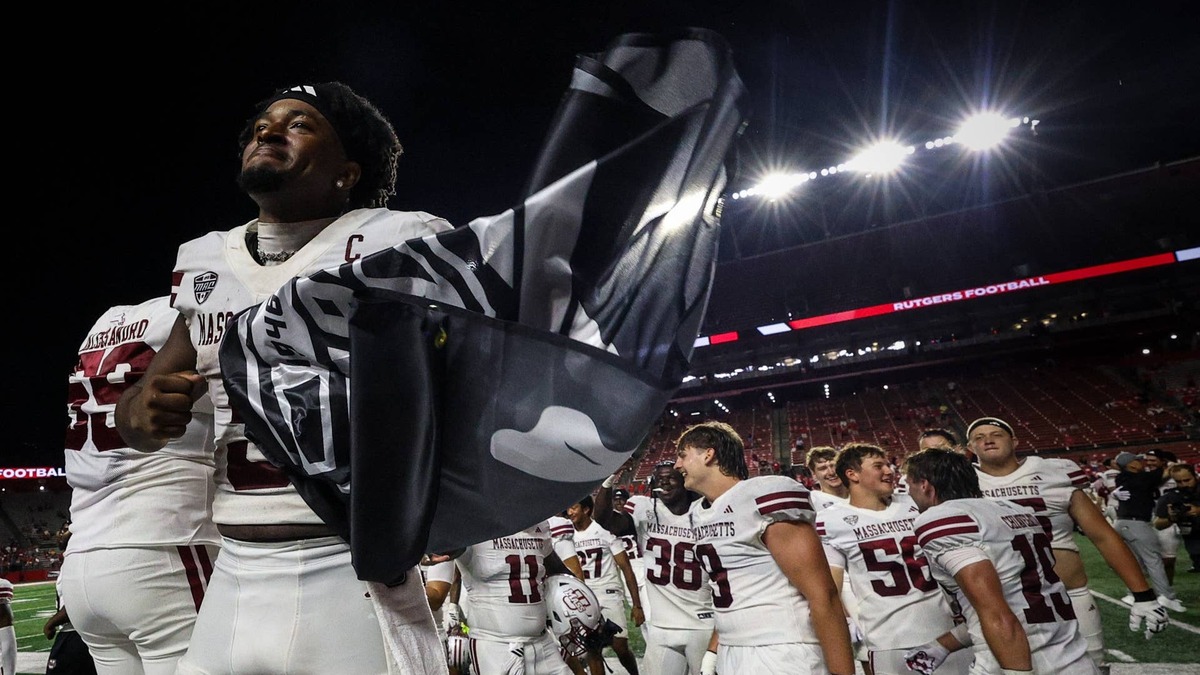
Look, things could have gone worse for the Rutgers football team over its first two winless weeks of the season.
Read more Report: Cowboys S Malik Hooker to see specialist for forearm fracture
The Scarlet Knights went viral for all the wrong reasons in their season opener Sept. 3 by suffering a 37-21 upset loss to Massachusetts, which went 0-12 last season and hadn’t beaten an FBS team since 2023. Then Rutgers fell to Boston College, 28-20, on Sept. 11. Must be something about the Bay State.
The Scarlet Knights could have gotten lost on the way to either game (or both) and suffered a 2-0 forfeit loss or two. That would have been worse.
The Scarlet Knights could have been shut out while allowing UMass and Boston College to score on every drive. That would have been worse.
UMass could have been a non-Division I team beating Rutgers, which is what happened Aug. 28, when Louisiana Christian, an NAIA school, beat FBS Northwestern State (NOT Northwestern of the Big 10), 42-37. That was definitely much worse.
Rutgers head coach Greg Schiano could have pulled a Woody Hayes and tackled a UMass or Boston College player. That would have been worse.
Big 10 leadership could have stormed onto the Rutgers sideline at halftime of either game and kicked the school out of the league. Which would have been worse but also justifiable, frankly.
But let’s be clear: This was bad. Really, really bad. And it’s a reminder that there is no off-ramp for BCS football — for Rutgers, UMass, Boston College and everyone else pot committed in a poker game they can’t win.
Will Rutgers Head Coach Greg Schiano Be Fired?
Rutgers losing to UMass — in a game in which the Scarlet Knights were 28 1/2 point favorites — was so bad, the Rutgers site on the On3 network had a post about the terms of Schiano’s buyout half an hour after the game ended.
Schiano would be owed $18.5 million if he’s fired following this season. The buyout drops to $11.7 million after the 2027 season, $5.9 million after the 2028 season, and then falls to zero after the 2029 season.
Following the loss to UMass, NJ.com‘s Steve Politi opened his column with “Greg Schiano is toast” and wrote that Schiano needs a miracle to keep his job.
As Politi noted, Schiano had another 11 opportunities to recover from Thursday’s debacle. Well, now that’s 10 opportunities after the loss to Boston College, which hasn’t won more than seven games in a season since 2010.
The Boston College defeat underlined the reality apparent against UMass: If the Scarlet Knights can’t beat a team that hadn’t won a game against an FBS foe since three days before Halloween 2023, what hope do they have against anyone else?
Where’s the next win for Rutgers after it faces Howard of the FCS on Sept. 25 (though we shouldn’t assume anything here)? Every other game for Rutgers is in the Big 10, a league that includes four schools ranked in the preseason top 25, including defending national champion Indiana.
Thanks to the loss to Boston College, even matching last season’s 2-7 Big 10 record only gets Rutgers to three victories. And the Scarlet Knights only play one of the schools they beat last season (Maryland).
Related: Returning Heisman Contenders Worth Believing In (And Two You Shouldn’t)
A 4-8 or 3-9 season, low-lighted by a loss to the worst program in FBS, would be bad news for Schiano, who was inherited by athletic director Keli Zinn and president William Tate, each of whom arrived in July 2025.
Why Greg Schiano Might Survive
A glimpse at Rutgers’ financial situation and Schiano’s resume suggests he might be able to escape the ax even if the Scarlet Knights endure a poor season.
Firing Schiano and swallowing the $18.5 million he’d be due — plus the salaries of his assistants — would be doubly costly for a school already swimming in the red. Per NJ.com, Rutgers’ athletic department lost $78 million last season and more than half a billion dollars — $516 million, to be exact — since the school joined the Big 10 in 2014.
Schiano is also the only head coach to make Rutgers relevant at a national level over the last 40 years. He has been the coach for nine of the Scarlet Knights’ 13 bowl appearances and steered them to a top-10 ranking in 2006, when they started 9-0 and briefly looked like a contender for the national championship. The non-Schiano coaches since 1984 are a combined 103-177-2, a .369 winning percentage.
Schiano’s 99 wins are the most in school history (yup, the UMass game was supposed to be the layup for his 100th win). But he’s collected those victories over a 17-year span spread out over two stints — and he’s also suffered 109 losses. So the winningest coach in program history is under .500.
Rutgers has done worse, but can they do better? And not to get too nihilistic, but does it matter either way?
Can a Non-Big 10 or SEC Team Win It All?
The emergence of Indiana from forever afterthought to national champion in just two years under Curt Cignetti is evidence that anything can happen under the right coach. But there’s also a Charlie Tucker discovering the Golden Ticket feel to Indiana’s revival. Expecting a once-per-century miracle isn’t a strategy.
At least Indiana’s success provides a road map for Rutgers. Any school that is going to go from nearly worst to first has to be in a power conference — preferably the Big 10 or the SEC as they continue to both expand their memberships and consolidate power.
Read more Five Plays That Defined the Dolphins’ Week 1 Loss
The last seven national champs have come from one of those two leagues. The only non-Big 10 or SEC schools to win it all in the last 20 years are the ACC’s Florida State and Clemson.
More College Football:
- Ohio State Buckeyes National Championship Hopes Could End In Week 2
- Big Ten Breaks Down “Phantom Second” That Saved Michigan’s Season Opener
- CJ Carr, Notre Dame National Championship Chances Surge After Week 1
So what is the path to national relevance for UMass and anyone else outside the Power 2?
Sure, some of us are old enough to remember when BYU won the national title in 1984. And the newly expanded 12-team College Football Playoff provides tournament berths to at least one school from the Group of Six (the leagues outside of the Big 10, SEC, Big 12 and ACC).
The opportunities for non-power conference schools will theoretically increase in 2027, when the CFP is expected to expand again. The SEC is pushing for a 16-team bracket. The Big 10 is pushing for a 24-team bracket.
All they’re going to do is push everyone else out — just as we’re seeing with the expansion of the NCAA men’s basketball tournament, which was for so long the most perfect of sporting events both in terms of bracketable fun and Cinderella candidates.
But both of those elements will disappear when the NCAA Tournament expands to 76 teams next year. Even typing that sentence makes me mad.
The extra eight berths are not going to go to the Hofstras of the world. They’re going to go to eight dreadfully dull and mediocre power conference teams who have spent the previous four months proving how dreadfully dull and mediocre they are. The Hofstras of the world are going to be relegated to play-in games against fellow mid-majors, thereby reducing the chances they’ll make a run to the second weekend.
Likewise, the extra berths in a 16- or 24-team CFP will be gobbled up by the power conference teams. One of the Big 10’s proposals for a 24-team tourney calls for 23 at-large bids and just one automatic bid — to whichever team is deemed the best of the G6.
Do you think the G6 leagues — which include 69 schools this season — are going to get more than that one bid? I used to believe in Santa Claus, too.
So 69 teams battling for one berth and the chance to try and win the championship by winning five games in as many weeks. Not to rain on UMass’ parade after its headline-creating victory over Rutgers — which the Minutemen followed up with a 37-10 win over FCS Sacred Heart — but no school within the G6 better embodies the almost incomprehensibly long odds for national relevancy.
Why Are Group of Six Schools Still Playing FBS?
The expanded CFP should finish off the bowls, as well, which means this year’s carrot for UMass following its fast start — winning four more games to become bowl eligible and earn a December trip to some tropical paradise or maybe Yankee Stadium or Fenway Park — will soon disappear. Bowls were largely irrelevant even in the pre-opt-out days, but they at least provided a postseason opportunity for the teams without a realistic chance at the national title.
With a bowl-less universe on the horizon and no realistic path outside of a 1-in-69 chance of making the CFP, schools should be looking to get out of FBS instead of moving up. And while the flood of schools moving up should slow to a trickle — eight schools have moved to FBS this decade, but the NCAA raised the application fee from $5,000 to $5 million in 2023 — there’s little indication anyone is considering a scale back and little precedent for such a move.
Only five schools playing at the Division I-A/FBS level have dropped down or out in the last 40 years. The lone school to move from FBS to FCS this century is Idaho, which made the transition in 2017.
But FCS, formerly known as Division I-AA, doesn’t move the needle nationally. (This drove me crazy as one of the reasons Hofstra’s administration said it dropped the football program in 2009, but it’s also true)
So, Division I schools such as Rutgers, Boston College, UConn and Syracuse — just to name three other northeast-based schools with little to no chance of competing for the CFP — accustomed to competing at the highest levels in other sports aren’t in a rush to follow in the footsteps of an Idaho, especially given the money they’ve spent on FBS-worthy facilities and stadiums.
Nor is any FBS program, major or mid-major, likely to take the really bold step of dropping the sport entirely, which hasn’t been done at the Division I/FBS level since 1995, when Pacific pulled the plug. Only three other Division I/FBS schools — Wichita State, Long Beach State and Cal-State Fullerton — have dropped football in the last 40 years.
Going back to FCS is a far less extreme option, especially for schools that built their FBS resumes at that level. But nobody wants to admit they made the wrong decision and nobody wants to lose their tangential-at-best connection to the nation’s elite programs. The prestige of being able to say you’re an FBS school is worth the hundreds of millions.
It’s like sitting at the very last spot at the cool kids’ table at lunch. Sure, nobody pays attention to you there. But at least you can say you’re there. (Hold on, having some high school flashbacks)
Thus, on Sept. 26, UMass will open Mid-American Conference play against Sacramento State, one of two new FBS programs this season along with perennial FCS national champion North Dakota State.
That’s UMass — which, as you all know, is located the very east coast state of Massachusetts. Against Sacramento State — which, as you all hopefully know, is located in the very west coast state of California.
East coast vs. west coast playing in a mid-major conference theoretically located in the middle of the country. What are we doing here? If only the people in power at dozens of FBS programs were asking the same question.
Read more Terry Bradshaw Announces He’s Considering Hair Plugs at 78
Copyright 2026 The Arena Group, Inc. All Rights Reserved.
This story was originally published September 14, 2026 at 10:35 AM.