 By admin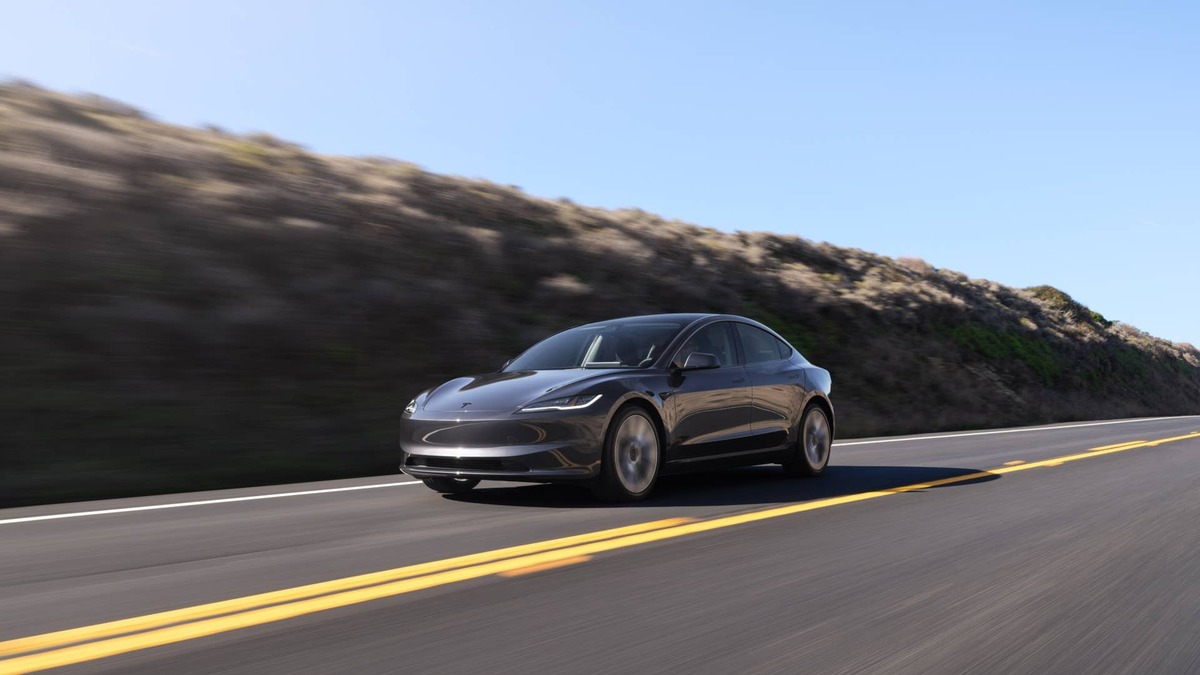
One of these cars is leaving the American market and that changes how the whole comparison reads. Hyundai confirmed that the Ioniq 6 lineup going forward will consist of the high-performance Ioniq 6 N alone, so the standard sedan was dropped after the 2025 model year and what remains is dealer inventory being cleared. Tesla, meanwhile, refreshed the Model 3 for 2026 into four versions from $38,630. So the question is not only which is the better electric sedan. It is whether a discontinued car being discounted by $7,500 is a smarter purchase than a current one at full price.
Read more Earthquake measuring 2.5 rattles area near Silver Springs, NV on Sept. 13
Where Each One Stands
Hyundai’s sedan reached its final American model year in 2025 with four trims: the SE Standard Range at $37,850, the SE at $42,800, the SEL at $45,600 and the Limited at $51,100. A 53-kWh battery powers the entry car and a 77.4-kWh pack the rest, and the native NACS port arrived for that model year, giving direct Supercharger access. The refreshed version continues in other global markets with new lighting, a three-spoke steering wheel and more physical switchgear, and none of it is coming here.
Tesla’s sedan runs Standard Rear-Wheel Drive, Premium Rear-Wheel Drive, Premium All-Wheel Drive and Performance All-Wheel Drive, priced from $38,630 to $56,630 with the $1,640 destination charge included. Ownership brings four years or 50,000 miles of roadside assistance and a 30-day Premium Connectivity trial, after which the system reverts to standard navigation with free over-the-air updates. Scheduled maintenance is not included.
Specs and Pricing
Hyundai Ioniq 6 SE, long range
- Price: $42,800
- Battery: 77.4 kWh
- EPA range: up to 342 miles with rear-wheel drive
- Standard-range version: 53 kWh, 240 miles, $37,850, 135 MPGe
- All-wheel-drive range: 316 miles, or 270 on 20-inch wheels
- Output: 149 hp on the base car, 225 hp with the long-range rear-drive setup, 320 hp with all-wheel drive
- Architecture: 800 volt
- 10 to 80% charge time: 18 minutes on high-power CCS
- Charge port: native NACS
- Drag coefficient: 0.21
- Trunk: 21 cu ft with heated 60/40 split-folding rear seats and a hands-free lid
- Displays: dual 12.3-inch, standard
- Battery and powertrain warranty: 10 years or 100,000 miles
Tesla Model 3 Standard RWD
- Price with destination: $38,630
- EPA range: 321 miles
- Premium RWD: 363 miles at 137 MPGe, the longest in the range
- Premium AWD: 346 miles at 128 MPGe
- Performance AWD: 309 miles at 114 MPGe, $56,630
- Architecture: 400 volt
- Peak DC charge rate: 250 kW
- 10 to 80% charge time: close to 25 to 30 minutes
- 0-60 mph: 5.8 sec, est. on the least expensive version
- Basic warranty: 4 years or 50,000 miles
- Battery warranty: 8 years or 100,000 miles, or 120,000 on long-range packs
Tesla’s four versions span $38,630 to $56,630 with destination included. Hyundai’s four trims ran from $37,850 to $51,100 in their final year, and remaining stock is what the American market has.
Warranty is Hyundai’s clearest structural advantage. Ten years or 100,000 miles on the battery and powertrain outlasts Tesla’s terms by years, and it is the coverage that matters most on the single most expensive component in either car. The same divergence between range and charging architecture runs through the rest of the segment.
Powertrains and Driving
Tesla wins on pace at every level. The least expensive Model 3 reaches 60 mph in 5.8 sec, est., while single-motor Ioniq 6 trims need 7 to 8 seconds, and the entry Hyundai makes 149 hp against numbers Tesla does not publish trim by trim but plainly exceeds. Specify all-wheel drive on the Ioniq 6 and its 320 hp makes it the pleasant surprise of the lineup, though the Performance Model 3 sits above it.
Character separates them more than the stopwatch. The Ioniq 6 is tuned for quietness and ride comfort, with a 0.21 drag coefficient that is among the lowest of any production car and does as much for highway refinement as it does for efficiency. Physical controls survive on the dashboard where Tesla routes almost everything through the touchscreen.
Both are rear-drive-based with all-wheel drive available, and both handle competently without being sports sedans. Tesla’s steering is the more direct and the Hyundai’s the more relaxed.
Range and Charging
Range goes to Tesla at both ends of the range. The Premium RWD reaches 363 miles against the Ioniq 6’s best of 342 on the SE Long Range with rear-wheel drive, and the gap widens dramatically at the entry point: 321 miles on a Model 3 Standard RWD against 240 on an Ioniq 6 SE Standard Range. That 81-mile difference at the bottom of each lineup is the most decisive range comparison here.
Charging splits by where you plug in, and the split is worth understanding before choosing. On a high-power CCS station the Ioniq 6’s 800-volt architecture completes 10 to 80% in close to 18 minutes, well ahead of the Model 3’s 25 to 30. On a Tesla Supercharger the order reverses: the Model 3 pulls its full 250-kW peak with plug-and-charge billing, while the Ioniq 6 charges well below its own peak because most Supercharger hardware runs at 400 volts.
Efficiency is a draw. The Model 3 Premium RWD is rated 137 MPGe and the Ioniq 6 SE Standard Range 135, which converts to close to 4.07 and 4.01 miles per kilowatt-hour. Two cars this close cannot separate themselves at the plug.
Design and Presence
Hyundai built the more distinctive object and the more aerodynamically serious one. The fastback silhouette produces that 0.21 drag coefficient, the pixel lighting is unlike anything else on the road, and the shape has drawn attention since launch in a way the Model 3 stopped doing years ago.
Tesla’s is the more familiar and the more anonymous, refreshed for 2026 with updated detailing on a silhouette that has been on sale since 2017. It looks current rather than striking. Which of those you prefer is a matter of whether you want the car noticed.
Cabins and Technology
Hyundai’s cabin is the more conventional and, for a substantial share of buyers, the better for it. Dual 12.3-inch displays come standard, physical buttons and switches handle the functions Tesla buries in menus, and even the entry SE Standard Range includes blind-spot monitoring and stop-and-go adaptive cruise control without an option box.
Tesla’s answer is software rather than hardware. Over-the-air updates, route planning built on the Supercharger network and an interface that remains the benchmark for responsiveness are genuine advantages, and the 30-day Premium Connectivity trial demonstrates them before reverting to standard navigation. Owners do report more rattles, trim complaints and infotainment quirks than a mainstream sedan typically generates.
Practicality and Space
Hyundai wins the interior comparison. The Ioniq 6’s trunk holds 21 cubic feet with heated 60/40 split-folding rear seats and hands-free lid operation, and rear legroom exceeds the Model 3’s, which is a consequence of the longer wheelbase the fastback shape allows.
Tesla’s counter is usable cargo volume rather than trunk figures, with a front trunk and a hatchback-style opening that swallows awkward items the Hyundai’s sedan aperture will not. Electric platforms free up storage in ways combustion architectures cannot, and both exploit it. Both seat five and neither is comfortable with three adults across the back for long.
Safety and Driver Assistance
Hyundai fits blind-spot monitoring, stop-and-go adaptive cruise control and the rest of its Smart Sense suite as standard from the base trim, with Highway Driving Assist II available higher in the range.
Read more 1963 Chevrolet Corvette Split-Window Coupe for Sale With 50k Miles Shown
Tesla ships every Model 3 with its camera hardware and onboard compute, with Full Self-Driving supervised available as a paid option. Neither system removes the requirement for an attentive driver, and both cars have solid crash records.
Resale and Cost of Ownership
Two forces pull in opposite directions here and both are large. Tesla holds the stronger resale position, with used Model 3s among the most-traded electric cars in America and a demand base no rival matches, though aggressive new-car price cuts have dragged used values down across the board.
Hyundai’s position is complicated by the discontinuation. A model with no successor in this market raises questions over parts supply, dealer familiarity and residual demand that a 10-year warranty answers only partly. Set against that, dealers are clearing remaining stock aggressively: a 2025 SEL with a $48,190 sticker has been listed at $40,670, a reduction of $7,520, with $7,500 in retail bonus cash attached. That is the single most important number in this comparison and it does not appear on any specification sheet.
Insurance runs slightly lower on the Hyundai, which is a small ongoing advantage.
What Five Years Actually Costs
Figures assume 12,000 miles a year over five years, 60,000 miles total, and electricity at $0.15 a kilowatt-hour, which is a working assumption rather than a published rate. Prices are MSRP, which understates what an Ioniq 6 currently transacts at. Depreciation and repairs are excluded because no matched five-year estimate exists for both.
Tesla Model 3 Standard RWD
- Price with destination: $38,630
- Efficiency: close to 4.07 mi/kWh
- Energy used over 60,000 miles: 14,760 kWh
- Charging cost over 60,000 miles: $2,214
- Five-year purchase and charging: $40,844
Hyundai Ioniq 6 SE, long range
- Price: $42,800
- Efficiency: close to 4.01 mi/kWh
- Energy used over 60,000 miles: 14,978 kWh
- Charging cost over 60,000 miles: $2,247
- Five-year purchase and charging: $45,047
- Gap at MSRP: $4,203 to Tesla
Energy contributes $33 across five years, so purchase price is the entire difference. The qualification is substantial: apply the discounting currently attached to remaining Ioniq 6 stock, which has run to $7,520 off sticker on an SEL, and the Hyundai lands below the Model 3 rather than $4,203 above it. Anyone running this calculation should run it on the number their dealer will actually write, not the one on the window.
Which Version to Buy
Tesla’s answer depends on what you want from it. The Standard RWD at $38,630 is the value choice and delivers 321 miles, which is more than the Ioniq 6’s entry car manages by 81. The Premium RWD is the range pick at 363 miles and 137 MPGe. The Performance AWD at $56,630 is quick and difficult to justify against the Premium AWD’s longer range.
Hyundai’s answer is the SE with the long-range battery at $42,800, the least expensive route to 342 miles and 225 hp. The SE Standard Range at $37,850 gives up 102 miles for $4,950, which is a poor trade unless your driving is strictly local. Whatever trim you choose, the discount is the reason to be looking.
Scorecard
- Design and presence: Hyundai. A 0.21 drag coefficient and a fastback shape unlike anything else, against a silhouette on sale since 2017.
- Cabins and technology: Hyundai. Dual 12.3-inch displays with physical controls, and blind-spot monitoring and adaptive cruise standard on the base trim.
- Powertrains and driving: Tesla. 5.8 sec, est. to 60 mph on the least expensive version, against 7 to 8 seconds for single-motor Ioniq 6 trims.
- Practicality and space: Hyundai. A 21-cubic-foot trunk with heated split-folding rear seats and more rear legroom.
- Range: Tesla. 363 miles against 342 at best, and 321 against 240 at the entry point.
- Charging: Tesla. Full 250-kW delivery on the largest network in America, where the Ioniq 6 runs below its own peak on 400-volt hardware.
- Resale and cost of ownership: Tesla. $4,203 less at MSRP, with resale demand a discontinued model cannot match.
Tally: Tesla 4, Hyundai 3.
So Which Comes Out Ahead?
The Model 3, and the deciding factor is availability rather than engineering. It reaches 363 miles against 342 and 321 against 240 at the entry point, hits 60 mph in 5.8 sec, est. against 7 to 8 for single-motor Hyundais, pulls its full 250-kW peak on the largest charging network in the country, and costs $4,203 less over five years at list price. It is also a current model with a future, where the standard Ioniq 6 has been discontinued in America and only the limited-run Ioniq 6 N continues.
What the Ioniq 6 does better is substantial and much of it is what you touch daily. Its 0.21 drag coefficient makes it one of the most aerodynamic cars ever produced and one of the quietest at speed. Its 800-volt architecture completes 10 to 80% in 18 minutes against 25 to 30, wherever high-power CCS exists. Dual 12.3-inch displays come with physical controls beneath them, its 21-cubic-foot trunk and rear legroom both beat the Tesla, and its battery and powertrain are covered for 10 years or 100,000 miles rather than eight.
Three situations justify the Hyundai anyway, and the first is the strongest. Dealers are clearing remaining stock at up to $7,520 off sticker with $7,500 in retail bonus cash, which erases the $4,203 gap and then some. If you charge primarily at home on a good CCS network, the 18-minute figure is the one you live with rather than the Supercharger comparison. And if you intend to keep the car for a decade, the 10-year powertrain warranty outlasts anything Tesla offers.
Take the Model 3 if you road-trip, want the longer range or care that the car you buy will still be sold next year. Take the Ioniq 6 if you can find the discount, because at $7,500 off it is the better car for less money, and be clear-eyed that you are buying a model with no successor here.
Alternatives to Consider
The Kia EV6 shares the Ioniq 6’s 800-volt architecture and 18-minute charging in a crossover body that is still sold here, with the same 10-year warranty. The Hyundai Ioniq 5 offers the same platform and charging speed with more cargo space and a continuing US lineup. The Polestar 2 covers similar ground to the Model 3 with a more conventional interior. And the Tesla Model Y is the crossover version of the Model 3 for buyers who want the height and the cargo volume.
Frequently Asked Questions
Is the Ioniq 6 being discontinued?
Yes, in the United States. Hyundai confirmed the lineup will consist of the Ioniq 6 N alone, so the standard sedan ended after the 2025 model year and remaining stock is dealer inventory.
Which goes farther on a charge?
The Model 3, at 363 miles on the Premium RWD against the Ioniq 6’s best of 342. At the entry point it is 321 miles against 240, a gap of 81.
Which charges faster?
It depends on the charger. The Ioniq 6 completes 10 to 80% in 18 minutes on high-power CCS; the Model 3 takes 25 to 30 but pulls its full 250 kW on Superchargers.
Which has the better warranty?
Hyundai, at 10 years or 100,000 miles on the battery and powertrain. Tesla covers 4 years or 50,000 miles basic, with 8 years or up to 120,000 on the battery.
Read more Trump defends his support for unified Ireland despite UK uproar
Copyright 2026 The Arena Group, Inc. All Rights Reserved
This story was originally published September 13, 2026 at 10:30 AM.