 By admin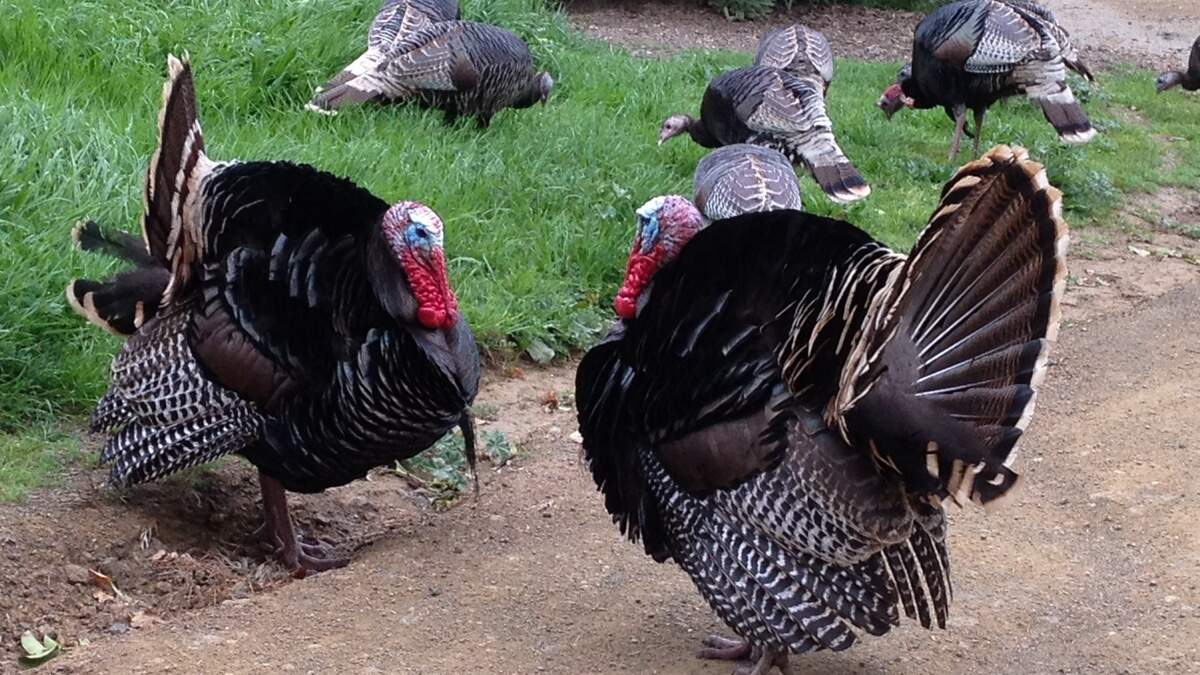
AI-generated summary reviewed by our newsroom.
Read our AI Policy.
- Utility says wild turkeys caused at least six recent, short, early-morning outages.
- PGE said birds’ weight causes lines to swing and trigger safety shutdowns.
- PGE crews increased line spacing to prevent bird-caused outages after their investigation.
The North Coast has been plagued this summer with a spree of unusual power outages — and PG&E says the cause isn’t what you might think.
Read more Alex Trebek’s former SLO County ranch sold at auction — for half its listing price
It’s wild turkeys.
The backstory: Since mid-July or so, the Cambria area has endured many short, repetitive outages, nearly always during the same time frame about daylight and always with a similar duration of approximately an hour.
The frequency and timing — sometimes two a day or several days in a row — have dismayed residents, especially those getting ready for work or who need the electricity to run medical equipment or are simply desperate for coffee they cannot brew.
The outages also disrupt work flows for businesses, like restaurant staffers who need to prep the food and open their eateries.
Lots of upset and curious people took to social media for answers that weren’t immediately forthcoming, although in its flurry of emailed and texted updates during and after each incident, PG&E did say that an “animal contacted the powerline” and caused the recent outages.
The Tribune asked PG&E for more information about the strange occurrences.
Stephanie Magallon, the utility’s regional communications representative confirmed there had been six outages since July — and the cause was wild turkeys.
Sounds a bit outlandish, but here’s what happens:
“These large birds perch on power lines,” she said. “When they take off, the push from their weight causes the lines to swing and come into contact with one another. When that occurs, our enhanced powerline safety settings (EPSS) detect the hazard and automatically shut off power to prevent an ignition.”
North Coast power lines run through or are near high-fire risk areas, so those settings, which aren’t always turned on, can apply.
Read more Update: Union assists workers to be laid off at wine screw-cap plant in Modesto
“We evaluate wildfire risk each day to determine when we should turn them on,” Magallon said. “These settings shut off power within one tenth of a second after detecting hazards on the power line, such as contact from an animal or tree branch, to prevent an ignition.”
Following the outages, engineers search for how to improve reliability.
And they may have found a solution, she said. Using new information Wednesday, PG&E crews worked “to increase spacing between the lines to prevent contact when a bird lands or lifts off,” Magallon said.
This isn’t the first time turkeys have run afoul of local power lines.
In September 2021, a flying turkey hit a power line, with neighbors saying it appeared to prompt another power outage across much of Cambria, according to The Cambrian reporting at the time. PG&E officials did not confirm the turkey was the cause of that outage, however.
Turkeys, which can fly but not well or far, often roost in trees that are close to the lines.
When they take off, they may land on the lines mid-flight, according to nearby residents who have reported that behavior. Recently fledged young birds may not have the distance judgment they need to avoid hitting the lines.
Adding to the odds, turkey flocks in Cambria appear to be getting bigger.
As PG&E continues to try to deal with the strange issue of turkey-caused outages, Magallon urged residents to have patience with them.
“We understand these outages have been frustrating for customers, and we appreciate the community’s patience while we worked to identify and address the cause,” Magallon said.
Read more Sacramento funded a quick-build road safety team. Over a year later, jobs remain unfilled