 By admin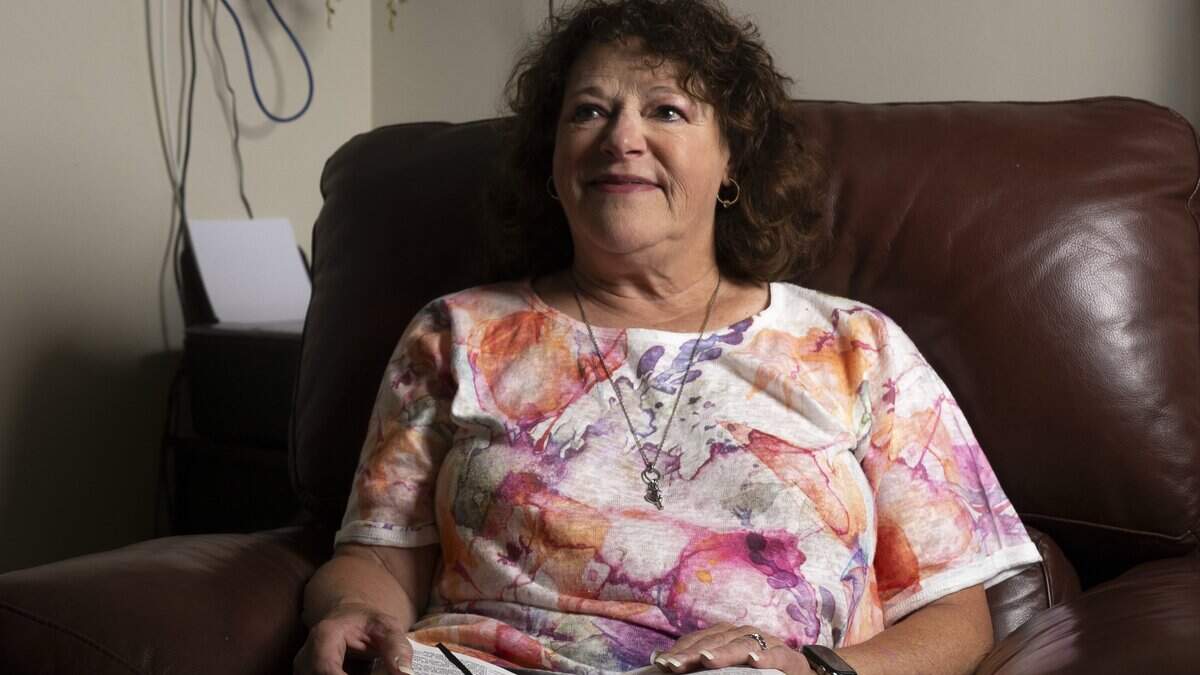
At her eldest daughter’s 2014 wedding in Galt, Lisa Ferrero wore a strapless navy dress and served as the maid of honor. Recently divorced and living alone, she had been working out regularly and felt healthy and confident as she walked down the aisle.
Read more What were the most popular majors among Sac State applicants in 2026?
She had worked hard to become fit, and was proud of herself.
“Everybody commented on my guns on my arms because I was in such wonderful physical shape,” Ferrero recalled.
Ferrero was 55 and lived in Lincoln near her two daughters. Her eldest, Valerie, was a teacher, while her youngest, Natalie, was preparing to graduate from college. Ferrero worked a desk job but stayed active by bicycling and skiing with her family. She had no history of serious medical problems.
A year after Valerie’s wedding, however, Ferrero struggled to walk, breathe and speak. Doctors eventually diagnosed her with two rare, related diseases — multiple myeloma and amyloid light-chain amyloidosis. They told her she had five years to live.
But her journey through chemotherapy, a stem cell transplant, setbacks, frustration and hope led her to a treatment that would genetically alter her immune cells to help her body fight the diseases after other drugs and treatments had failed. Along the way, she learned that patients can take charge and help control their destinies.
“Educating yourself is one of the best things you can do when you have something like this,” she said. “Everybody has to be their own advocate.”
A rare diagnosis
Her symptoms first appeared with painful, swollen ankles. Walking up the stairs at work became so difficult that she had to elevate her legs while sitting. Her legs cramped. A case of pneumonia left her short of breath. Her tongue swelled, affecting her speech.
A doctor in Rocklin ordered a series of tests and referred Ferrero to an allergist, then a rheumatologist. After conducting more tests, the rheumatologist said she could not help Ferrero and referred her to an oncologist.
“I just about fainted when she said that word,” she recalled.
The oncologist performed biopsies. The results showed amyloid light-chain, or AL, amyloidosis and multiple myeloma.
The combination is uncommon.
The average lifetime risk of multiple myeloma is less than 1% in the U.S., according to the American Cancer Society. An estimated 10% to 15% of multiple myeloma patients also develop AL amyloidosis, according to the National Institutes of Health.
Both diseases begin in plasma cells, a type of white blood cell made in the bone marrow. When AL amyloidosis occurs with multiple myeloma, patients may show symptoms different from the usual signs of multiple myeloma, including bone fractures and high blood calcium.
In multiple myeloma, abnormal plasma cells can multiply without the controls that normally regulated the immune system. In Ferrero’s case, those cells also produced abnormal proteins called lambda-free light chains. The proteins escaped from her blood vessels and accumulated in her tissues, forming deposits known as amyloids.
Ferrero’s illness stemmed from the abnormal proteins produced by her plasma cells, which seeped out of her blood vessels and accumulated in her tissues.
Ferrero continued to experience the symptoms of multiple myeloma and AL amyloidosis as she began undergoing chemotherapy. Her swollen tongue pushed her teeth outward, and she began working with a speech therapist. She also reconsidered a sleep apnea diagnosis she had received two years earlier. Doctors had been unable to explain its cause.
“I was female, I was young, I was in great shape, there was nothing wrong with my nasal cavities,” she said. “I mean, I’d gone to everybody, and nobody could explain why I had sleep apnea.”
Later, she realized it was the first sign of her amyloidosis.
Ferrero quickly picked up on other aspects of her new reality as well. After she rubbed her eye, she woke up with the skin around it purple and red.
“It looked like I had been in a bar fight,” Ferrero said.
Through online research, she knew that this was another side effect caused by thin skin. Ferrero has been careful not to rub her eyes anymore.
“I haven’t rubbed my eye for about 10 years,” she said. “I just dab.”
Treatment, family and life
Ferrero broke the news to Valerie at a family barbecue in Elk Grove. Valerie said that her reaction was “immediate panic and tears.”
Natalie canceled plans to move to New York so she could remain near her mother during treatment.
Ferrero began drug therapy at UC Davis Health’s Rocklin clinic. Her regimen, known as CyBorD, included dexamethasone, bortezomib and cyclophosphamide. Daratumumab later became part of the standard combination, but it was not available to Ferrero when she started treatment.
“It’s been extremely effective for people with amyloidosis,” Ferrero said. “For me, it wasn’t available yet.”
One of Ferrero’s daughters and a son-in-law accompanied her to her first scheduled infusion.
“I just sat and cried in the chair,” she remembered. “I knew this was going to make me feel sick, and it’s like, ‘why am I taking something that’s going to make me feel so lousy?’ But that’s what you have to do.”
Ferrero had to take anti-nausea medication. Dexamethasone is a steroid that can cause insomnia and stimulate appetite, so she also had trouble sleeping and was always hungry.
David Steele, her then-boyfriend and now-husband saw her through the rigors of CyBorD and the therapies that followed.
“He’s the one that was there every day for me, going through all the treatments and all the side effects and all the, you know, the emotional roller coaster I was on,” Ferrero said.
Ferrero and Steele married two years after her diagnosis, while she remained in treatment. Her days were filled with medical appointments, lab tests, prescriptions, medication changes and infusions.
“It’s like having a full-time job,” she said.
When Steele proposed, Ferrero said she thought he was crazy.
“I don’t even know if I’m going to be here in five years,” she recalled telling him.
Steele didn’t care.
“That’s not what’s important,” Ferrero recalled him saying.
A transplant and a wedding
The year before their wedding, Ferrero underwent a stem cell transplant. Doctors collected healthy blood-forming stem cells from her body, then administered high-dose chemotherapy to destroy cancerous cells in her bone marrow. The preserved stem cells were later returned to her bloodstream so her body could begin producing blood cells again.
The treatment also severely depleted the white blood cells needed to fight infection, said Jan Nolta, director of the Cell and Gene Therapy Center at UC Davis Health.
“It makes you very sick,” Nolta said. “You blast out everything with fire, basically.”
The healthy stem cells that had been removed were then given back to the patient, allowing the body to resume producing healthy blood cells.
Ferrero described the transplant as one of the most difficult experiences of her life.
“I was in quarantine for like four months. I wasn’t really allowed to go anywhere or do anything,” she said. “I was miserable.”
The treatment caused Ferrero to lose her hair. As the wedding approached, Natalie noticed her mother worried about her appearance. A hairstylist who was Natalie’s friend arranged for Ferrero to receive a wig.
“It was this really amazing thing, and it looked great on her,” Natalie recalled. But, she said, Ferrero asked Natalie whether she would be upset if she stopped wearing it, and took it off.
“It just was so funny,” Natalie said. “She just looked too hot to wear this wig.”
Read more Report says bill allowing state workers to telework could save California millions
For six months after the transplant, tests showed encouraging results. But Ferrero continued to experience long-term effects. Hair did not grow back on her legs or underarms, and the hair on her head grew curly instead of wavy
“My numbers were good, and I was excited,” she remembered.
The transplant had not produced a lasting result. The setback was especially difficult because the procedure had been so taxing.
Father and daughter, loss and set back
After the transplant, Ferrero tried a succession of therapies. None controlled the amyloidosis for much longer than a year. Among the treatments that failed were proteasome inhibitors, which allow the buildup of proteins that are damaging to cancer cells; monoclonal antibodies, lab-made clones of specific antibodies that target harmful cells; and immunomodulators, which strengthen the immune system to help it better fight cancerous cells.
“I did them all, and we did multiple combinations of them to see if there was something that would kick in and work for me, and nothing did,” Ferrero said.
Ferrero had never felt comfortable around needles, but repeated blood draws made them routine. Even now, when she goes to see her doctor for routine appointments, she looks away when the needle goes in.
“They probably have at least 1,000 blood files in my history now, and I’m not exaggerating,” she said.
About halfway through Ferrero’s decade of treatment, her father, Mario Ferrero, died.
Ferrero said she had always been close to him and that he struggled with the news of her diagnosis.
“He was my strength. He saw me through everything I went through in life, and was always there for me,” said Ferrero. “It broke his heart when he found out I was sick.”
Her father had bladder cancer that had initially been controlled but later returned. For a period, father and daughter underwent chemotherapy at the same time. They once scheduled their treatments together at the Rocklin clinic so they could receive infusions alongside each other.
Before he died, Ferrero assured him that she would be all right.
“He just smiled, and I honestly believed it in my heart that that’s what was going to happen for me,” she said.
Finally, something worked
Her doctor was Aaron Rosenberg, a multiple myeloma specialist at UC Davis Health. He said the COVID-19 pandemic further complicated treatment for patients whose diseases and medications weakened their immune systems.
“These patients are immunocompromised from the disease and immunocompromised from what we’re doing to them,” Rosenberg explained. “It was terrible for everyone.”
Ferrero became an expert in her condition. She would come to appointments with lists of questions prepared and, if a doctor suggested trying a treatment that didn’t seem completely right to her, she would suggest an alternative that she had had better success with instead.
“She’d take notebooks with her to the doctor’s office and take notes like she was studying for the bar,” said Natalie, who frequently attended Ferrero’s appointments with her.
When daratumumab, the drug that was eventually added to make CyBorD-D, or Dara CyBorD, became available to amyloidosis patients, Ferrero was excited. She had heard that other AL amyloidosis patients had done really well on daratumumab and was hopeful that it would work for her, too.
When it failed, like all of the other treatments, Ferrero was disheartened.
“I thought, ‘why me? Why can’t I be that one? I’ve done everything they told me to do,’” she recalled.
Ferrero first heard about chimeric antigen receptor T-cell therapy, more commonly known as CAR-T, from an amyloidosis support group she had joined to connect with other patients going through similar experiences. A representative from Nexcella, the biopharmaceutical company developing the trial that Ferrero would undergo, spoke to the group a year and a half before the therapy would come to Sacramento.
During that time, Ferrero underwent even more therapies.
“I was really on my last hope, because there was only one other treatment I could have taken,” she said. “It was pretty brutal of a treatment, the side effects, you had to be hospitalized, it was something I absolutely didn’t want to consider, if I didn’t have to.”
CAR-T cell therapy fights cancer by genetically changing a patient’s cells. Doctors first collect a patient’s blood and separate its T cells through a process called leukapheresis. T cells are used by the body’s immune system to target cells that don’t belong in the body. Typically, they help the body recover from viruses or infections, but can also be used to target cancer.
After doctors collect the patient’s T cells, they genetically modify them to produce synthetic proteins called chimeric antigen receptors. The modified T cells are then returned to the patient’s bloodstream, where the receptors help the T cells bind to cancer cells to kill them.
Starting in the fall of 2024, Ferrero underwent a series of tests to determine whether she was eligible for the CAR-T therapy trial. After completing the tests, however, she still had to wait several months for the trial to be approved.
In January 2025, Natalie gave birth to her first child. Ferrero told her doctors that she could not start the therapy because she needed to be there for her daughter and decided to wait another few months before beginning the trial.
In March, she started the trial and stayed in the hospital for 17 days. By the 12th day, Ferrero felt so good that she wanted to go home again. She started riding her bike again.
Rosenberg described seeing Ferrero around three months after she received CAR-T as one of the most memorable moments since he began treating her in 2021.
“She was off therapy for the first time in about a decade, and she just was feeling more like herself than she had in so long, and more like herself than I had ever known her,” Rosenberg said.
Barriers to accessing CAR-T therapy
Ferrero hopes more multiple myeloma and AL amyloidosis patients become aware of CAR-T therapy.
But because CAR-T therapy is expensive and requires specialized centers with the facilities needed to administer it, access to the treatment is often limited to major medical centers.
CAR-T cells, unlike cells used in other treatments, are not frozen but instead are kept viable while being shipped to labs to be genetically modified before being returned to hospitals to treat patients.
Rosenberg explained that the hospital also needs to have an apheresis team, a group of physicians and nurses who collect the T cells and ship them to labs.
Medical centers capable of administering CAR-T therapy are few and far between. The next health center capable of administering the therapy north of Sacramento is in Portland, Oregon.
Nevada doesn’t have any health centers capable of treating patients with CAR-T therapy, Rosenberg said.
To Ferrero, being proactive remains one of the most important pieces of advice she has for other multiple myeloma and amyloidosis patients.
“Educating yourself is one of the best things you can do when you have something like this,” she said. “Everybody has to be their own advocate.”
Ferrero is also hopeful that more CAR-T clinical trials will be able to help patients who haven’t had much success with other treatments.
Now that she is at home again, Ferrero has enjoyed traveling, spending time with her grandchildren and being active again. She plans to buy an electric tricycle so that she can be active with her family despite her limited endurance.
Read more Man gets 40 years to life in prison for murder of Sacramento woman at truck stop
“I feel joy,” she said.