 By admin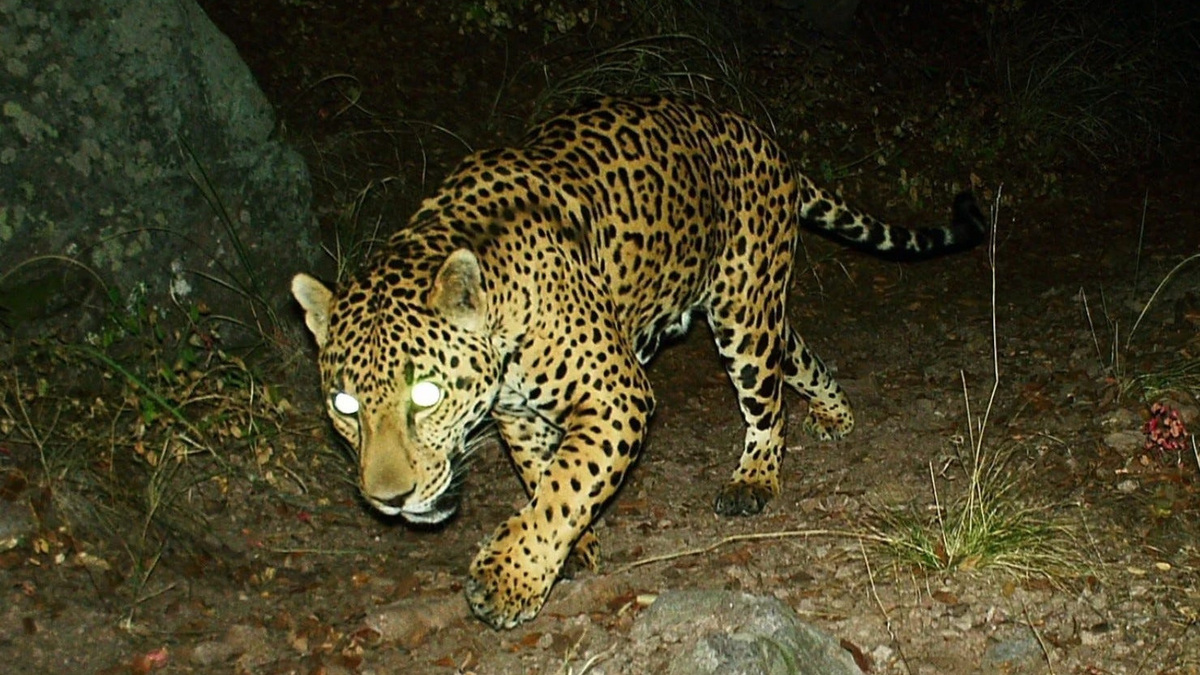
Move over, tigers and lions; Arizona has jaguars.
Yes, jaguars. Those sleek, powerful big cats most people associate with the jungles of Central and South America have a surprising connection to the Grand Canyon State.
Read more UPDATE: Flood advisory issued for Imperial and Riverside counties Sunday morning
While they are incredibly rare visitors today, jaguars once roamed parts of Arizona and the Southwest. Their occasional sightings continue to remind us that these predators aren’t just creatures of far-off rainforests.
Built for stealth, strength and serious style, jaguars are the largest cats in the Americas. Their distinctive golden coats, covered in dark rosettes, help them disappear into rugged landscapes, while their powerful jaws make them formidable hunters. In Arizona, their story is tied to wildlife corridors, borderlands and the broader effort to understand and protect the species as it moves through its historic range.
So, how did jaguars end up in Arizona? Where have they been spotted? And what does their presence mean for the state’s wildlife?
Here’s everything to know about Arizona’s elusive jaguars.
What parts of Arizona have jaguars?
We talked with Kinley Ragan, field research project manager at the Arizona Center for Nature Conservation and Phoenix Zoo, who told us that jaguars have historically ranged all the way through Arizona to the Grand Canyon.
“However, in recent years, jaguars have only been recorded in the Sky Island regions of the U.S.-Mexico borderlands and these recent records have only been of male jaguars,” said Ragan. “Jaguars are a far-roaming species and can cover miles of land in one day, crossing through many different types of habitats as they travel. This makes understanding their habitat preferences more challenging. However, the presence of water and availability of prey are important and most recent records have occurred in or near Madrean Evergreen Woodlands in Arizona.”
Ragan also mentions that there are five corridors in Arizona that are critical for jaguar movement between Sonora and Arizona, and all are being impacted by U.S. border wall security projects.
“In exciting news from our partners, for the first time in many decades, a female has been recorded in the borderlands on the Sonora side. This is critical information because it indicates that females are closer to the U.S.-Mexico border than we originally anticipated,” said Ragan.
Why are there jaguars in Arizona?
Ragan said jaguars are native to the southern United States.
“Arizona is part of the farthest north reaches of their habitat,” said Ragan.
What to do if you see a jaguar?
Although it’s extremely rare to encounter a jaguar, there’s always a possibility. If you encounter a wild jaguar, do not run. Stay calm and back away slowly while keeping the animal in your field of vision.
Running triggers the jaguar’s instinct to chase and attack. You cannot outrun a big cat. Also, make sure not to turn your back; it makes you look like easy prey. Never approach or provoke and focus on maintaining space and ensuring a clear exit path for the animal to leave the area safely.
How many jaguars live in Arizona?
Ragan explained that it’s tricky to know the exact number of jaguars living in the state because Arizona’s Sky Island region is vast, with complex habitats, canyons, mountains and areas in between to roam.
Read more How an Arizona man turned 9 refrigerators into a car movement
“In the last 30 years, there have been eight individual jaguars documented in Arizona. However, thanks to recent great work by many different organizations in the borderlands, namely Sky Island Alliance and University of Arizona Wild Cat Research & Conservation Center, we know of one male individual who has been consistently seen this past year and his name is ‘Cinco,'” said Ragan.
How big is an Arizona jaguar?
Jaguars can range in size from 100-250 pounds and can be 5 to 8 feet long from nose to tail, depending on their age and the food availability and resources in a system.
“Our Arizona jaguars are no different than other jaguars within the rest of their range,” said Ragan.
Can you shoot a jaguar in Arizona?
Jaguars are protected under the Endangered Species Act and cannot be shot in Arizona.
“It’s important to check with local laws and to be properly informed on the wildlife you might come across before engaging in any hunting activities,” said Ragan.
Which is bigger, a cougar or a jaguar?
Jaguars tend to be heavier and more muscular than cougars, making them larger on average. Jaguars were ranked as the third-largest cat species in the world, behind tigers and lions.
Cougars, also known as mountain lions or pumas, are the fourth-largest cat species.
When was the last jaguar sighting in Arizona?
Trail camera footage captured the male jaguar, nicknamed Cinco, prowling along a grassy stream on Aug. 18, 2026.
Got a story you want to share? Reach out at [email protected]. Follow @tiffsario on Instagram.
Looking for the best things to do in Arizona? Sign up for our newsletter.
This article originally appeared on Arizona Republic: Yes, there are jaguars in Arizona. Where they’ve been spotted
Read more Pope Leo will undergo surgery to remove nodule from lung
Reporting by Tiffany Acosta, Arizona Republic / Arizona Republic
USA TODAY Network via Reuters Connect
Copyright Reuters or USA Today via Reuters Connect
This story was originally published October 11, 2026 at 5:01 AM.