 By admin
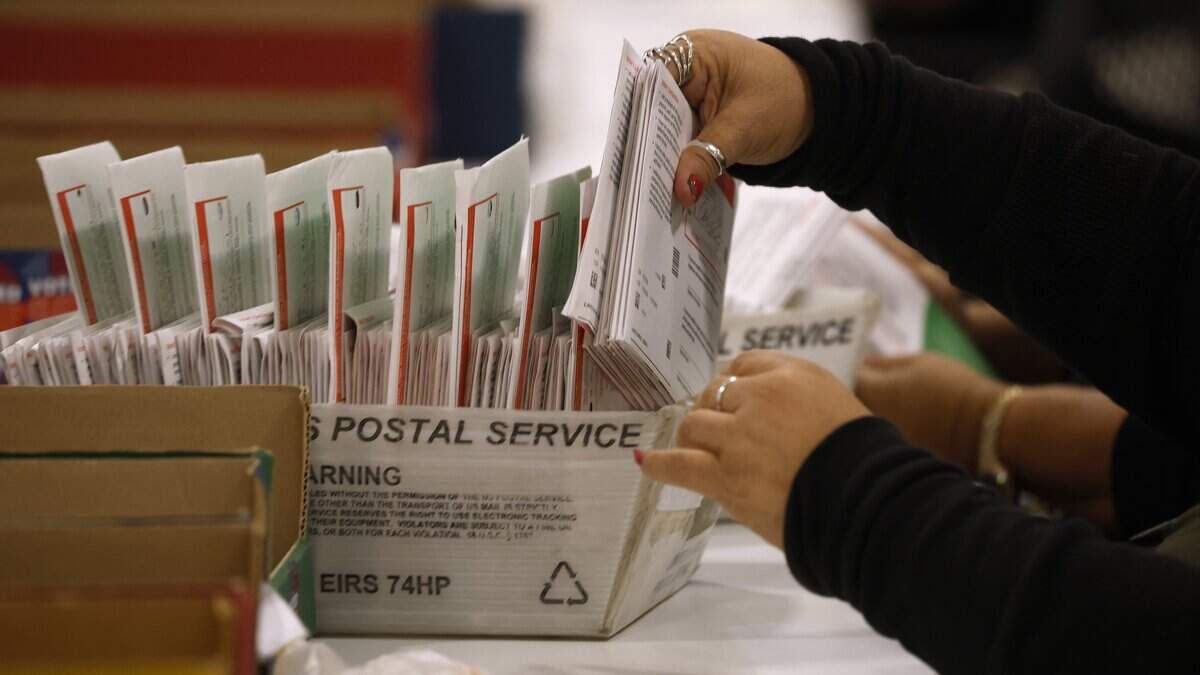
A federal judge in Los Angeles said he will rule by Wednesday on a Trump administration demand that California and Los Angeles County set aside ballots cast by 20,000 people the U.S. Department of Justice says might be noncitizens registered to vote.
Read more Support for billionaire tax, permitting reform measures both drop in new polling
The ruling by Judge David Carter will cap days of fast-moving legal wrangling that began earlier this month, when the federal government gave the county and the state 48 hours to agree to segregate ballots from voters the administration suspects might be illegally registered.
That demand was quickly followed by a lawsuit asking Carter to order the state and county to comply. Days later, the government charged 28 individuals throughout California it said had were noncitizens who had registered or voted in the state.
The Republican administration’s actions drew fierce pushback from Gov. Gavin Newsom and other leaders, who accused the Justice Department of trying to meddle in California’s elections and cast doubt on the results in the heavily Democratic state. The federal government says it is merely trying to ensure that noncitizens do not cast votes.
Several times during the past two weeks, First Assistant U.S. Attorney Bill Essayli has mentioned that election officials who knowingly process ballots by noncitizens could themselves be prosecuted for voter fraud — comments opponents have taken as threats.
During the hearing on Tuesday, he again raised that possibility, prompting a sharp rebuke from Carter.
“This court believes that it would be wise that any threats to state and county elected employees cease immediately,” the judge said.
Rejection by appeals court
Saying that Carter was not moving fast enough, the Justice Department last weekend petitioned the Ninth Circuit Court of Appeals to hear their request before Tuesday’s hearing in his Los Angeles court. After a highly unusual Sunday hearing, a three-judge panel of the appellate court rejected the government’s request.
Read more Should California borrow $8.4B for immunology research? Proposition 38 explained
The panel left the decision to Carter, who after an hourslong hearing Tuesday, expressed skepticism of the government’s arguments.
“Some of these may be very valid voters,” said Carter, who was appointed by former President Bill Clinton. “And that’s my concern.”
How was the list compiled?
During the hearing, Essayli for the first time provided some details about how the government compiled its list.
A redacted version of California’s voter roll that did not include Social Security numbers was purchased and given to the Department of Homeland Security, Essayli said. Government analysts then cross-referenced it with their own databases to try to identify people on it who were not U.S. citizens, he said. He did not say who purchased the list, when it was purchased or for what period of time it purported to reflect registered voters.
Essayli said the names were also checked manually by government analysts.
The same methods were used to search for possible noncitizen voters in Nevada, he said. In that case, the administration initially told state officials that there were possibly 16,000 noncitizens registered to vote, but then reduced the number to about 185. Of those, the state of Nevada later said all were citizens, though Essayli said he disagreed with their reasoning.
Anna Baldwin, an attorney for civil rights groups challenging the government’s demand, said the California list was of unknown provenance and inaccurate. The government’s system could easily confuse relatives with similar names or other mismatches. She called the government’s efforts to force the state to set aside ballots “lawless.”
Last week, a federal judge in Oakland called the administration’s list “flawed” in connection with a different case and barred investigators from conducting interrogations based on it until after Nov. 3, Election Day.
Read more Should California tax billionaires? How McClatchy Editorial Board sees Props. 40, 41 & 42