 By admin
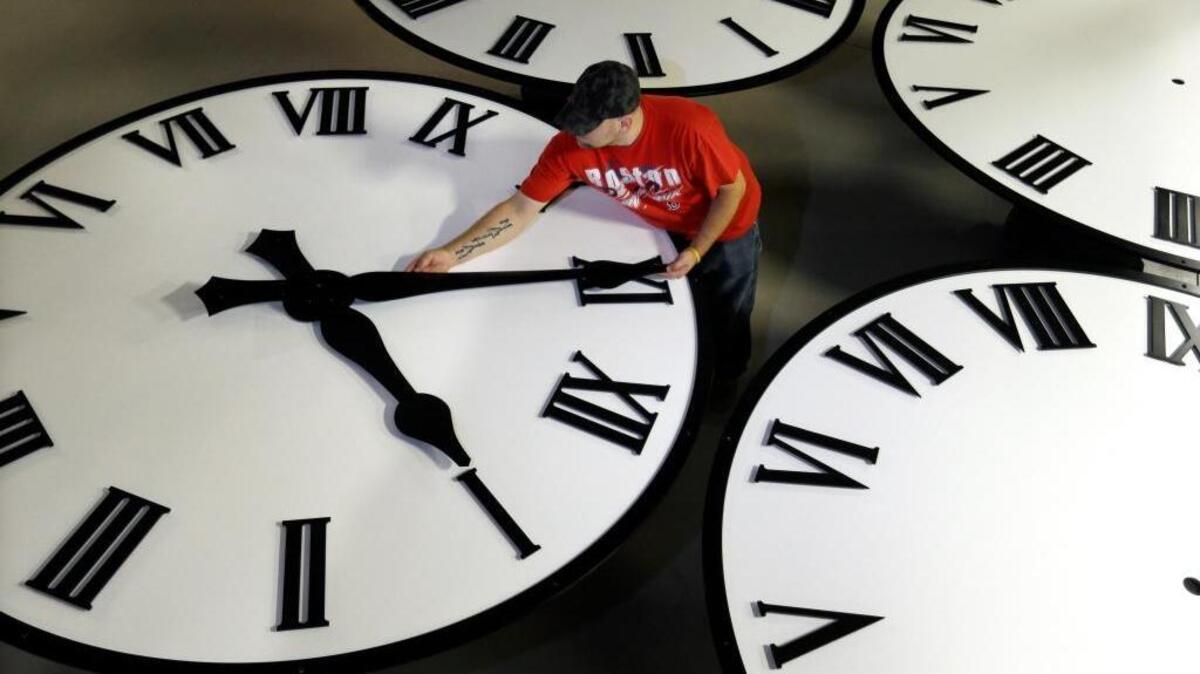
It may seem that changing the clock one hour to gain extra sleep would be a good thing. But studies show daylight saving time can be hard on the body. Just how does changing the clock affect sleep, metabolism and mental health?
Read more 3 kids with E. coli are in ICU, as officials investigate California pumpkin patch
Here’s what to know:
What is daylight saving time?
Daylight saving time is the period of the year when clocks are moved one hour ahead, according to the National Institute of Standards and Technology.
This has the effect of creating more sunlight hours in the evening during months when the weather is the warmest. Clocks are advanced ahead one hour at the beginning of daylight saving time, in March, and clocks are moved back one hour in November when returning to standard time.
When does daylight saving time end?
Daylight saving time ends on the first Sunday in November, according to Time and Date, an online world clock.
At 2 a.m. Sunday, Nov. 1, clocks in California and other states will move back by one hour.
Sunset will occur one hour earlier once the time shift takes place. Californians will experience less daylight in the evenings and more natural light when people are most active.
How early will it start getting dark in California?
Sunset in Sacramento will be 5:05 p.m. on Nov. 1, according to AccuWeather.
When will daylight saving time return?
Under rules adopted in 2007, daylight saving time will resume on the second Sunday in March. In 2027, that date will be March 14. Clocks will move forward by one hour.
What does daylight saving time do to the body?
Sleep health can be disrupted a number of ways, according to Northwestern Medicine.
Sleep health depends on the balance between two processes:
- Sleep homeostasis: the desire to sleep that builds from the moment you wake up through bedtime.
- Circadian rhythm: the body’s natural 24-hour biological cycle, including the sleep-wake cycle that regulates the timing of sleep at night and wakefulness during the day.
Circadian rhythm is set by the timing and amount of bright light exposure a person gets during the day, according to Northwestern. Between March and November, your body is exposed to less morning light and more evening light, altering a person’s biology or their circadian rhythm.
Read more See Woodland protesters march against ICE, one week after man struck by vehicle
The time disruption can disrupt the body’s biology, so the immune system or metabolism might not work as well, according to reporting by PBS.
On the other hand, the American Heart Association shows a reduction or neutral effect on heart attacks when the clock is turned back. One 2014 study by the American College of Cardiology showed a 21% drop on the Tuesday after the fall time change.
Although the time change is less stressful to the body in the fall, the disruption still has an impact.
How does the end of daylight saving time affect my sleep?
Dr. Michael Breus, clinical sleep specialist and founder of SleepDoctor.com, compared the twice-annual time shifts to jet lag.
He told The Bee in 2025 that the start of daylight saving time in the spring can impact your cognitive, emotional and physical well-being. However, the end of daylight saving time can also disrupt your body’s natural rhythms, especially if you’re already sleep-deprived, Breus said.
When you get an extra hour of rest, “Your body then wants to stay in sleep — something that we call sleep inertia,” Breus said. “This is the body wanting to stay in a deeper stage of sleep, to become more nourished, and it just kind of continues to want that sleep process to occur.”
The American Heart Association said body clock disruptions carry an increased risk of obesity, among other medical issues. The timing of when a person sleeps, eats and gets exercise can affect metabolic health beyond just calories: “Eating late at night or having irregular mealtimes can misalign the circadian clocks found in organs like the liver and pancreas, contributing to blood sugar spikes or dips and weight gain,” the Association said in an online statement.
What time you exercise might affect your weight as well: “Exercise acts as a secondary synchronizer. Morning or afternoon workouts can help advance circadian rhythms, while evening exercise may delay them. The timing of physical activity may also influence outcomes like blood pressure, glucose (blood sugar) control and sleep quality…” the statement said.
Read more The mystery of Mount Rainier’s Muir Steps
What can I do to avoid the pitfalls?
The American Heart Associate recommends these tips for good sleep hygiene:
- Set the alarm in the morning and at night, scheduling specific wake up and wind-down times
- Establish bedtime rituals that signal your body that it’s time to go to sleep
- Take a tech break by keeping your bedroom free of light and technology. Try to log off your electronic devices at least one hour before bedtime
This story was originally published October 27, 2026 at 6:00 AM.