 By admin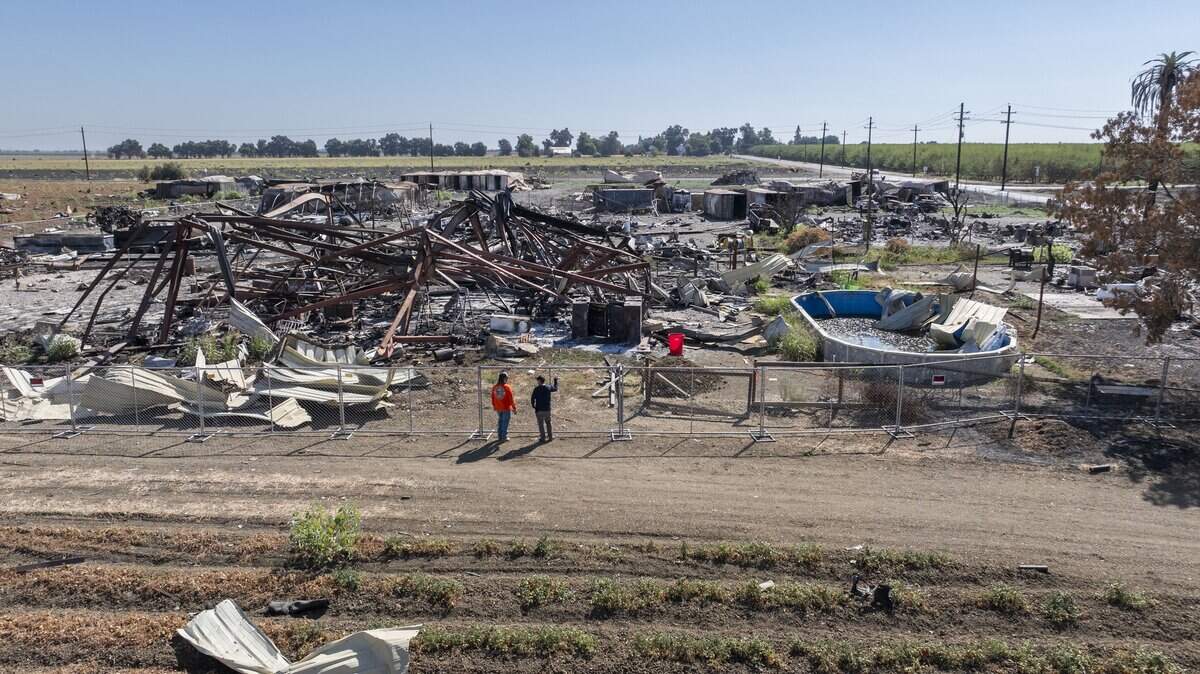
A new Yolo County report ordered in the wake of the deadly Esparto fireworks explosion found that the county’s code enforcement program needs improvement — not replacement — and recommended giving the program resources to expand proactive enforcement.
Read more 5 Sacramento light rail stations closing for nearly 3 weeks. What riders should know
formally received by the Yolo County Board of Supervisors on Tuesday, laid out the challenges facing the program. Many of those challenges are common among smaller California counties, according to the report.
In addition to evaluating code enforcement practices in the county, the report included recommendations and a three-year plan to modernize the program, which is housed in the county’s Community Services Department.
The report’s author, Deputy County Counsel Darren Pytel, made clear that it was not an investigation into any specific incident, a recommendation that the program be completely remade or an indictment of the county’s program.
The report says the county’s code enforcement program “should be viewed as a functioning and capable program operating under longstanding structural constraints rather than as a deficient system.”
The Board of Supervisors was not asked to take any action Tuesday beyond receiving the report. The board requested the internal assessment to help steer program improvements after the July 2025 explosion, which involved 1 million pounds of fireworks and killed seven people.
A Yolo County grand jury investigation into the explosion sought to understand “the failure of the Yolo County code enforcement process” in the lead-up to the deadly blast, according to a grand jury report released in March.
“The grand jury has identified nearly a dozen county employees who knew over the years of the pyrotechnics operations at the Esparto site but failed to take any remedial action,” the grand jury wrote in its report. “County records show communication between most of these employees, some now retired, concerning the Esparto fireworks site. Despite this, there is no record that any of them advocated for enforcement of existing county ordinances.”
The county denied a $35 million claim filed against it related to the explosion and rejected many of the grand jury’s findings, which officials said came from incomplete information about the Esparto incident and the county’s code enforcement practices. The county is named in a multimillion-dollar lawsuit filed in July by the families of the victims. The code enforcement assessment largely supports the county’s response to the grand jury report.
The review conceded that the grand jury identified “legitimate opportunities to strengthen the county’s Code Enforcement Program,” including better documentation and information sharing. But the assessment found that some grand jury findings did not fully account for how enforcement responsibilities are shared among county departments and outside agencies. The internal report offered recommendations that build on the county’s existing structure and could be implemented gradually.
» Davis/Yolo news in your inbox: Get our free Davis/Yolo email newsletter here
The report’s recommendations include standardizing complaint response procedures and documentation, writing enforcement principles and priorities into the county code and finalizing a code enforcement officer safety policy, which is required under state law.
Read more Want to learn more about wine? This Sacramento wine bar will take you to school
The report recommends creating a program manual, conducting a workforce study and strengthening employee training. The report also recommends that the Board of Supervisors adopt formal risk-prioritization principles, while county officials first determine the level of service they want the program to provide.
Many of the recommendations could be achieved by existing personnel using current administrative resources. Larger investments, including additional staffing, technology improvements and a more robust hybrid enforcement model, would need to be considered through the county’s budget process. Yolo County laid off 26 people and eliminated 124 vacant positions in June to address a $35 million budget shortfall. Even so, the county faces a structural budget deficit projected to last for years.
Code enforcement responsibilities are spread across several county functions. Code enforcement personnel handle nuisance abatement, investigations, notices and citations, while Building Services oversees building compliance, permits and inspections. Planning handles land use, Environmental Health handles health and sanitation, and the Sheriff’s Office handles criminal violations.
The county formalized its program in 2004 and hired a dedicated code enforcement officer, but the position was eliminated during the Great Recession. The county later reestablished a more formal code enforcement presence by hiring a building/code enforcement inspector and increasing coordination among departments.
Yolo County’s complaint-based enforcement system arose out of operational necessity rather than formal policy, according to the report. Such complaint-based systems are common among California local governments operating with limited general fund resources.
“While this model ensures community concerns receive timely attention, it also limits the program’s ability to identify emerging issues, address repeat violations, and conduct proactive inspections targeting higher-risk conditions,” the report says.
Because complaints vary in reliability, urgency and complexity, county responses can seem inconsistent, potentially damaging public trust and reducing voluntary compliance, the report says.
The recommended changes would provide faster responses to high-risk complaints, better documentation, clearer prioritization strategies and a standardized workflow.
The report proposed a response priority system under which complaints related to an immediate threat to life or safety would be investigated immediately or within 24 hours, significant public health or safety hazards within one to three days and standard-priority complaints within five days to two weeks.
A bill aimed at strengthening regulations and oversight of fireworks companies was passed by the California Legislature last month and sent to Gov. Gavin Newsom on Tuesday. The bill focuses on improving communication, information sharing and coordination between public agencies.
Read more Sac City Unified unveils long-term fiscal plan. Experts question assumptions
Newsom has until the end of the month to sign it.