 By admin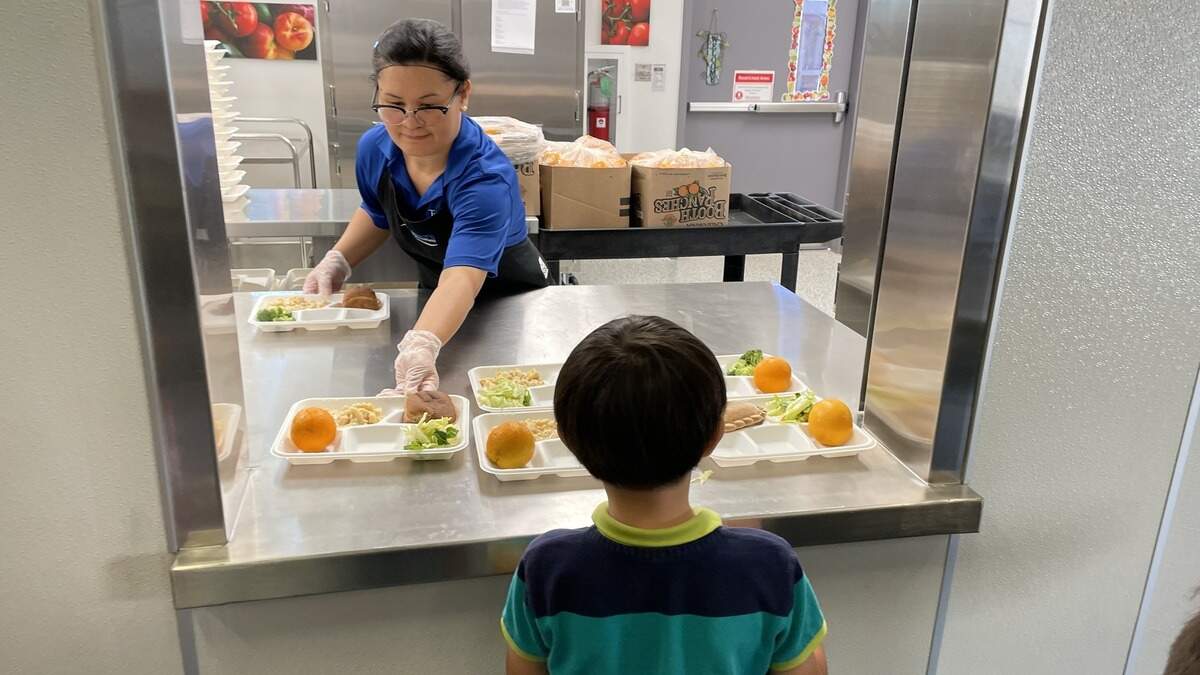
Mark Tadros didn’t have anywhere to sell 180,000 pounds of dates in 2020.
After being sold to a middleman, it turned out that much of his product was going to restaurants, hotels and cruise ships — places that were not highly frequented during the COVID-19 pandemic. His buyer pulled back.
Read more California looks to block state worker strike, asks labor agency to halt walkout
At the time, Tadros’ wife worked at a public middle school. Her position, which included handing out school lunches, got him wondering how he could get his dates to students.
Three months later, his dates had a home at multiple school districts in Southern California. He then purchased dates from other growers in similar positions and sold their product to schools.
Tadros expanded the decades-old family business beyond just dates and now works with dozens of farms in Southern California and 28 school districts. He also hosts field trips for students at the farm. Tadros received a grant from the California Department of Food and Agriculture in 2024 to improve his farm’s outdoor education space.
“I think that our business would have stayed very stagnant (if not for the school sales),” said Tadros, co-owner and president of Aziz Farms in the Coachella Valley. “There wasn’t a lot of growth potential for us in the space that we were in for just dates. We would have been confined to one revenue stream and with farming, that is a very difficult proposition.”
Californians from across the state will gather this week in Sacramento for a summit to celebrate and discuss the future of the state’s Farm to School Program, which was officially recognized and protected by law this year. While the program was made permanent, it is unclear if the next governor will show the same level of support as Gov. Gavin Newsom’s administration. First Partner Jennifer Siebel Newsom has been a key leader of the program, helping launch the initiative in 2021 with CDFA.
The Farm to School Program has been a bright spot as California agriculture struggles to stay afloat amidst record high input costs and threats from cheaper imported food. The initiative helps kids eat fresher, locally-grown meals while supporting farmers who may otherwise not have buyers for their products. Millions of children and hundreds of school districts and farms are involved in the program. It also helps the state meet its goals to phase out ultra-processed foods in school meals.
Rancho Cordova-based Soil Born Farms is hosting this week’s event at its property with Siebel Newsom, CDFA, the Center for Ecoliteracy, the Alice Waters Institute and the National Farm to School Network. The Governor’s Office said it expects up to 900 attendees, about three times the size of the previous conference in 2023 at Aziz Farms.
For every $1 given to farmers through the farm to school grant program, $2.10 is invested in economic activity statewide, according to the latest progress report from a research team tasked with evaluating the program. The initiative provides growth opportunities for farmers, the report found, with participating farms sharing that they had increases in sales and acreage.
Read more ICE agent accused of attacking California homeowner was hired 10 months ago
Farm to school programs exist in all 50 states, Washington, tribal communities and United States territories, according to the National Farm to School Network. California has made the largest investment of any state, the progress report said, with grants to total approximately $126 million by 2027. The state agriculture department grants can be used by schools to purchase products from farms, to provide students with food education and to train staff involved in the program. Farms can access the grants to expand their operations for school district needs.
The state began awarding grants in 2021, with additional funding rounds in 2022, 2024 and 2027. The initiative has seen waves of funding, with a peak of nearly $53 million in 2024. CDFA combined state budget funds for the program for 2025 and 2026 for the 2027 round of awards.
The Los Angeles Unified School District, the second-largest district in the country, is one of the numerous awardees. For the 2024 cycle, its $1 million grant was used to educate students on the value of food and to scale up their farm to school operations, including with partners such as Aziz Farms. Florence Simpson, deputy director of food services at LAUSD, said the district is seeing less food in trash cans and kids enjoying their meals more — meals which are served three times a day.
“If you would have told me five years ago we would have been serving organic apples, dragon fruit and that we would have had all the kids eating kumquats … I would have said, ‘You are crazy. This is LA Unified. We can’t do it,” Simpson said.
The Farm to School Program has benefited from Siebel Newsom “championing school food,” Simpson said. While seeing early success, the initiative needs continued investments in order to transform school nutrition in the next 10 to 15 years, she said.
“The one thing that we absolutely need is for legislators and whoever the new governor is to continue to be the champion for this,” Simpson said. “For us, we have the foundational pieces in place, but we still have room to grow. …We still have a long way to go to really cook things in our kitchen and give kids really freshly prepared meals.”
The latest farm to school progress report offers a slate of for the next governor, including strengthening existing and creating new food hubs — which pull together products from farms to sell — and creating a policy for food source transparency for growers and entities selling to state institutions.
“Ultimately, I am confident in the program’s future as a testament to the incredible partnerships we anchored with our schools, farmers, advocates, culinary chefs, food service workers, and the California Legislature to ensure California’s students continue to have access to fresh, locally grown, regenerative organic food,” Siebel Newsom said in a statement to The Sacramento Bee.
Read more UC Davis research funding drops slightly, even as federal sources remain stable