 By admin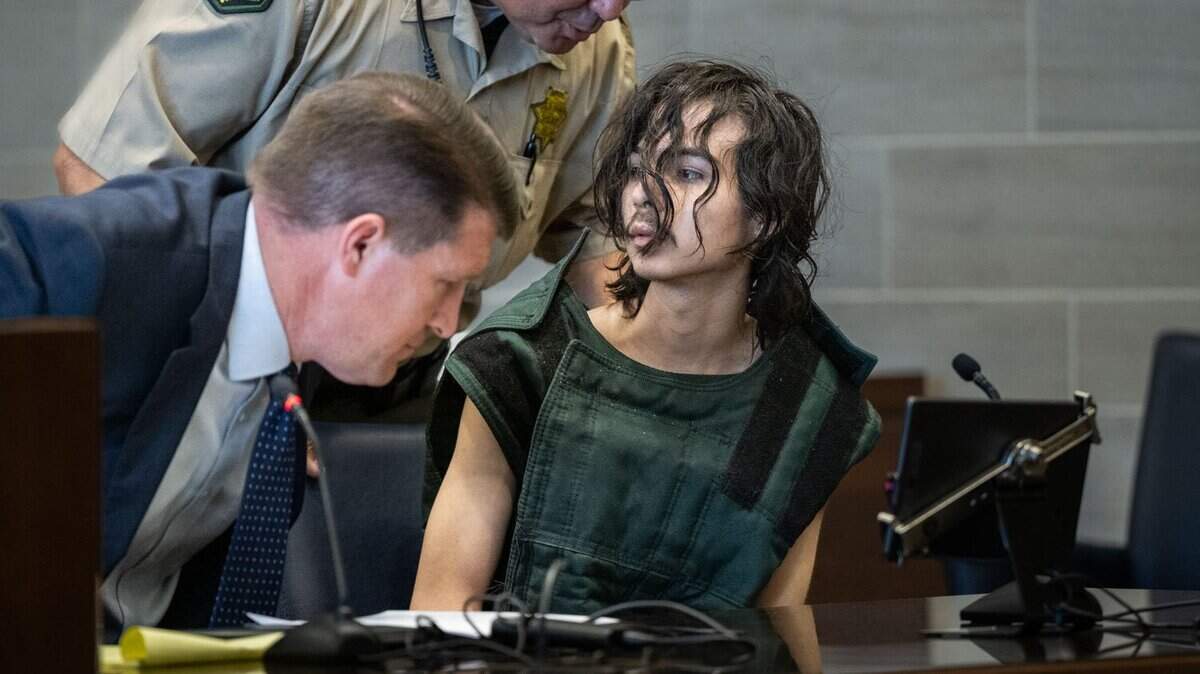
California’s regulation of cannabis was not on trial in the tragic case of 23-year-old Carlos Reales Dominguez, the former UC Davis student convicted of involuntary manslaughter for stabbing two city residents to death in 2023.
Read more Attendance figures dip slightly for final summertime dates of California State Fair
But it should have been on trial.
Thanks to an initiative passed by voters in 2016, Dominguez had been legally using cannabis since age 19. He obtained cannabis thanks to the most dubious of authorizations from a doctor, according to evidence gathered for his trial.
Dominguez went on to be diagnosed with schizophrenia, which research has linked to heavy use of cannabis by teenagers.
Kaiser Permanente Northern California researchers found “the teens who reported cannabis use were more than twice as likely to be later diagnosed with a psychotic disorder or bipolar disorder, 34% more likely to be diagnosed with depression, and 24% more likely to be diagnosed with anxiety disorders.”
In 2023, Dominguez went on a knifing rampage that terrorized Davis. On April 23, he killed 50-year-old David Breaux in the city’s Central Park, stabbing him 31 times. Two days later in Sycamore Park, he killed 20-year-old UC Davis student Karim Abou Najm with 52 separate wounds. Two days later at a homeless encampment near Second and L streets, he stabbed 64-year-old Kimberlee Guillory three times before fleeing. She survived.
Dominguez’s two trials (the first ended in a mistrial) focused largely on whether his mental condition left him sufficiently aware of what he was doing. It was the appropriate issue for jurors to weigh.
What factors contributed to his schizophrenia and whether California’s lax cannabis regulations may have played a role are matters that lawmakers in Sacramento should be considering.
California allows a host of potent cannabis products to get into the hands of teens as their brains are still under development and uniquely vulnerable to its effects. On Aug. 25, 2022, Dominguez sought access to purchase cannabis by obtaining a medical cannabis card via the Arcata-based Flower Company, which advertises that it has physicians at the ready 24 hours a day.
“Patient is a good candidate for medical marijuana therapy for diabetic,” wrote the evaluator, Dr. Rick Rieser, a specialist in the unrelated field of nuclear medicine, a specialized area of radiology. Dominguez is a “19 year-old with trouble falling and staying asleep.” Efforts to reach Rieser were unsuccessful.
Dominguez’s application mentions nothing about diabetes. Nor does any major medical association recommend cannabis as a treatment for diabetes. Dominguez wrote that he heard that cannabis “was something I could try to possibly help and further assist me with my anxiety and depression.” He also agreed to immediately notify a physician if he became “more irritable than usual.”
A medical cannabis card, authorized for the stated purpose of sleeping better, does not restrict its owner to the related products in a dispensary. In court, Dominguez was portrayed as a daily user of cannabis. The prosecutors’ case alleged Dominguez knew what he was doing as his frequent use of potent cannabis fueled his violent state.
Read more California fast food chain named No. 1 in nation for burgers. It’s not In-N-Out
There are about two million Californians who aren’t old enough to buy a beer, yet who are eligible to get stoned out of their mind. That is what voters unleashed when they approved Proposition 64, and legalized marijuana through an initiative written by industry backers. An 18-year-old still in high school can apply to use cannabis for medical reasons via websites with doctors standing by.
“If you say you’re anxious, you get a medical marijuana card,” said Jim Keddy, executive director of Sacramento’s Youth Forward. “Who isn’t anxious or stressed? Now you have full access to everything in a dispensary.”
Because voters approved Prop. 64, only voters can amend its major provisions. But there is still plenty Sacramento could do.
Keddy and then-state Sen. Richard Pan of Sacramento were unsuccessful in 2022 when they tried to expand the warning label on cannabis products. The bill died in the California Assembly.
Studies linking youth mental health conditions to cannabis use have been published since Prop. 64’s passage.
“People might suggest cannabis use can be a useful treatment for, say, PTSD, but this analysis indicates otherwise,” said Dr. Joel Gelernter, senior author of a 2025 study by the Yale School of Medicine. “We show that over time, cannabis is more likely to cause PTSD than to treat it. When medications are approved for a particular condition, we generally require strong scientific evidence that the treatment works, but clinical trials are lacking for cannabis for many of these traits.”
Shouldn’t physicians face potential sanctions for approving these medical cannabis cards without a serious weighing of the known risks?
The California Medical Board, which can rescind a doctor’s license for malpractice, “should be playing a role in this policy work,” Keddy said.
The Democrats who run the Legislature have been in the pocket of the cannabis industry. As an example, last year lawmakers temporarily reduced the taxes all cannabis products must pay, even though the sales pitch behind Prop. 64 back in 2016 promised the new money was real.
Carlos Dominguez did not need unlimited access to California’s cannabis businesses simply to help him fall asleep as a distraught 19-year-old UC Davis undergraduate. We know more now about the dangers of cannabis for those like him than we did when we passed Prop. 64. Sacramento needs to wake up.
Read more Attendance figures dip slightly for final summertime dates of California State Fair