 By admin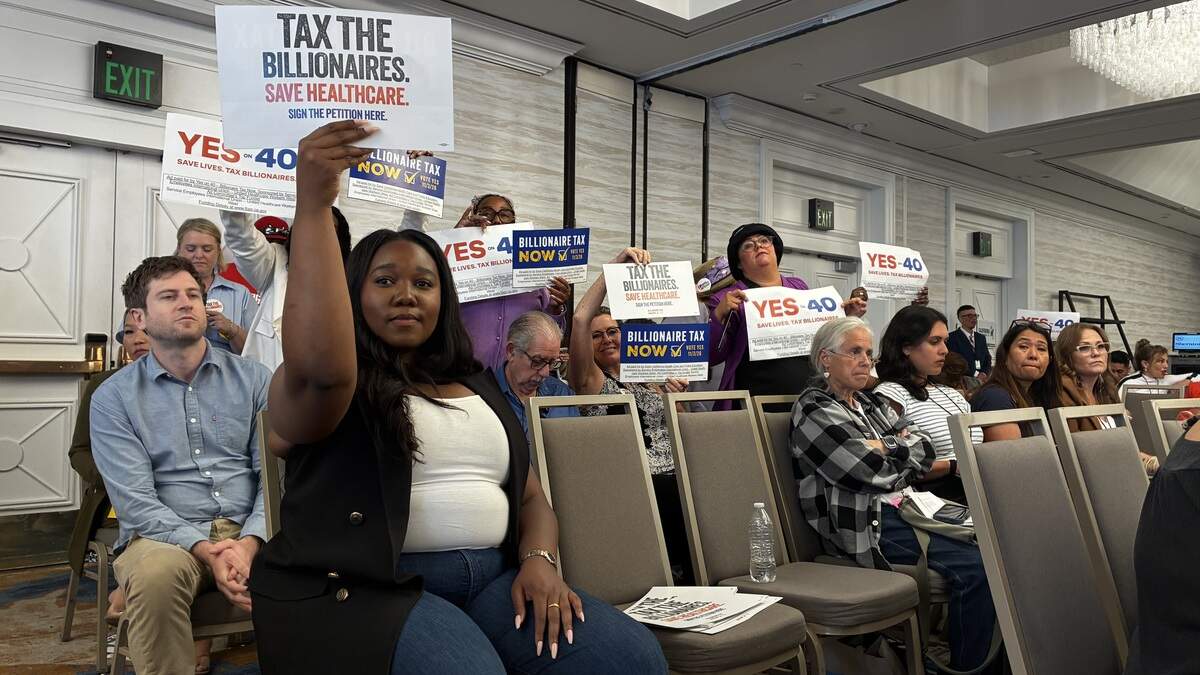
The ballot measure to introduce a one-time tax on the state’s billionaires, , has taken off because of one very simple idea: Everyone wants to eat the rich.
Read more Russell Westbrook retires and the NBA loses some fashion flair. Check out these photos
This movement has ignited a sense of defiance across California. But it’s more than a popular idea; it’s a mirror we’re forced to stare into. In that reflection, billionaires amass staggering wealth while ordinary Californians work tooth and nail just to get by. For many, a “yes” vote on Proposition 40 isn’t simply a policy preference; it’s a collective shout for justice that says, “It’s time for billionaires to pay their fair share.”
The California Budget and Policy Center estimates there are roughly 250 billionaires in California. If passed, Prop. 40. would levy a one-time, 5% tax for most individuals, married couples or trusts with a net worth above $1.1 billion. The tax would be phased in on those with a net worth between $1 billion and $1.1 billion.
In a state where the real-life contrast between privilege and struggle has become a chasm, the cry for fairness feels urgent and personal — and, for some, it is the first sign in years that the system might finally be listening.
Recent polling underscores the stakes. A March UC Berkeley poll found 52% of registered voters back the billionaire tax, with 33% opposed. Among regular, high-turnout voters, support drops to 48%. Occasional voters, who currently favor the measure by more than 2-to-1, could tip the balance. A May Public Policy Institute of California poll showed 54% support of likely voters for Prop. 40. and 45% opposed.
The fate of Prop. 40. hinges on who shows up at the polls.
If Democrats want to harness this energy, they need to get their house in order. If they can’t agree on how new revenue — mostly earmarked for healthcare — will be spent and who it will serve, especially desperate low-income Californians, they risk squandering a rare moment of public momentum.
The real battle lines aren’t just between rich and poor, but over how the pie gets divided among the state’s competing interests. The party’s debate over whether to back the measure exposed deep rifts — not just with the ultrawealthy, but within the coalition that claims to represent working Californians.
These divisions came to a head during the California Democratic Party’s executive board vote, where endorsement of Prop. 40 barely passed after a second round of voting and intense debate. The party’s eventual support was a significant boost, but it also exposed deep fissures within the coalition, with prominent labor groups like the California Teachers Association and United Domestic Workers opposing the measure.
Even after the party’s nod, Gov. Gavin Newsom and Democratic gubernatorial hopeful Xavier Becerra remained opposed, citing fears that the tax could drive billionaires out of California and undermine long-term funding for schools and public services.
Read more Man arrested on homicide charge in suspected racial hate crime in Yuba County
That internal divide is evident among party leaders, including Sacramento County Democratic Party Chair Andres Ramos, who voted to endorse Prop. 40.
“I think it makes sense to ask the wealthiest among us to pay their fair share to address the healthcare cuts that (the federal budge) is going to bring to California and hurt the lowest-income Californians.”
Ramos also believes the billionaire tax debate is less about ideology and more about who has control of the money.
“A lot of the challenges in the party are not always purely just ideological. People kind of oversimplify them to be in every instance just about this is just about progressives and centrists,” Ramos said. “There wasn’t as much disagreement about whether to have a billionaire tax. I think it’s more about the power dynamic of who gets to be in the driver’s seat and determine where the funds go, how much the tax is, how long it’s going to be.”
No matter the outcome of Prop. 40, it’s clear that Californians will continue to face questions about how we tax extreme wealth and fund our most essential services.
Similar ballot measures will likely appear in future elections, and that’s a healthy sign for our democracy. Each time, voters are asked not just to weigh the merits of a proposal, but to grapple with how we distribute power and opportunity in our state.
These debates are how we move closer to a California that listens to its people — not just special interests.
Read more Amador deputies nab burglary suspect in Elk Grove — ALPRs helped track him