 By admin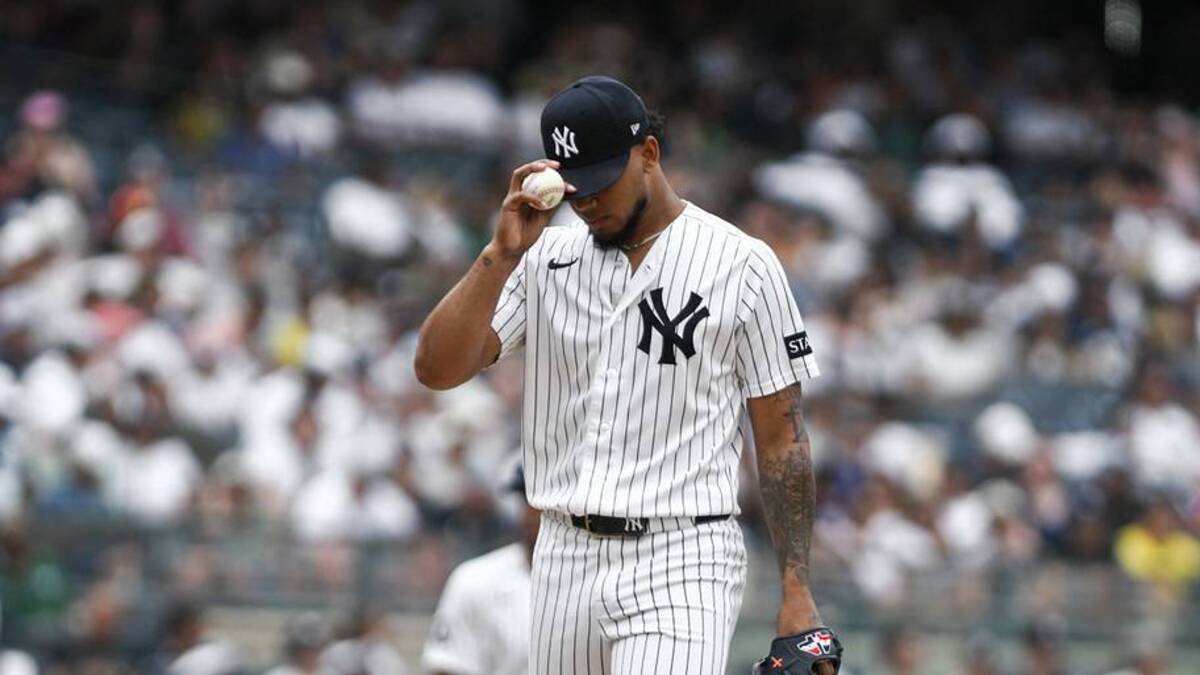
Trades are a complicated thing in sports, especially in baseball, a sport with such volatile outcomes. A player can show so much promise in one location, but wilt in the next for whatever reason. There’s so much precision needed in this sport, one where overthrowing a pitch by a few inches can result in a walk or home run, or a slight timing issue can cause you to crater as a hitter.
Read more Will Howard is Steelers Biggest Winner of Training Camp: Week 1
We’ve seen in the past guys who come to New York and just can’t handle it. It’s not an exact science, nor anything predictable, but the weight of the city and the pinstripes just gets to some people. That isn’t to say Camilo Doval is a Joey Gallo-type, where his tenure in the Bronx will effectively ruin his career, but it does beg the question of how a man this talented can fall so fast.
Just a year after being acquired from the San Francisco Giants, Doval is heading out the door, being traded to the Pittsburgh Pirates on Saturday for two prospects in a trade eerily similar to previous ones with Gallo and Sonny Gray. It ends a year of frustrating potential not realized and a question.
What went so wrong?
An inconsistent All-Star closer
Doval’s time in San Francisco can be described as one of great promise, but never quite emerging as one of the best closers in the game. He looked to be on that path in his first two full seasons, pitching to a 2.73 ERA with 66 saves and 167 strikeouts in 135 innings from 2022-23, but just as quickly as he rose to the top of baseball, he hit a roadblock.
In a tumultuous 2024 season, he lost his closer job to Ryan Walker as the middling Giants entered August on the periphery of the NL Wild Card race. His already inconsistent command cratered, skyrocketing to over 14 percent while giving up significantly more barrels.
He was still a good pitcher peripherally, but in the small samples that high-leverage relievers work in, there was too much room for error, and that led to his stock cratering.
He opened the 2025 season in a similar rut, but completely broke out of it in mid-April. From April 12 to June 19, he allowed just three runs in 28.1 innings, reclaiming his closer role that he had lost the year prior while getting his walks under control.
While he hit a snag over the following month and entered the end of July with a bit of a whimper, he was still a premium asset for a selling Giants’ team. They shipped him off to the Yankees for four prospects.
The burden of promise that never came
There was so much to like with Doval when he came to New York. He had triple-digit velocity on both his sinker and cutter, but those were more compliments to a ferocious slider that had always been his bread and butter. In a bullpen that badly needed swing and miss, he was supposed to be the guy who could get it on cue.
But his struggles started quickly. Like David Bednar and Jake Bird, his debut in Miami was a disaster, blowing the save thanks to abhorrent defense. From there, it just seemed like his stuff didn’t have as much bite as it used to.
His walk rate ballooned; he was giving up nearly two baserunners per inning and was completely removed from leverage as the playoffs began, only throwing two meaningful innings in Game 1 of the ALDS against the Blue Jays.
Going into 2026, the team was willing to give him a fresh slate, planning to use him as Bednar’s setup man in the bullpen, still believing in his stuff. But while there were good moments and stretches where he’d look unhittable, he looked way too mortal for someone of his caliber.
The walks were under control for the first time in several years. He was extremely efficient at getting ground balls. Even through his early-season struggles, his peripherals looked good. In the same way Devin Williams had the previous year, he was due for positive regression.
Read more Florida State Challenging Dynamic Desir Twins To Reach Another Level
But then the wheels completely fell off. Some time in June, everything changed. While his strikeout rate was recovering, he suddenly lost the ability to throw strikes. He had seven walks in his first 31 innings through the end of June, but walked 11 in eight innings in July. He was allowing harder contact. He was wilting with defensive miscues. He had become Murphy’s Law: The Pitcher.
He was a dead man walking in July, forced to mop up low leverage after the city and the team had turned on him. Trade rumors began to swirl as the deadline approached, so it was no surprise he was moved. In a final game that was emblematic of his tenure, he looked to have the game in hand on Wednesday at Rate Field, but an error by Ali Sánchez and an inability to throw strikes doomed him.
What went wrong for Camilo Doval?
When a player regresses the way Doval did, you have to dive into the data to see what happened. Yankees pitching coach Matt Blake has worked wonders for a lot of guys, but some of them never receive the changes well.
As soon as he came to New York, his slider usage cratered. After throwing it about half the time in San Francisco to great results, he reduced it to around 30 percent in New York at the expense of throwing his sinker more, a specialty in Blake’s pitching development.
His slider itself hasn’t changed that much. It’s breaking slightly less horizontally and more vertically, but the location has been pretty jarring.
Doval’s living in one spot on both his sinker and his slider: bottom of the zone. He’s also throwing significantly more in-zone sliders, trusting it less below the zone and thus leading to more contact. It makes sense that his slider’s slugging percentage allowed has gone from .270 throughout his entire career to .570 in 2026. The higher you leave a slider, the easier it is to hit.
No pitching coach will ever bat 1.000 with pitching development, and there was clearly something the Yankees were trying to accomplish with Doval and trying to tweak him to be better than he was in San Francisco. They successfully got him to throw more strikes for a while, but it came at the expense of allowing harder contact (50% hard-hit rate) than he ever has in his career.
It also didn’t help that he got the Clay Holmes and Mark Leiter Jr. treatment. The fielders behind Doval had a team-worst -5 Fielding Run Value when he was on the mound, one of the worst of any pitcher on a rate basis. This was the same thing that happened to Leiter in 2025, as he had the worst Outs Above Average behind him of any pitcher in the sport. When you couple that with inconsistent command, bad things happen.
It wouldn’t surprise me if we saw a better Doval in Pittsburgh, but it wouldn’t be a negative indictment of the Yankees or their pitching apparatus. Sometimes, it just happens this way, especially with something as volatile as a relief pitcher.
Today’s best reads
- The Yankees Should Give the Pirates What They Want
- Yankees Have Easier Trade Deadline Decisions With Sudden Bullpen Emergence
- Yankees Quickly Putting Camilo Doval Trade Benefit to Good Use
- David Bednar’s Dominance Should Force Yankees to Break Emerging Trend
- Potential Clay Holmes Reunion Could Impact Yankees in More Ways Than One
This article was originally published on www.si.com/mlb/yankees/onsi as Camilo Doval’s Yankees Tenure Still Leaves Questions About What Went Wrong.
Copyright ABG-SI LLC. SPORTS ILLUSTRATED is a registered trademark of ABG-SI LLC. All Rights Reserved.
Read more Alabama Football Returning Starters With the Most to Prove This Season