 By admin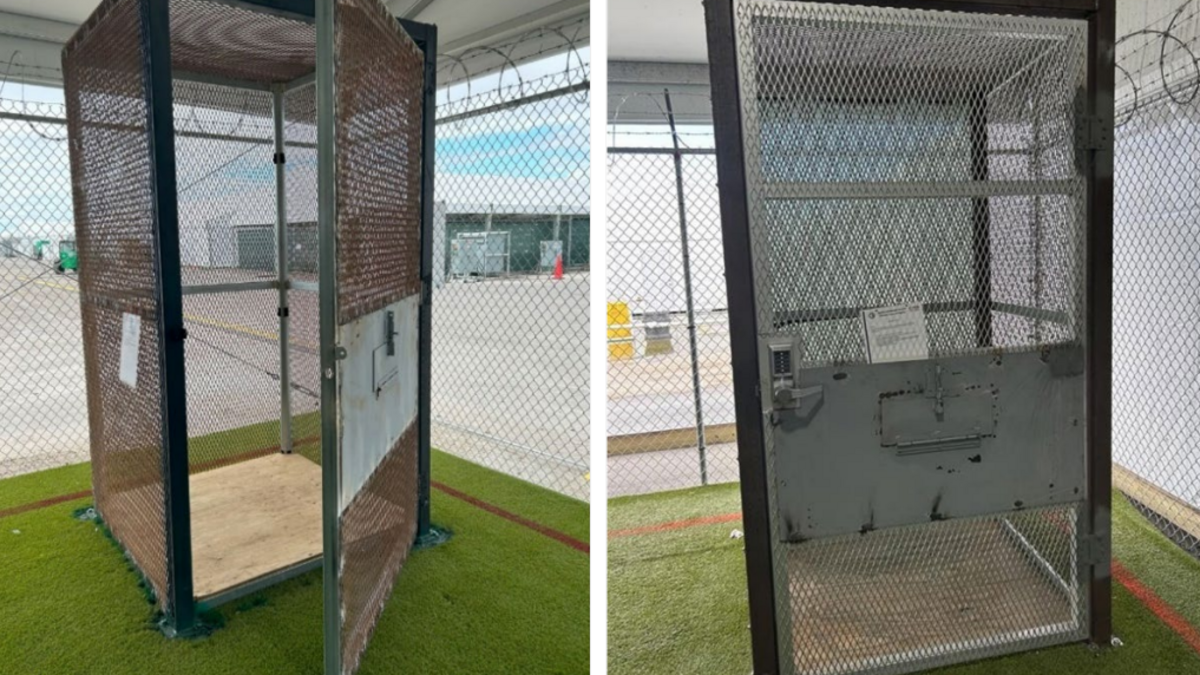
The state-run immigration detention center in the Florida Everglades known as “Alligator Alcatraz” violated a host of federal and state detention standards, according to a new government report.
At the center, which cost an estimated $1 billion and closed on June 25, detainees lacked adequate living space, access to showers, legal information and clean water, and some were, according to the Sept. 11 report from the Department of Homeland Security’s Office of the Inspector General.
Photos in the report show the metal enclosure, described as 4 feet, 3 inches by 7 feet, 9 inches. At least 79 men were kept in the space, some for up to two hours, and at least one as a form of punishment. The findings were based on an unannounced inspection conducted in January.
“The use of such restrictive spaces is highly unconventional and does not align with standards for humane treatment,” the report concluded.
Staff told inspectors the cages were used as “calming areas,” but an Amnesty International report published last year cited former detainees who called it “the box,” and said it was used as a punishment. While officers told investigators that the men were not shackled in the enclosure, detainees told Amnesty International that they were.
“These findings confirm a deliberate system built to punish, dehumanize, and hide the suffering of people in detention,” said Ana Piquer, Amnesty International’s regional director for the Americas, when the report was published last year. “What we are seeing in Florida should alarm the entire region.”
According to the OIG report, officers didn’t know what standards to follow for the hundreds of immigration detainees in their care — but inspectors found the facility failed to comply with guidelines for both Florida jails and federal immigration detention centers.
The men spent most of their time in cages surrounding rows of bunk beds — cramped to about 28 square feet of floor space per person, less than half of the required 75, the report found. They were only offered one hour of recreation time three days a week, as opposed to the required hour per day, five days a week.
When asked about the report at a Lakeland news conference Monday morning, DeSantis said he hadn’t read it.
He said that when the state set the detention center up, their goal was to exceed the required federal standards. As he has in the past, DeSantis brushed off reports about mistreatment at Alligator Alcatraz, saying that people will accuse the state regardless.
“I think some of this stuff is going to be characterized in a certain way no matter what,” he said.
Immigrants held there and their families have long described the facility as a detention center where complaints were met with beatings, meager meals and inhuman treatment. The Trump and DeSantis administrations have dismissed allegations of mistreatment at the facility, at times calling it a “hoax.”
Read more Fantasy Football Managers May Be Overreacting to Brock Bowers’ Week 2 Return Chances
“We stand by our previous press release,” a Department of Homeland Security spokesperson after two corrections officers who worked at the detention center were arrested and accused of striking a Cuban immigrant.
The Inspector General’s report said that Homeland Security did not address its 10 recommendations, arguing that the oversight of the facility fell under state control, and that DHS did not have a contract with the state of Florida for the detention space.
Still, inspectors found that U.S. Immigration and Customs Enforcement handbooks were given to detainees, and all detainees were under ICE custody.
The facility, which is officially named the Florida Soft-Sided Facility, closed a year after its controversial opening. Former detainees have filed lawsuits alleging beatings and use of pepper-spray, which resulted in injuries that include a broken wrist and a bloody eye.
“Alligator Alcatraz fulfilled the role it was designed to serve,” DeSantis said at a news conference at the facility after it closed.
When it opened in June 2025, local officials said that the makeshift tents would hold “deranged psychopaths,” who would face quick deportation. Names of detainees did not appear in a government locator.
The Miami Herald obtained a list within the first two weeks of over 700 detainees sent there or scheduled to be sent there. The data showed that only a third had criminal convictions, and hundreds had no charges against them, only immigration violations.
The DeSantis administration has promised $1.4 billion in no-bid contracts to private vendors to carry out Trump’s mass deportation agenda, including building and operating the state-run detention centers Alligator Alcatraz and Deportation Depot, a second state-fun immigration facility in North Florida.
The Federal Emergency Management Agency promised the Sunshine State a $608 million grant to reimburse it for operating an immigration detention center, which is usually the federal government’s responsibility. The state has only received $84 million.
This story was originally published September 14, 2026 at 9:40 AM with the headline “Detainees confined to small metal cages at Alligator Alcatraz, report finds.”
Read more Sharks to have new corporate logo on helmets for home games this season