 By admin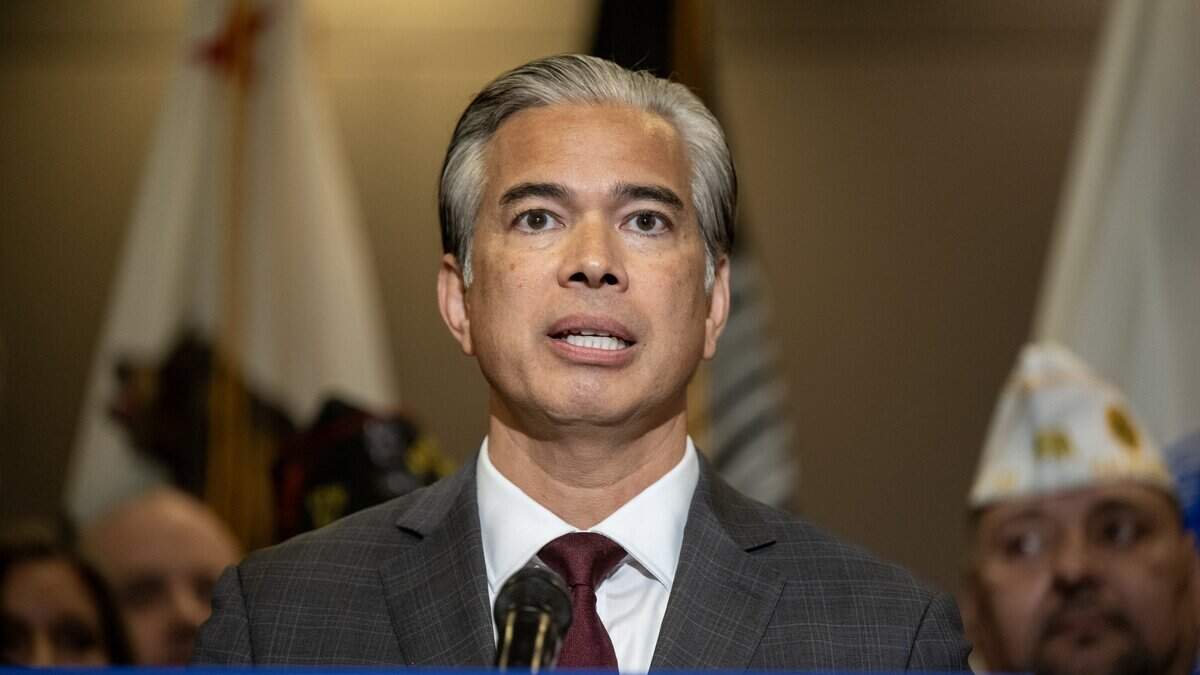
The Yes on Proposition 38 campaign has raised more than $38 million and spent nearly $20 million of it on television advertisements in support of the $8.4 billion immunology research bond on the November ballot.
Read more Marshalls discount department store opens in Elk Grove at The Ridge shopping plaza
The No on Proposition 38 group had raised less than $640 by Sept. 19. Instead of funding ads, the group is focused on letter-writing campaigns to highlight possible issues with the ballot initiative.
On Oct. 6, they wrote a letter to California Attorney General Rob Bonta alleging that the measure may violate the state constitution.
“The stakes are substantial,” committee co-chair David Panush wrote. “Californians are being asked to assume $8.4 billion in general obligation bond debt, with half the proceeds reserved for what appears to be a single, predetermined private institution. Voters deserve to know whether this arrangement complies with the constitutional safeguards governing initiatives and the use of public funds.”
Supporters of the proposition, meanwhile, said the letter was a “campaign stunt to distract voters.”
The proposition will ask voters to allow the state to borrow $8.4 billion to support medical research in immunology and immunotherapy conducted by California research institutes and universities.
Its backers say the measure materialized as a response to the Trump administration’s cuts and freezes to thousands of research grants — many of which were later restored, but not without creating disruptions and delays. The stated goal is to allow immunology research to cure and prevent diseases like cancer and Alzheimer’s to advance unimpeded. Half of the bond proceeds would go to a single nonprofit immunology research institute affiliated with the University of California, while the rest would be distributed as competitive research grants to public or nonprofit universities and institutions.
Earlier this summer, CalMatters reported only one research institute in California appeared to meet the criteria for half of the immunology bond’s funds: the California Institute for Immunology and Immunotherapy, an independent medical research organization affiliated with UCLA. Gary Michelson, a billionaire philanthropist and medical inventor, is both the co-founder of that institute and the chief backer of Prop. 38.
Last month, the opponents sent a letter to the UC Board of Regents urging them to only approve additional funding or construction commitments for the CIII if it agrees to public transparency and conflict-of-interest safeguards that public agencies are subject to. The UC board approved next steps in the construction of the institute’s facility at its September meeting.
Violation of constitution?
In a letter this week, Panush urged Bonta to weigh in on if Prop. 38 violates the California Constitution before voters decide to approve it. The attorney general is involved in the ballot initiative process in California from the very beginning. For any initiative proposed by citizens to make it onto the ballot, it must first be submitted to the attorney general with a request to prepare a title and summary that can be circulated to collect signatures — a step that was taken months ago for the immunology bond.
Suggesting Bonta take another look at the measure, Panush cited a section of the California Constitution that says an initiative that identifies a private corporation to perform any function or have any power may not be submitted to voters. While Prop. 38 does not name any private corporation, he asked if it “makes any legal difference when the requirements effectively identify it.”
For the institute that will receive half the bond proceeds if Prop. 38 passes, the measure outlined several specific requirements. The nonprofit immunology research institute must be affiliated with a University of California campus that has a hospital and clinic volume of more than 35,000 inpatient admissions and 3,500,000 outpatient visits each year. It must also own or lease a site that is at least 200,000 square feet in size and note philanthropic funding of at least $250 million in its affiliation agreement with the UC. And it must have secured $50 million to support a rapid vaccine development program and another $50 million for a microbiome research program.
Read more Erling Haaland’s Plea Amid Man City Turmoil Is Not What Fans Want to Hear
“That would mean an institute connected to a health system with, say, 3 million visits, or occupying 180,000 square feet, would be excluded regardless of its research capabilities,” Panush said. “These thresholds operate as categorical exclusions, not measures of an institute’s scientific merit.”
In a previous interview with The Sacramento Bee, a spokesperson for the Yes on Proposition 38 campaign said the California Institute for Immunology and Immunotherapy very likely meets the criteria, but the ultimate decision will be taken by the California Department of Public Health. If the state is unable to identify a suitable institute, it can modify the criteria, per the measure.
In its affiliation agreement with the UC, the California Institute for Immunology and Immunotherapy is described as a “nonprofit public benefit corporation” governed independently of the university. First announced in 2024, the CIII is currently under construction and scheduled to open “in a year or so,” according to Yes on Proposition 38 spokesperson Robin Swanson. The institute is operational and has already administered grants, she said. A UC report indicates that construction will be complete by the end of 2028.
The UC, which sponsored a law to place a $7.5 billion scientific research bond on the March 2028 ballot, said it does not have position on Prop. 38.
‘Saved my life’
For the supporters of the measure, the central campaign message has been that it will provide critical funding for time-sensitive immunology research. This includes finding cures for cancer, heart disease and Alzheimer’s disease.
“Prop 38 will provide much-needed funding to accelerate medical research at California’s world-class universities and research institutes, which is desperately needed in the face of federal research cuts,” Swanson said.
In a moving advertisement, cancer survivor Andrew Dale says immunotherapy saved his life and allowed him to see his daughter graduate from high school. Laurie Adami, a cancer survivor who spoke with The Bee last month, said Prop. 38 will benefit not just California, but the country and the whole world.
The measure is supported by a broad coalition of doctors, nurses and patient advocates. This includes the Alzheimer’s Association, ALS Association, the Michael J. Fox Foundation for Parkinson’s Research, American Nurses Association California, Prostate Cancer Foundation and Kidney Cancer Association. It also has the endorsement of the California Republican Party and the California Democratic Party. The Yes on Proposition 38 campaign contributed $250,000 to the Democratic Party in September.
The campaign had raised more than $38 million, as of Sept. 19, of which more than $33 million has come from billionaire philanthropist Gary Michelson and his nonprofit Michelson Center for Public Policy. Another $5 million was donated by Meyer Luskin, co-founder of the California Institute for Immunology and Immunotherapy.
The campaign has spent nearly $20 million on cable airtime and advertisement production costs. It also spent more than $10 million earlier this year to circulate its petition and collect enough signatures to get onto the ballot.
Read more Fantasy Football WR Rankings: Who To Start Week 5?
This story was originally published October 8, 2026 at 5:00 AM.