 By admin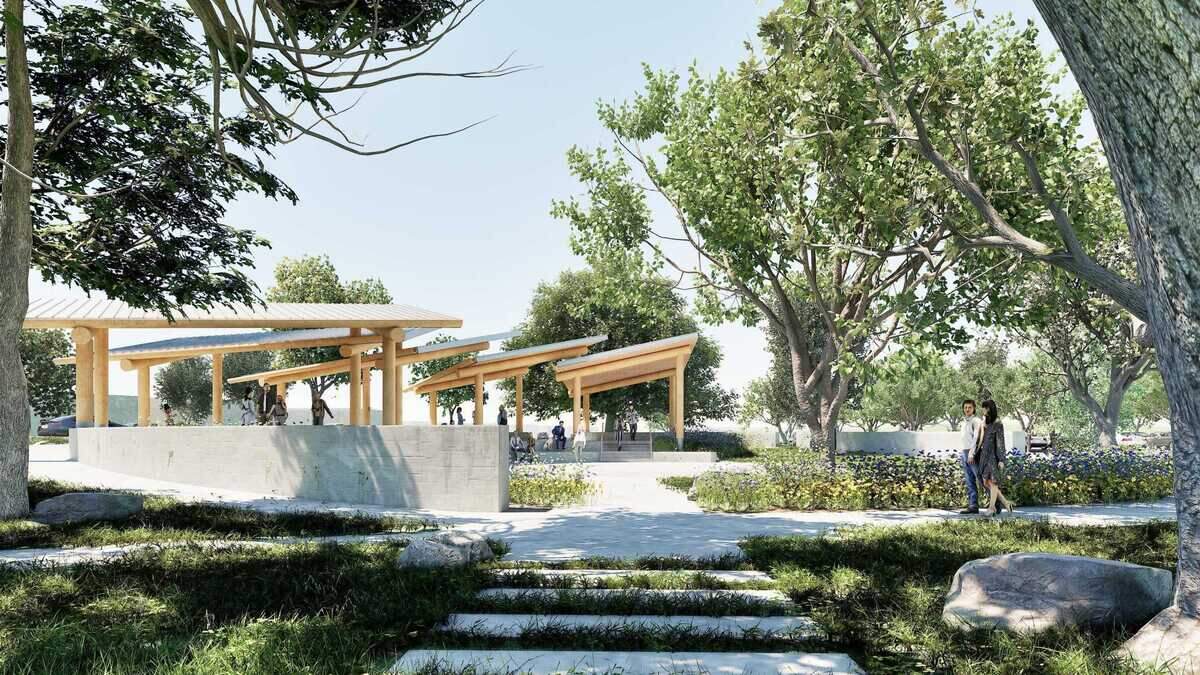
The California Indian Heritage Center under construction in West Sacramento will have a new framework for tribal involvement in its operations and programming under a law signed Friday by Gov. Gavin Newsom.
Read more U.S. Supreme Court again blocks Missouri’s gerrymandered congressional map
Newsom signed Assembly Bill 1592, introduced by Assemblymember James Ramos, D-Highland, which authorizes the California Department of Parks and Recreation to enter into an agreement with a nonprofit support organization to help operate, program and support the center. At least 51% of the organization’s board members must represent California Native American tribes.
“California tribes have worked since 2018 with state and local partners to create a facility that truly reflects the history and culture of California’s First People,” Ramos said in a news release. “That is a place of healing, beauty and reflection, as well as a place of gathering and learning.”
Planning for the center began in 2007 before the project was delayed by state budget problems, The Bee reported in 2024. The project later received $100 million in state funding. In 2019, West Sacramento transferred 43 acres of riverfront property to California State Parks for the center. Together with adjacent state-owned land, the heritage center’s site encompasses about 51 acres near the confluence of the American and Sacramento rivers.
Plans call for about 120,000 square feet of building space, including exhibition and educational facilities, collection storage, public art space, community gathering areas, an outdoor plaza and trails connecting to the Sacramento River. The center is intended to replace the California State Indian Museum next to Sutter’s Fort in midtown Sacramento.
The project formally broke ground in West Sacramento in April, when Newsom joined tribal representatives at the riverfront site. The Bee reported at the time that the first phase would include a welcome area, cultural and educational information, amphitheater seating, bathrooms and parking. The full museum has been expected to open in 2030.
Read more CHP asks for help finding pickup in North Highlands following hit-and-run
The center’s priorities will include cultural preservation, learning and exchange, land stewardship based on Native American values and public education. State Parks says the completed center is intended to celebrate the living cultures of California tribal communities.
The new center “will serve as a world-class cultural hub that honors living cultures of California’s First People,” Ramos said.
Ramos’ bill was supported by the California State Parks Foundation and Trust for Public Land, as well as the California Tribal Business Alliance, Jamul Indian Village of California, Habematolel Pomo of Upper Lake, the Morongo Band of Mission Indians, the Scotts Valley Band of Pomo Indians, the Yocha Dehe Wintun Nation and the Yuhaaviatam of San Manuel Nation.
Project leaders have described the center as a Native-led institution intended both to preserve and explain California Native history and to serve as a gathering place for Native people. Larry Myers, chairperson of the California Indian Heritage Center Foundation, told The Bee in 2024 that its purpose was to have “the real people tell the real story.”
A total of seven bills authored by Ramos, the first California Native American elected to the Legislature, were signed by Newsom on Friday, California Native American Day, which is observed on the fourth Friday in September. The bills addressed issues including education, guardianship of Native children and culture.
Read more Your guide to California’s 4th Congressional District race