 By admin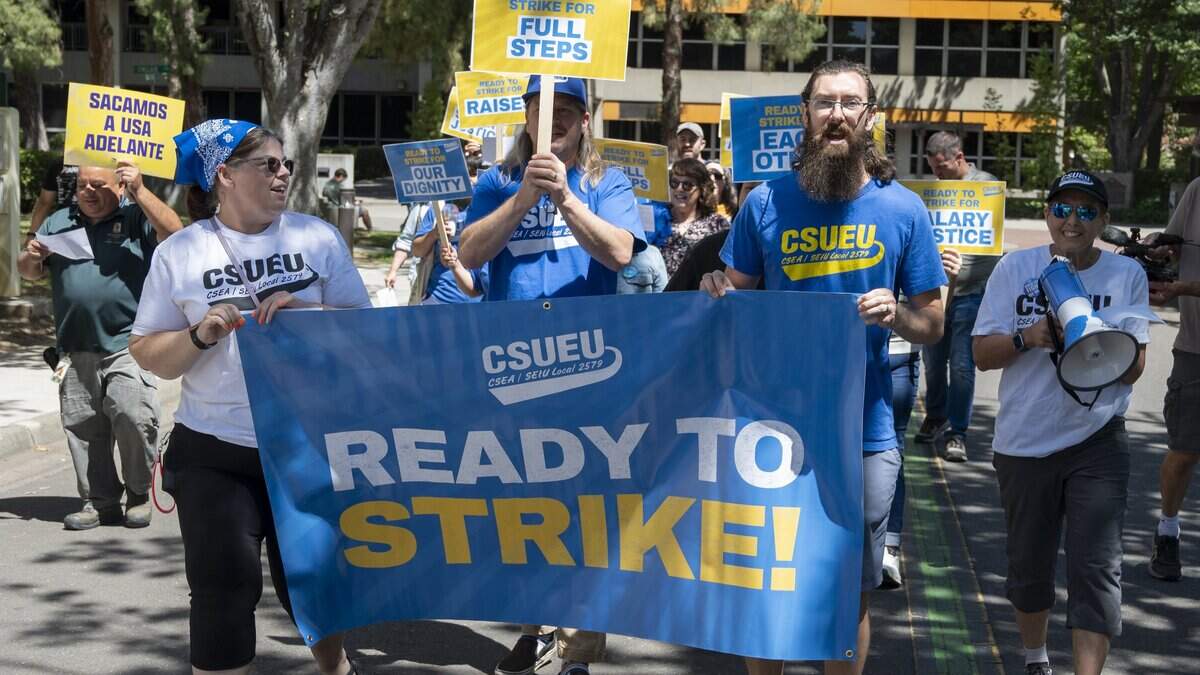
For the California State University, being an “employer of choice” is one of the four major objectives outlined in its . Some of its workers say it has become quite the opposite.
Read more Railyards District projects marking new progress, Sacramento developers say
At the CSU Board of Trustees meeting this week, nearly 30 students, staff and faculty took to the podium to express their frustration at what they called inadequate pay, misplaced budget priorities and bad faith bargaining. The system is currently negotiating new contracts with the CSU Employees Union, California Faculty Association, and Teamsters Local 2010.
Pointing to the strong funding the state allocated to the system in the 2026-27 budget year and recent raises in executive compensation, employee union leaders said they felt disrespected and devalued by CSU’s bargaining proposals. They delivered letters of no confidence in the current leadership and warned that a work stoppage was a real possibility if negotiations remained unproductive.
“CSU cannot stand before the Legislature and the public asking for hundreds of millions of dollars to strengthen the university while telling the employees who make the university run that there’s no money for real raises,” said Carlos Sanchez, a supervising locksmith at San Diego State and a member of the bargaining team for Teamsters Local 2010. “Enough is enough. Stop asking us to shoulder the burden while you celebrate new funding. Honor your budget. Honor your stated priorities and bring us proposals that include meaningful permanent retroactive salary increases. Our members have earned nothing less and will not accept anything less.”
In a statement released July 17, CSU officials said it was committed to the collective bargaining process and would “continue to negotiate in good faith with all its labor partners” with the goal of reaching “fair and fiscally responsible agreements.”
“(Our) proposals represent the beginning of negotiations regarding compensation — not the end. Across all sectors, collective bargaining is not resolved through a single proposal; it is a process that involves continued negotiations and the exchange of counterproposals,” the statement said.
Where do negotiations stand?
The CSU system is negotiating new contracts with the CSU Employees Union, California Faculty Association and Teamsters Local 2010. CSUEU represents 15,000 staff members, 20,000 student assistants and a thousand workers employed by private sector auxiliaries on campuses, making it the largest labor group within the system. California Faculty Association represents 29,000 professors, lecturers, librarians, counselors and coaches. Teamsters Local 2010 covers 1,100 skilled trades workers at the California State University system.
The CSUEU contract for healthcare, operations, clerical and technical support services staff ran from July 31, 2022 to June 30, 2026, while the student and private sector workers within the union are currently negotiating their first contracts. The CSUEU’s major demands include salary raises, reducing dependence on temporary workers and ensuring job security. In addition, the workers are asking that step-based raises be fully funded. In its latest update, the union said the CSU gave them an economic proposal “that was basically a middle finger to staff.” The CSUEU said progress had been made on other issues, including implementing step-based raises, but raises remained a sticky subject. Union leaders asked their members to prepare for a strike authorization vote if negotiations on pay did not progress.
Read more Sacramento tiny home village for homeless vets gets $32M from state. See where
The 2022-25 contract for the CFA, meanwhile, has been extended five times through July 31. After more than a year of bargaining, the union and the CSU system have been unable to reach an agreement. This month, the CFA declared impasse, meaning negotiations will now be mediated by a state-appointed third party. If there is still no agreement, the union could call for a strike, it said.
In a July 10 statement, union leaders said the CSU had, in its latest proposal, offered a “weak and flimsy” salary proposal that had left them not just disappointed but “insulted.” The union is asking for a full-time base salary that is at least 10% of the chancellor’s base salary of $795,000 and annual cost-of-living adjustments among other things. The CSU, meanwhile, said it believed “meaningful opportunities” for negotiations remained but the CFA had ended those by declaring impasse.
The Teamsters contract ran from March 4, 2024 to June 30, 2026. In the new contract, they are negotiating for adjustments to the salary structure and step increases each year that are not contingent on performance evaluations, among other things. Teamsters leaders said the CSU had not only offered them inadequate raises but also attempted to end emergency pay, condition step increases on performance evaluations, and eliminate monthly supplements that lower staff’s healthcare premiums. Chris Rooney, an employee at CSU Northridge and a member of the Teamsters bargaining team, said in public comments Tuesday that the CSU’s bargaining team had treated the Teamsters’ negotiators poorly and laughed at them. Ahead of their next bargaining session on July 29, the union is asking members to sign a declaration of no confidence in Chancellor Mildred García.
CSU’s budget
For the labor groups, a major argument in favor of larger salary increases being written into their contracts is that the CSU received a significantly bigger budget from the state in 2026-27 as compared with the previous year. This year, Gov. Gavin Newsom approved more than $500 million in new ongoing state support for the university system. This, along with $175 million from tuition increases and $25 million from a 1% enrollment growth, covers the CSU’s essential priority while enabling “enhanced investment” in its strategic plan, officials said. Still, officials emphasized that the CSU would have to be fiscally disciplined given that the state will have a new governor in January and the state’s budget outlook is uncertain.
With more than $700 million in new operating funds in 2026-27, the CSU has allocated more than half of that — $377 million — to employee salaries and benefits. The rest will be spent on financial aid, academic programs, and technology and infrastructure, among other things.
“When people say, ‘What are our priorities?’ Our people are our priorities,” trustee Julia I. Lopez said. “The challenge here that we always have is we can’t do everything. But we have an opportunity to meet the challenge, to pivot, and to meet the commitments that we made to our employees, to being the employer of choice, to addressing the needs of students, to lowering the cost of attendance as best as we can. That’s what this budget begins to allow us to do.”
Read more How sports, housing, transit developments are reshaping Sacramento’s Railyards