 By admin
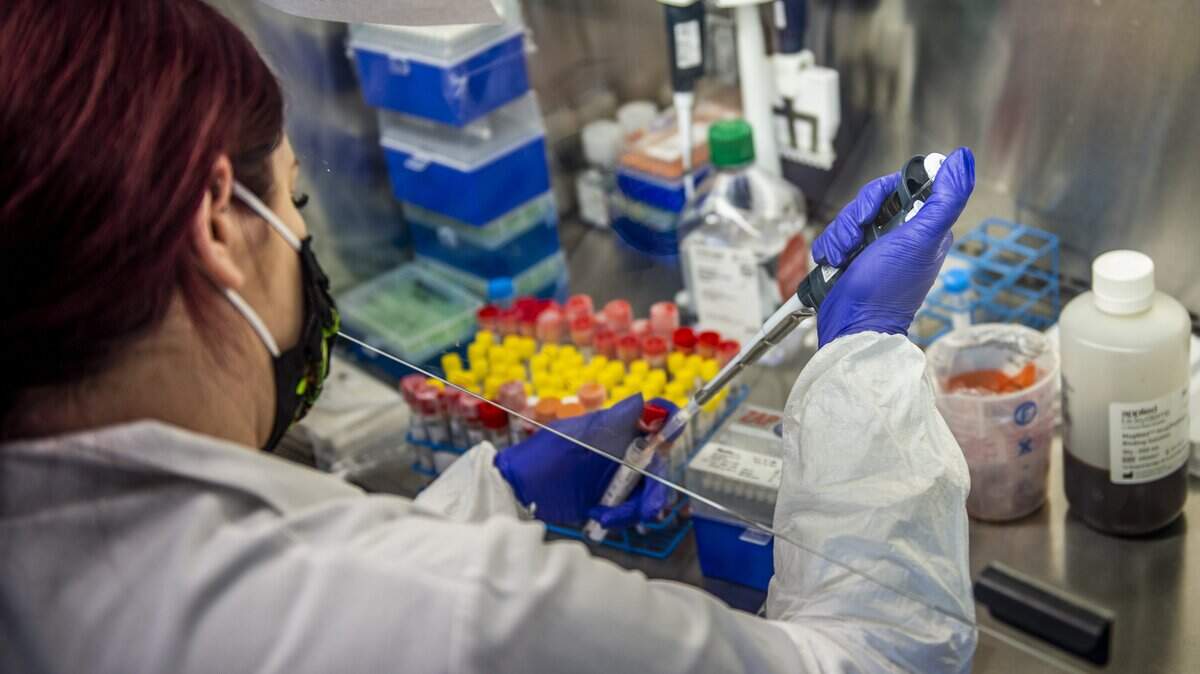
Hundreds of thousands of signatures and more than $70 million in campaign funds later, Proposition 38 has passed. The measure allows the state to borrow $8.4 billion to support medical research in immunology and immunotherapy conducted by California research institutes and universities.
Read more Gov.-elect Becerra’s rate freeze plan could pit him against powerful interests
The Associated Press called the race for the bond Monday evening. With an estimated 83% of votes counted, more than 54% of Californians had voted Yes on the ballot measure while nearly 46% rejected it. The measure needed a majority to pass.
“The measure will fund a statewide network of researchers, universities and nonprofit institutions working to advance immunology discoveries and turn promising science into life-saving treatments,” the Yes on 38 campaign said in a statement Monday night. “Its passage comes as federal research funding cuts have disrupted clinical trials and delayed medical discoveries nationwide.”
Half the bond proceeds are set to go to a single nonprofit immunology research institute affiliated with the University of California. The remaining money will be distributed through competitive grants to public and nonprofit research institutions. The funds will be used for research on cancer, heart disease and Alzheimer’s disease, among others.
Through the campaign, critics argued that the measure’s eligibility requirements were so specific that they effectively reserved half the funding for one institute: the not-yet-open California Institute of Immunology and Immunotherapy. That UCLA-affiliated institute was co-founded by philanthropist and medical inventor Gary Michelson, who is also the measure’s chief financial backer. Between him and his nonprofit Michelson Center for Public Policy, he contributed more than $65 million to the campaign.
“The measure remains a misuse of the ballot process by a billionaire seeking billions in public funding for his pet project,” the No campaign said in statement Tuesday. “More importantly, it is an irresponsible and ineffective way to distribute public research dollars. Reserving half the funding for a single favored institute undermines the open competition and rigorous scientific review that should guide investment in research.”
The No campaign was led by physicians, scientists and taxpayer advocates who said they support medical innovation but oppose the way the measure was written.
They argued that Prop. 38 amounted to “ballot-box science” and would result in decades of bond debt for California. The campaign criticized the practice of funding research focused on specific diseases rather than investing in medical research more broadly, especially when the Trump administration’s cuts affected public health programs across the board, and selecting priority areas through elections. The No campaign said it remained committed to “a better path for science research” and would announce next steps soon.
Read more 3 ballot measures remain uncalled. How did California vote on its 14 propositions?
“Californians want cures for the diseases that affect so many of us and our families,” the No on Proposition 38 campaign said in a statement. “Proposition 38’s campaign appealed to that hope while obscuring fundamental questions about where the money would go and whether it would fund the most promising science.”
California voters have previously backed large biomedical research initiatives. In 2004, voters approved Proposition 71, creating the California Institute for Regenerative Medicine and authorizing $3 billion in bond funding for stem cell research. Californians approved an additional $5.5 billion for the institute in 2020 but with only 51% of voters in favor.
According to the Legislative Analyst’s Office, the state will have to pay $500 million to $600 million annually for about 20 years to repay the Prop. 38 bond. That is about 0.25% of the state’s annual general fund budget.
Per the proposed measure, 10% of all proceeds from the immunotherapies developed as a result of the bond must be given to the state to offset its repayment costs. Any additional revenue must be used for future immunology research, it says. In addition, treatments developed through funded research are to be offered at a 20% discount in California.
The proposition was supported by a broad coalition of doctors, nurses and patient advocates. This includes the Alzheimer’s Association, ALS Association, the Michael J. Fox Foundation for Parkinson’s Research, American Nurses Association California, Prostate Cancer Foundation and Kidney Cancer Association.
“This victory belongs to the patients and families who have spent years fighting devastating diseases and waiting for the next medical breakthrough,” said Chris Tarver, president of the California chapter of the American Nurses Association, in a statement.
Meanwhile, Californians will see another $7.5 billion bond for science and health research on their ballots in the March 2028 election. Lawmakers sent the proposal to Gov. Gavin Newsom earlier this year. It was the final bill he signed from his last regular legislative session as California’s governor.
Read more Gov.-elect Xavier Becerra taps staffers with Newsom ties for transition team
This story was originally published November 9, 2026 at 9:43 PM.