 By admin
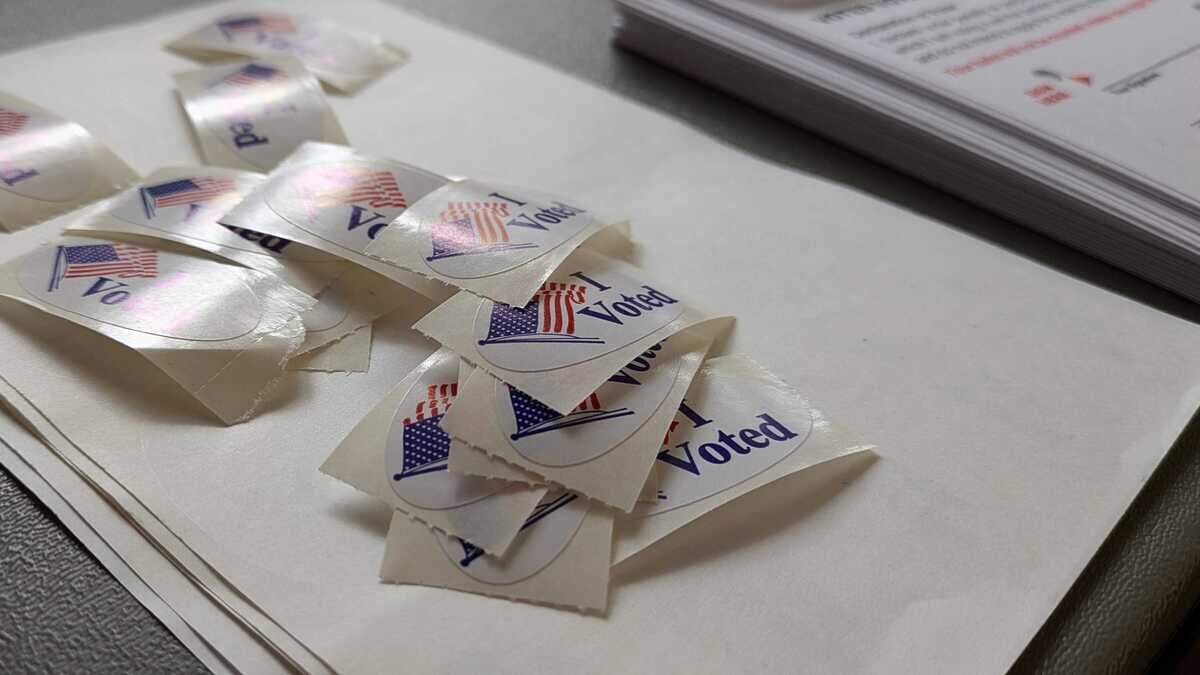
California voters weighed in on 14 statewide ballot measures in the Nov. 3 election, with several races still undecided nearly a week later. The Associated Press had called nine of the 14 contests as of Monday morning.
Read more Voter roll case closed: Trump officials tried to disrupt California elections, judge says
Which propositions passed, which failed and which remained too close to call?
Here’s where each measure stood Monday morning.
Proposition 1: Affordable housing bonds
The measure authorized California to borrow more than $11 billion to fund housing programs. Supporters said the money would help finance projects ready for construction. The funds would come from bonds, which the state would repay at an estimated cost of $500 million to $600 million annually for about 25 years. It faced no registered opposition.
The AP called the race shortly before 11 p.m. on election night. As of Monday morning, about 61% of voters had approved the measure.
Proposition 2: State rainy day fund
Prop. 2, placed on the ballot by legislative Democrats, would require the state to set aside more money, particularly during periods of surging tax revenue. California has traditionally experienced boom-and-bust budget cycles because of the stock market’s strong influence on state tax revenue. Republican lawmakers argued the measure was not about fiscal responsibility but would instead allow the state to spend more money in the future because deposits into the state’s rainy day fund would not count against a state spending limit.
The AP called the race shortly before 10 p.m. on election night. As of Monday morning, about 61% of voters had approved the measure.
Proposition 3: High-income tax extension
This measure made permanent an existing tax on California’s top 2% of earners, with revenue continuing to support public K-12 schools and community colleges. The tax was first approved by voters in 2012, in response to the Great Recession, and extended in 2016. It increased income taxes on high earners by 1 to 3 percentage points compared with rates before 2012.
Education groups argued that allowing the tax to expire in 2031 would leave schools facing a $10 billion annual funding shortfall.
About 60% of voters had cast ballots in favor of Prop. 3 as of Monday morning. The AP called the race shortly after midnight on Nov. 4.
Proposition 4: Public campaign financing
The California Fair Elections Act would repeal California’s ban on using public funds to finance political campaigns, although some cities, including San Francisco and Berkeley, already had exemptions.
The measure, which would not apply to federal elections, would impose restrictions on how public money could be spent, including requiring candidates to demonstrate a base of public support.
Supporters argued it would reduce candidates’ reliance on wealthy donors in state and local elections. Opponents said public financing of campaigns would waste taxpayer money.
The AP had not called the race as of Monday morning. Opponents held a narrow lead, with about 50.6% of counted ballots against the measure.
Proposition 5: Recall election process
This initiative would overhaul recall elections by allowing officials removed from office to run in the same election to replace themselves. That would mark a change from the current system, under which a successor is chosen later through an appointment or special election.
Prop. 5 has been an unexpectedly tight race and the AP has yet to call the race as of Monday morning. About 52% of counted ballots have been in support of the measure.
Proposition 37: Middle-income homebuyer loans
The measure authorized California to issue up to $25 billion in bonds to establish a down payment assistance program for homebuyers.
Each loan could cover up to 17% of the purchase price of a newly built home. Applicants would have to be California residents with household incomes no greater than 200% of the median income in their area.
Supporters said mortgage payments from loan recipients would be used to repay bond investors rather than taxpayer funds. The measure had no registered opposition.
With about 62% of voters in support as of Monday morning, the AP called the measure’s passage shortly after 9 p.m. on election night.
Proposition 38: Medical research bonds
Proposition 38 would authorize California to borrow $8.4 billion to support immunology and immunotherapy research at universities and research institutions.
If approved, half the bond proceeds would go to a single nonprofit immunology research institute affiliated with the University of California. The remaining money would be distributed through competitive grants to public and nonprofit research institutions.
Critics argued that the measure’s eligibility requirements effectively reserved half the funding for the California Institute for Immunology and Immunotherapy, which had not yet opened. The institute was co-founded by billionaire Gary Michelson, the measure’s chief financial backer.
Supporters said the measure would advance potentially lifesaving medical research amid uncertainty over federal research funding.
AP called the race late Monday, with about 54% of counted ballots in favor of the measure.
Proposition 39: Voter ID requirements
The measure would have required California voters to present government-issued identification to vote. Mail-in voters would have been required to provide the last four digits of their identification number on their ballot envelopes.
Prop. 39 also would have required election officials to report annually the percentage of voters in each county whose citizenship status had been verified.
The AP called the measure’s defeat shortly after 9:30 p.m. on election night. About 60% of counted ballots opposed the measure as of Monday morning.
Proposition 40: Billionaires tax
Prop. 40 would impose a one-time 5% wealth tax on Californians with net worths exceeding $1 billion, directing 90% of the revenue toward the state’s health care system.
Read more Prop. 38 passes, assures billions in funding for California immunology research
Supporters, including SEIU-United Healthcare Workers West and U.S. Sen. Bernie Sanders, I-Vt., argued the tax was needed to offset federal health care funding cuts enacted by Congress in 2025.
Opponents, including Gov. Gavin Newsom and the California Teachers Association, warned that the tax could drive billionaires out of California, reducing future tax revenue and threatening funding for state services.
Opponents of Prop. 40 maintained a lead on the measure with about 53% of the vote before AP called the race Monday evening.
Proposition 41: State tax audits and limits
Opponents of Prop. 40 backed Proposition 41, which included a provision that could nullify the proposed billionaire tax.
The measure would have required pre-election audits of ballot initiatives proposing special taxes. It also would have invalidated Prop. 40 if both measures passed and Prop. 41 received more votes.
Supporters said it would help curb wasteful state spending, while opponents, including SEIU-UHW, called it a “billionaire-funded smoke screen” designed to defeat the wealth tax.
The AP called the measure’s defeat Saturday evening. As of Monday morning, about 55% of counted ballots opposed Prop. 41.
Proposition 42: Property tax restrictions
Like Prop. 41, this measure was largely financed by billionaire opponents of Prop. 40 and was designed to block the proposed wealth tax.
Prop. 42 would amend the California Constitution to prohibit new taxes on personal property and other financial assets enacted after Jan. 1, 2026. It also would prohibit retroactive taxes, potentially invalidating Prop. 40 if both measures passed and Prop. 42 received more votes.
Supporters said the proposal would protect Californians from future wealth taxes. SEIU-UHW argued it was a billionaire-backed effort to undermine Prop. 40.
The measure led with about 52% of counted ballots as of Monday morning, but the AP had not called the race.
Proposition 43: Local tax approval threshold
The measure would have required a two-thirds majority to approve new or extended local taxes dedicated to specific purposes. Currently, such taxes placed on the ballot through voter signature drives do not have to meet that threshold.
The proposal emerged from a legislative deal intended to avert a separate ballot measure that also would have overturned some previously approved tax increases.
Supporters argued it would protect Californians from higher taxes, while opponents said it would make funding local services more difficult.
The AP called the measure’s defeat Saturday evening. About 57% of voters had opposed Prop. 43 as of Monday morning.
Proposition 44: Community clinic spending
The initiative would have required certain private nonprofit health care clinics to spend at least 90% of their annual revenue on patient care.
The measure’s primary backer, SEIU-UHW, argued that clinics were spending money on executive compensation and other expenses that should instead support patients.
Opponents, including the California Medical Association and the California Primary Care Association, said the measure could divert funding from essential clinic operations, including nursing supervision, translation services, insurance assistance and community education.
The AP called the measure’s defeat shortly after 9 p.m. on election night. As of Monday morning, about 82% of counted ballots opposed the measure.
Proposition 45: Environmental review rules
Proposition 45 would have accelerated environmental reviews for certain construction projects, including housing, public infrastructure and renewable energy developments.
The measure would have established deadlines under the California Environmental Quality Act, requiring government agencies to approve or deny permits within one year and courts to resolve related lawsuits within 270 days.
Prop. 45 also would have reduced the number of alternatives developers had to consider to limit environmental damage and made it more difficult for opponents to overturn project approvals in court.
Supporters said the changes would speed construction of projects needed by California communities. Opponents argued the measure favored developers at the expense of residents concerned about environmental impacts.
The two sides also disagreed over whether data centers, which opponents cited as particularly controversial projects, would qualify for expedited reviews. Supporters said they would not.
The AP projected the measure’s failure on Saturday evening. As of Monday morning, about 56% of counted ballots were against Prop. 45.
This story was originally published November 9, 2026 at 10:16 AM with the headline “Where do California propositions stand? Voters decide on housing, voter ID measures.”
Read more Gov.-elect Becerra’s rate freeze plan could pit him against powerful interests